
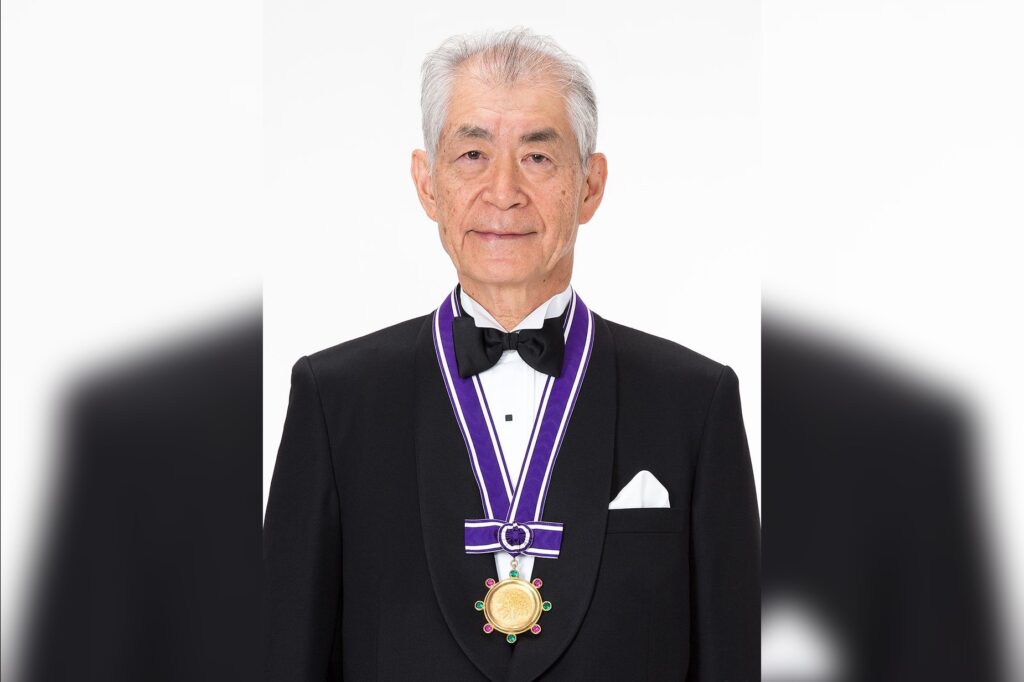
TEHRAN, July 14 — A Japanese immunologist whose laboratory work reshaped the global fight against cancer, Tasuku Honjo, continues to be recognised as a central figure in modern oncology. Born in Kyoto on January 27, 1942, Honjo’s path from medical student to Nobel laureate illustrates a decades-long commitment to understanding the immune system’s most subtle controls. Honjo earned his M.D. from Kyoto University in 1966 and completed his Ph.D. at the same institution in 1975.
He then travelled to the United States for postdoctoral research at the Carnegie Institution of Washington and the National Institutes of Health (NIH).
A Checkpoint Discovery That Changed Cancer Care
The breakthrough came in 1992. While working at Kyoto University, Honjo discovered a protein on the surface of T cells called PD-1 — programmed cell death protein 1. He subsequently demonstrated that PD-1 functions as a checkpoint, suppressing immune responses.
Crucially, he showed that blocking PD-1 could enhance the body’s ability to attack tumours. That discovery did not remain in the laboratory.
It led directly to the development of PD-1 inhibitors, drugs that have become a cornerstone of cancer immunotherapy. The U.S. Food and Drug Administration approved pembrolizumab, sold under the brand name Keytruda, in 2014. That same year, the FDA also approved nivolumab, marketed as Opdivo.
According to reports, these drugs are now used to treat multiple cancer types, including melanoma, non-small cell lung cancer, kidney cancer, and Hodgkin lymphoma.
Earlier Contributions and a Nobel Prize
Honjo’s contributions to immunology extend well beyond PD-1. In 1980, he discovered class switch recombination, a mechanism that allows B cells to produce different types of antibodies. That finding deepened the scientific understanding of how the immune system adapts to diverse pathogens.
In 2018, Honjo shared the Nobel Prize in Physiology or Medicine with James Allison. The Nobel committee cited their discovery of cancer therapy by inhibition of negative immune regulation.
For Honjo, the award capped a career that had already earned him the Imperial Prize of the Japan Academy in 1996 and the Lasker-DeBakey Clinical Medical Research Award in 2015. He has served as a professor at Kyoto University and as a visiting professor at Harvard University. His work has transformed oncology.
PD-1 inhibitors are now regarded as a standard tool in the treatment of several cancers, offering patients options that did not exist a generation ago. The account indicates that Honjo’s research continues to influence clinical practice worldwide.
For patients and physicians alike, the story of PD-1 is one of sustained progress — from a protein identified in a Kyoto laboratory to a class of drugs that has changed the trajectory of cancer treatment. Consult your doctor for medical advice.
Sources
{“@context”: “https://schema.org”, “@type”: “NewsArticle”, “headline”: “Tasuku Honjo discovered PD-1, unlocking new cancer drugs”, “description”: “TEHRAN, July 14 — A Japanese immunologist whose laboratory work reshaped the global fight against cancer, Tasuku Honjo, continues to be recognised as a central…”, “datePublished”: “2026-07-14T09:30:00+00:00”, “author”: {“@type”: “Person”, “name”: “Reza Karimi”}, “publisher”: {“@type”: “Organization”, “name”: “InfoPulse Today”, “url”: “https://newsfeed.2bme.xyz/”}, “citation”: [{“@type”: “CreativeWork”, “url”: “https://en.wikipedia.org/wiki/Tasuku_Honjo”}]}




