
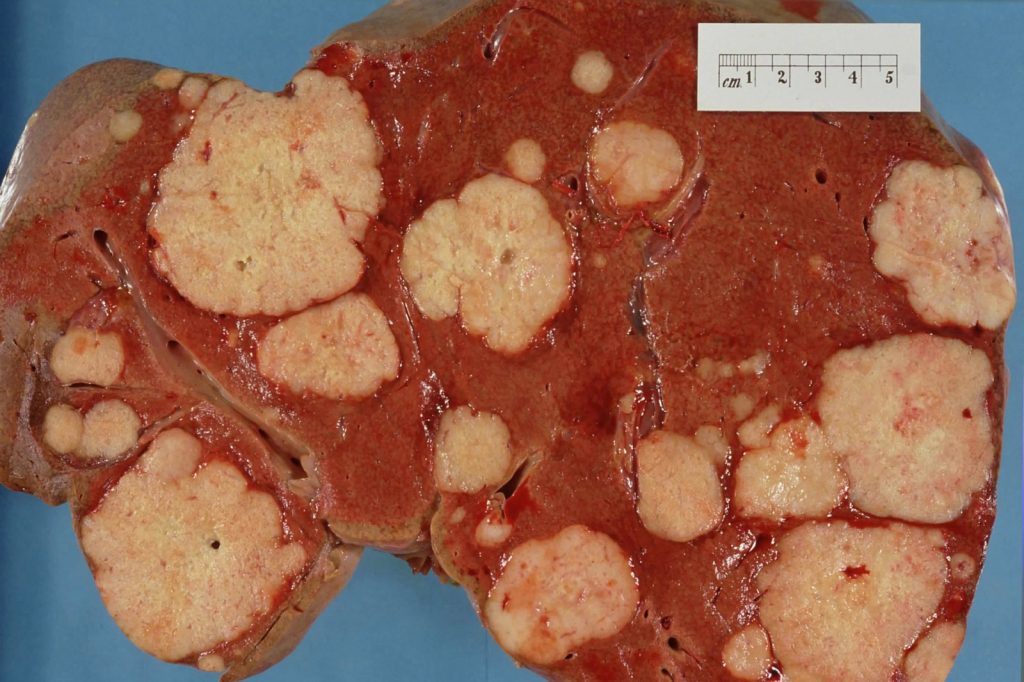
ITHACA, N.Y. — For the small number of patients diagnosed each year with fibrolamellar carcinoma, the news has been grim. No cure exists. Diagnosis often comes late.
Standard immunotherapy drugs have largely failed. But researchers at Cornell University and the University of Washington have published a study in the journal Gastroenterology that may explain why — and point toward a treatment already sitting on pharmacy shelves.
The cancer, a rare and aggressive form of liver disease that hits children and young adults hardest, accounts for about 2% of all liver cancers. Until now, doctors had no clear picture of why immune checkpoint inhibitors, a common immunotherapy, didn’t work. The new study offers an answer: the tumor builds a trap.
Using single-nucleus transcriptomics — a technology that reads gene activity in individual cells — the team mapped out the mechanism. Altered liver stellate cells produce the fibrous bands that give the cancer its name.
Those same cells release signals that pull immune T cells away from the tumor and into nearby fibrous tissue. The process is called T cell exclusion. The cancer essentially walls itself off.
“It’s a cellular trap,” one researcher said. The immune cells get redirected, stuck in scar tissue, unable to reach the tumor itself. That finding alone would be significant.
But the team went further. They tested a drug called AMD3100, already approved by the FDA for other uses.
Working with slices of actual tumor tissue taken from patients, they found the drug blocked the signals that were trapping the T cells. Once the signal was cut, the immune cells moved back into the tumors. The implications are direct.
When the researchers combined AMD3100 with immune checkpoint inhibitors, they saw stronger T cell activity and a significant increase in cancer cell death — far more than with immunotherapy alone. For the roughly 200 young people diagnosed with fibrolamellar carcinoma in the United States each year, this is not abstract science.
It is a concrete possibility. A drug already approved, already tested for safety, could be repurposed. The path from lab to clinic could be shorter than usual.
Cornell and UW researchers stressed that more work lies ahead. Clinical trials would need to confirm the findings in living patients. But the study provides one of the clearest explanations yet for why standard immunotherapy has struggled against this cancer — and a clear target to hit.
For central New York, where Cornell sits at the heart of a growing biomedical research corridor, the work carries local weight. The university has pushed into cancer research in recent years, and this study ties directly to that mission.
It also connects to a regional reality: patients with rare cancers often travel long distances for care. If a treatment emerges from this line of research, local hospitals and clinics would be positioned to deliver it. The study does not promise a cure.
It does not claim that AMD3100 alone will save lives. But it maps a path forward where before there was only dead ends.
For a disease with no standard effective therapy, that counts as progress.
{“@context”: “https://schema.org”, “@type”: “NewsArticle”, “headline”: “Study Reveals Why Immunotherapy Fails for Rare Liver Cancer, Points to Existing Drug”, “description”: “ITHACA, N.Y. — For the small number of patients diagnosed each year with fibrolamellar carcinoma, the news has been grim. No cure exists. Diagnosis often…”, “datePublished”: “2026-07-05T04:13:33+00:00T09:30:00+00:00”, “author”: {“@type”: “Person”, “name”: “Sebastian Smith”}, “publisher”: {“@type”: “Organization”, “name”: “InfoPulse Today”, “url”: “https://newsfeed.infopulsetoday.com/”}}




