
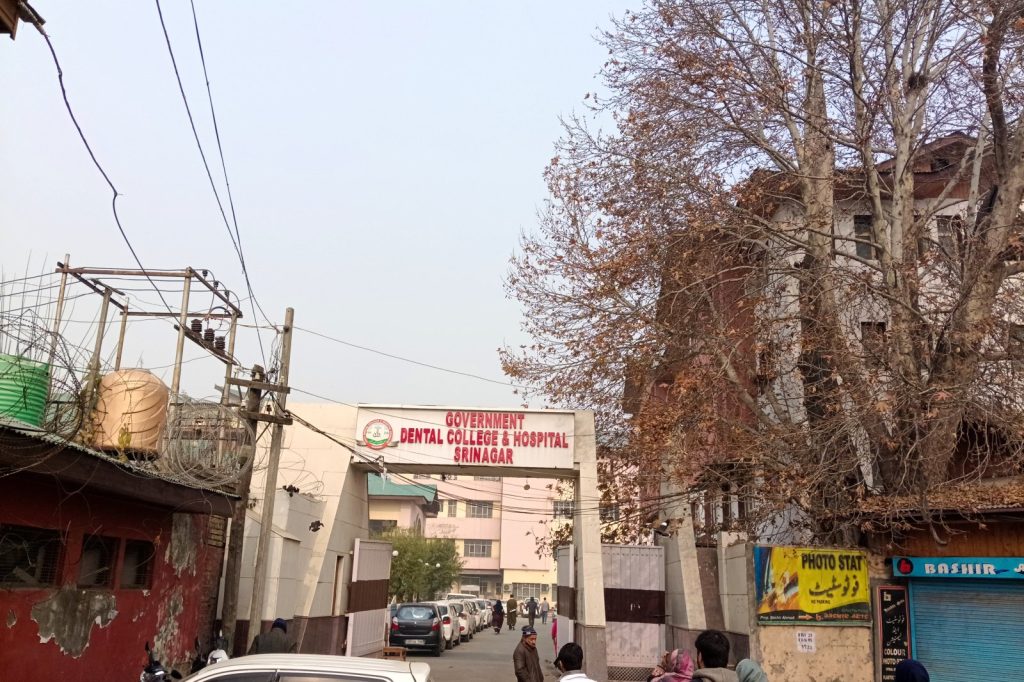
A comprehensive new Cancer Care Strategy for Jammu & Kashmir was reviewed here today, the product of a six-month process led by the Health & Medical Education Department in consultation with leading oncology experts and national institutions. The framework was presented at a high-level meeting chaired by Chief Secretary Atal Dulloo, who stressed the need for a coordinated, evidence-based, and patient-centric response. The strategy arrives as the Union Territory’s healthcare system continues to adapt to significant governance changes that have redefined how public health initiatives are designed and delivered in this contested region.
Jammu and Kashmir has long been a geographical and political crossroads. For centuries, the broader Kashmir region—which includes areas administered by India, Pakistan, and China—has been a source of territorial contention. From 1846 to 1947, it existed as a princely state under British suzerainty. After India’s partition, the former princely state became a subject of dispute between India and Pakistan, both claiming it in full. India administered the region as a state from 1947 until 2019, when the central government reorganized it into two union territories: Jammu and Kashmir, and Ladakh. A separate region called Azad Jammu and Kashmir, or Azad Kashmir, is administered by Pakistan as an autonomous division. Today, the union territory of Jammu and Kashmir operates under direct rule from New Delhi, a structure that shapes every policy rollout, including this cancer care initiative. The region has experienced periodic unrest and cross-border tensions, and the long-standing Kashmir conflict has profoundly shaped its social and political landscape.
A Holistic Vision From Prevention Through Palliative Care
The cancer strategy takes a whole-of-system view, covering the full continuum of care: prevention, early detection, screening, diagnosis, treatment, and palliative care. It also integrates research, capacity building, and digital health interventions. What this means for communities across Jammu & Kashmir is a shift toward an integrated and technology-enabled cancer care ecosystem. The framework explicitly aims to create that ecosystem across the Union Territory, with a coordinated approach that ties together primary care centers, district hospitals, and tertiary referral facilities.
Chief Secretary Dulloo emphasized that the response must put the patient at the center. The strategy’s inclusion of palliative care signals a commitment to treating the whole person, not just the disease. By addressing pain management and supportive care alongside curative treatments, the framework acknowledges that cancer affects not only patients but also their families and communities. This inclusion is particularly significant in a region where healthcare access has historically been uneven due to geography, political uncertainty, and shifting administrative structures.
Building Workforce, Infrastructure, and Evidence
Capacity building stands as a central pillar of the framework. The strategy envisions strengthening both the healthcare workforce—through specialized training for doctors, nurses, and community health workers—and physical infrastructure, such as diagnostic labs, radiology equipment, and treatment centers. This work is being undertaken with input from national institutions, though the specific institutions were not named in the review. Research is also named as a priority. The plan calls for evidence generation that can inform local treatment protocols and prevention strategies, ensuring that what works in other parts of India is adapted to the unique epidemiological and demographic profile of Jammu & Kashmir.
Digital health interventions run through the entire strategy. From screening reminders and telemedicine consultations to treatment tracking and follow-up care, technology is seen as a tool to make the system more efficient and accessible. In a Union Territory where mountainous terrain and periodic unrest can disrupt physical access to care, a digital backbone could help maintain continuity of services. The framework aims to use technology at every stage—from early detection through to long-term survivorship care—to create a seamless patient journey.
For the people of Jammu & Kashmir, the strategy represents a roadmap. The framework itself, built on consultation with experts and national institutions, provides a foundation. But implementation will depend on sustained political will, adequate funding, and the ability to coordinate across a healthcare system that is still adjusting to direct central rule. The meeting chaired by Chief Secretary Dulloo signals that the administration is treating cancer care as a priority. Whether the strategy can overcome the region’s structural challenges—its contested status, its history of disruption, and its evolving governance—remains to be seen. For now, the plan offers a clear, comprehensive blueprint for tackling one of the most pressing public health challenges facing this strategically significant part of the subcontinent.




