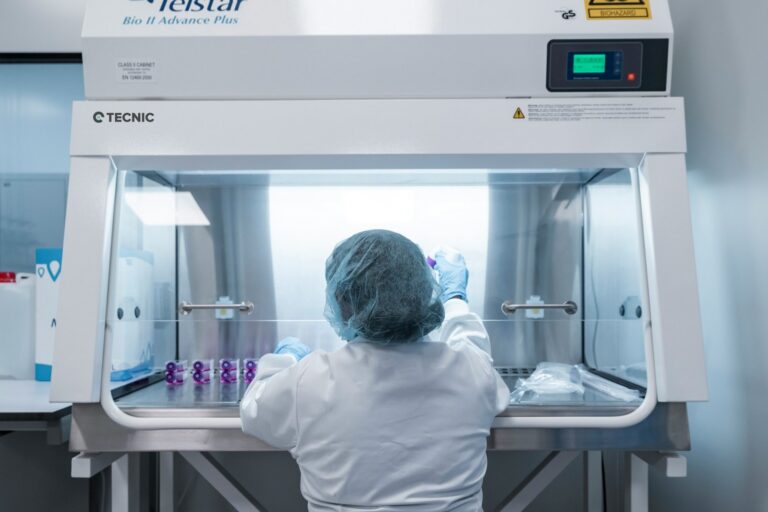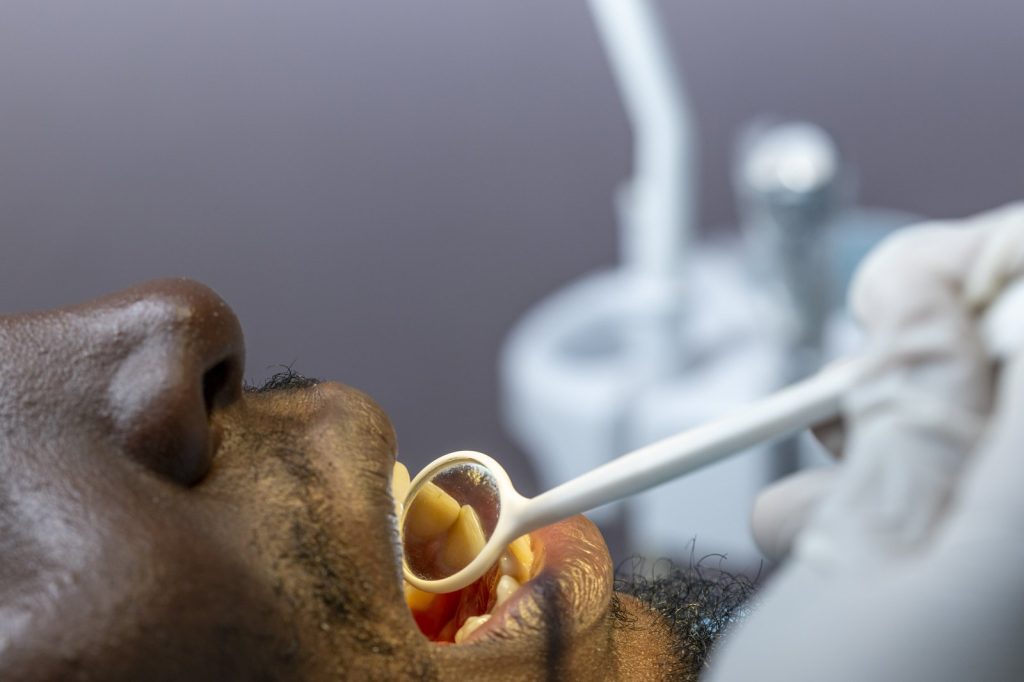
A swab of the mouth, run through a four-gene test, picked out oral cancer with 95.5% overall accuracy in a study of 545 patients. The result came back in under an hour.
The test is called qMIDSV3. A cross-university team led by Queen Mary University of London published the work in Biomarker Research, and the researchers say it is the largest study of its kind. Each patient gave two brush samples, one from the lesion and one from healthy tissue on the opposite side of the mouth, so 1,090 brushings were tested in all. Of the patients, 443 had oral squamous cell carcinoma, 63 had oral leukoplakia and 39 had oral lichen planus.
What the numbers showed
A lab measured the activity of four genes, INHBA, S100A16, YAP1 and POLR2A, in each sample. An algorithm turned the readings into a malignancy index. The test separated cancer from leukoplakia and lichen planus with a sensitivity of 95.7% and a specificity of 95.1%. The false-positive rate was 4.9% and the false-negative rate 4.3%.
For families waiting on a diagnosis, the practical gain is fewer cuts. Most suspicious oral lesions are benign, but patients routinely get a scalpel biopsy anyway. On the tongue, the most common site for the cancer, that means part of the tongue is removed. The authors say this deters both patients and doctors from repeating the procedure, and delays follow-up. They estimate qMIDSV3 could spare over 90% of low-risk patients an unnecessary tissue biopsy.
A swab can be repeated. “That means doctors can now monitor patients with persistent pre-malignant lesions regularly and systematically,” said lead author Muy-Teck Teh, “and pick up cancers much earlier than we would have been able to before.”
Why early checks matter
Oral cancer is spreading. Global Burden of Disease data lists lip and oral cancer among the world’s fastest-growing causes of early death, and about 650,000 people are affected worldwide each year. Tobacco, alcohol, the HPV virus and sun damage raise the risk. More than half of cases, 53%, are found at stage IV, the most advanced.
The team says the problem is also one of overtesting. In the UK, a ten-year audit recorded a 450% jump in two-week-wait referrals and a 50% fall in the cancer detection rate. Later audits found that 92.5% to 99.5% of referred patients had no cancer.
Teh said the brush result matching the older microbiopsy test had surprised the team. That earlier version, qMIDS-V2, needs a 1mm tissue sample.
Researchers from King George’s Medical University, Modern Dental College & Research Centre and the All India Institute of Medical Sciences also took part. Queen Mary is seeking a commercial partner, and says the test could reach clinics within two years.
Consult your doctor for medical advice.
Sources
- New brush test detects oral cancer in one hour
- Non-Invasive Brush Biopsy Test Detects Cancer Within an Hour