When researchers at Nagoya University cut the liver’s output of a protein called C3 by 90%, a cancer immunotherapy drug kept working just as well in mice. When they instead stopped cells inside the tumor from making it, the same drug did worse, even though the level of C3 in the blood fell by only 9%.
The finding, published in Nature Communications, points to where the protein matters. It is the C3 made inside the tumor, not the C3 travelling through the bloodstream, that decides how well the treatment works.
An old protein, a new job
Complement C3 is ancient. It turns up even in sponges and jellyfish. Most of it is made in the liver and released into the blood, where it helps the immune system fight infection. What it does when tissues make it locally has been much less clear.
“Cancer tumors are surrounded by normal cells called fibroblasts,” said lead author Yuki Miyai, assistant professor at Nagoya University’s Graduate School of Medicine. “Until now, the role of complement C3 produced by these cancer-associated fibroblasts within tumor tissue was not known.”
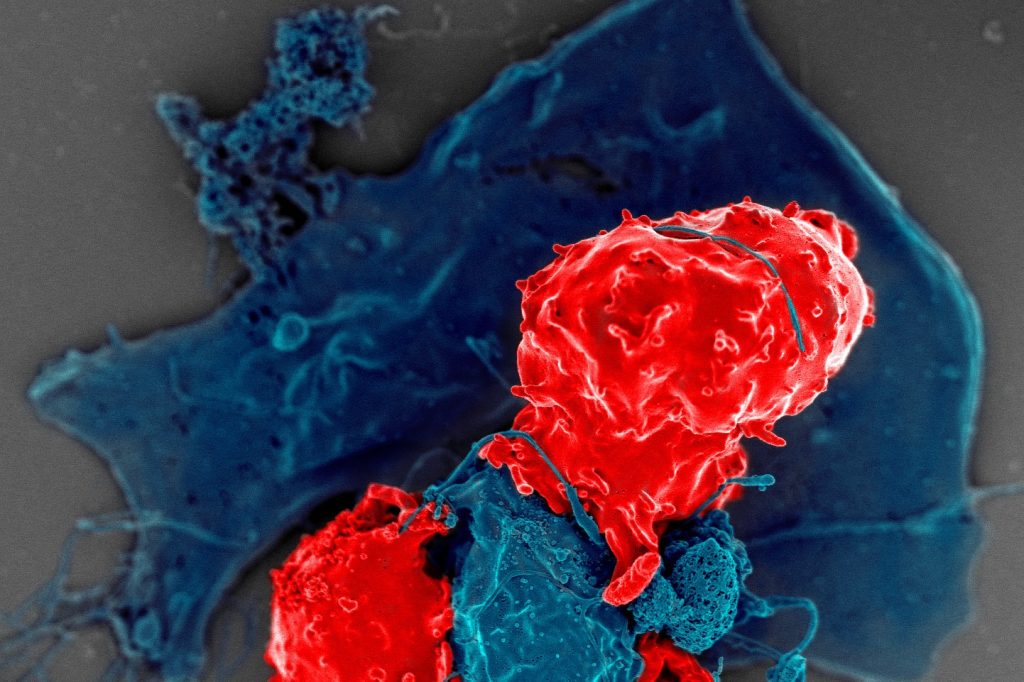
The team found that C3 made in the tumor keeps immunosuppressive myeloid cells out of the tumor microenvironment. Those cells blunt the body’s attack on cancer. With fewer of them around, immune cells have a better shot at recognizing and attacking the tumor.
Miyai said the effect comes from a fragment called iC3b, which forms when the local C3 breaks down. “What determined the efficacy of the immunotherapy treatment was not the C3 in the blood, but the local C3 produced at the tumor site,” he said.
Mice and lung cancer patients
The researchers then tried to copy the effect in tumors that normally resist immunotherapy. They tested a drug designed to imitate the way C3 keeps myeloid cells out. Tumors that had held out against treatment responded to immunotherapy, and the mice lived significantly longer.
The team also looked at tumor samples from lung cancer patients. Those with higher C3 levels in the tissue around the cancer cells had better treatment results and longer survival. About half of the patients with high local C3 responded to treatment. None of those with lower levels did. As in the mice, C3 in the blood showed no link to success.
The work could eventually help doctors pick the patients most likely to benefit from immunotherapy, and may open options for cancers that do not respond at first. The group now plans to test ways of raising C3 inside tumors and to work out the best timing for treatment. They also think local C3 may shed light on wound healing and the regulation of inflammation.
Consult your doctor for medical advice.