
Eleven medical institutions across China are joining a Phase II trial of RAG-01, an experimental treatment designed to activate a tumour-suppressor gene in people with non-muscle invasive bladder cancer.
Ractigen Therapeutics marked the study’s initiation with a meeting at Fudan University Shanghai Cancer Center on Nov. 2. For patients, the central question is whether the treatment, alone or with chemotherapy, can reduce recurrence while preserving the bladder.
Why recurrence drives this research
Non-muscle invasive bladder cancer remains in the mucosal and submucosal lining rather than reaching the bladder’s muscle wall. It accounts for approximately 75% of newly diagnosed bladder cancers.
Standard initial treatment for intermediate- and high-risk disease involves transurethral removal of the tumour followed by bladder-delivered BCG immunotherapy or chemotherapy. Some patients nevertheless experience repeated recurrences, progression or loss of response to BCG.
Radical cystectomy, removal of the bladder, can become the remaining option. Professor Ding-Wei Ye, the trial’s leading principal investigator, also cited persistent BCG shortages, intolerance or failure and limited durability from conventional intravesical chemotherapy.
Two cohorts, two different comparisons
Study RAG010201 is a randomised, controlled, multi-centre Phase II trial evaluating efficacy, safety, tolerability and pharmacokinetics. RAG-01 is delivered directly into the bladder through intravesical instillation.
Cohort A covers high-risk patients. Following a safety run-in to establish the recommended regimen, participants will enter an open-label, 1:1 randomised comparison of RAG-01 alone against RAG-01 combined with mitomycin C.
Its primary endpoint is the 24-month event-free survival rate. That measures events including recurrence or progression over two years; it is not an efficacy result available at launch.
Cohort B covers intermediate-risk patients and uses a single-arm design to study RAG-01 alone. Its primary endpoint is the 24-month recurrence-free survival rate, reflecting the clinical aim of preventing recurrence while limiting treatment-related toxicity.

Switching a gene on, rather than silencing it
RAG-01 uses small activating RNA, or saRNA. It is designed to increase expression of p21, a tumour-suppressor gene that can halt the cell cycle and promote cellular senescence, reducing abnormal bladder-cell proliferation.
The therapy uses Ractigen’s LiCO delivery system. On Oct. 23, the company announced a peer-reviewed Molecular Therapy Nucleic Acids paper describing that platform’s design, mechanism and preclinical translation beyond the liver.
In animal research, local LiCO delivery produced target silencing in the bladder urothelium, while other experiments examined joints and eyes. Those preclinical results do not demonstrate that RAG-01 benefits patients.
Ractigen says an earlier Australian Phase I trial showed favourable safety, dose-dependent target engagement and encouraging durable responses. It describes those as early signals, while the new controlled trial is intended to test the treatment more rigorously.
The hospitals and the regulatory status
Professor Ye leads the study at Fudan, where he is chief expert on the multidisciplinary urologic-oncology team. Other participating centres include Peking University First Hospital, Ruijin Hospital, Hunan Cancer Hospital, Nanjing Drum Tower Hospital, Qilu Hospital of Shandong University and Sun Yat-sen Memorial Hospital.
RAG-01 received investigational-new-drug clearance from the US Food and Drug Administration and Fast Track designation in 2024. China’s NMPA Center for Drug Evaluation approved the Phase II IND.
Those regulatory milestones permit and facilitate development; they are not approval of RAG-01 as a proven treatment or evidence that it is available for routine care.
“We look forward to collaborating with top urology centers nationwide,” Ye said, identifying reduced recurrence, delayed progression and bladder preservation as the outcomes the study is designed to evaluate.
No efficacy findings from RAG010201 have been released. Its two principal measurements are the 24-month event-free and recurrence-free survival rates.
Sources
- Ractigen Therapeutics Kicks Off Multi-Center Phase II Clinical Trial of First-in-Class saRNA Therapeutic RAG-01 for Non-Muscle Invasive Bladder Cancer
- Ractigen Therapeutics Kicks Off Multi-Center Phase II Clinical Trial of First-in-Class saRNA Therapeutic RAG-01 for Non-Muscle Invasive Bladder Cancer
- Ractigen Therapeutics Kicks Off Multi-Center Phase II Clinical Trial of First-in-Class saRNA Therapeutic RAG-01 for Non-Muscle Invasive Bladder Cancer
- Ractigen Therapeutics Publishes Foundational Study on its Extrahepatic LiCO™ Delivery Platform in Molecular Therapy – Nucleic Acids
- Ractigen Therapeutics Kicks Off Multi-Center Phase II Clinical Trial of First-in-Class saRNA Therapeutic RAG-01 for Non-Muscle Invasive Bladder Cancer
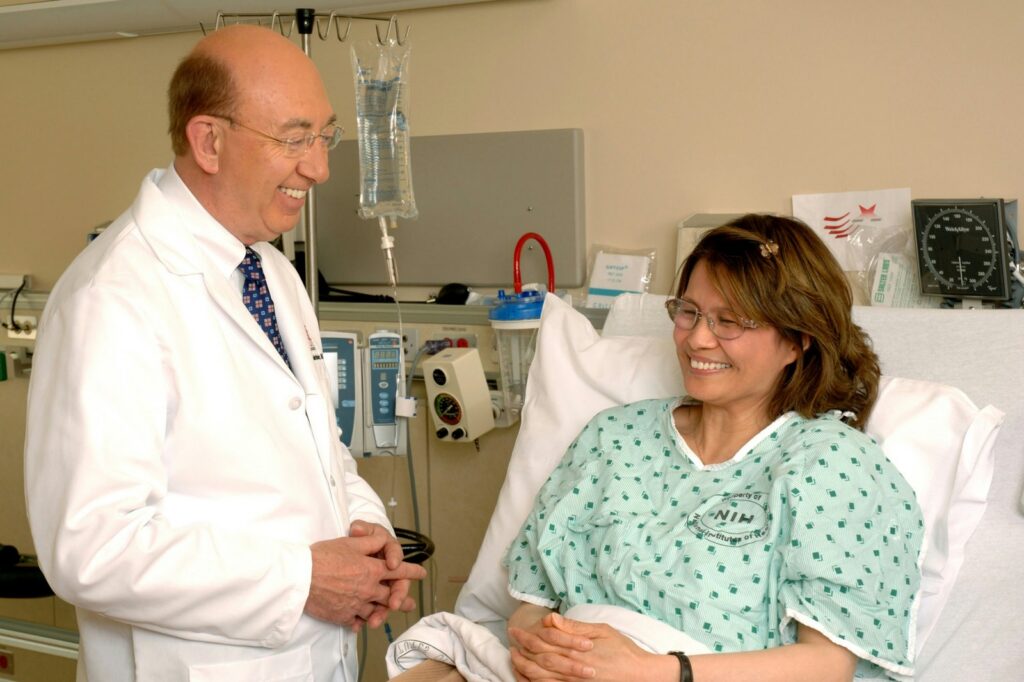
Photo: National Cancer Institute / Unsplash (Unsplash License)