
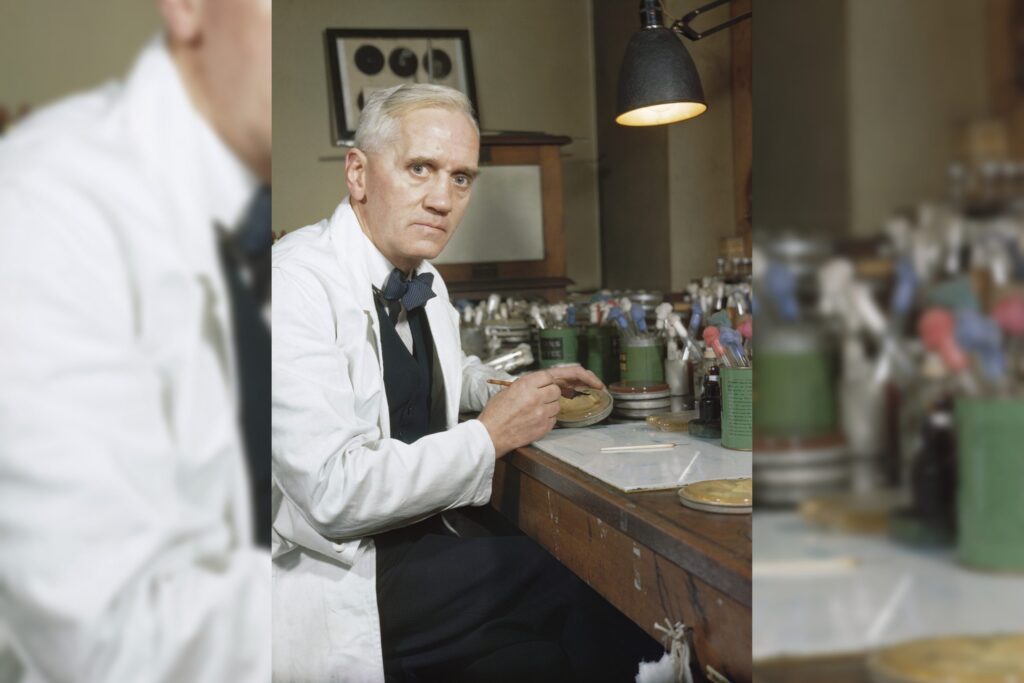
A Fortuitous Discovery and a Decade of Frustration
In 1928, Fleming, working at St. Mary’s Hospital in London, noticed something unusual in a petri dish. A mold identified as *Penicillium notatum* was inhibiting the growth of *Staphylococcus* bacteria. He published his findings in 1929. But Fleming could not purify the compound, and for a decade, the story stalled. Without a method to isolate and produce the active substance in usable quantities, the potential of the observation remained untapped. The pre-antibiotic era was still the norm: bacterial infections such as those from wounds, childbirth, or routine surgeries often turned fatal with no effective treatment available.
From Oxford to Mass Production: Turning Mold into Medicine
In 1939, a team at the University of Oxford took up the challenge. Led by Howard Florey and Ernst Boris Chain, the researchers developed methods to mass-produce the substance. By 1941, the first human patient, Albert Alexander, received treatment with penicillin. He later died because the supply was insufficient to complete the course. The need for a reliable manufacturing process became urgent. Mass production began in 1943, backed by the U.S. government and pharmaceutical companies, including Pfizer. By 1944, penicillin was widely used to treat wounded soldiers in World War II, cutting infection-related deaths dramatically. Penicillin is a natural antibiotic derived from certain molds in the *Penicillium* family. Its impact was profound, transforming medicine by providing an effective treatment for a wide range of bacterial infections. For their contributions, Fleming, Florey, and Chain shared the Nobel Prize in Physiology or Medicine in 1945.
The success of penicillin spurred the development of other antibiotics. Streptomycin was discovered in 1943 by Selman Waksman. Tetracycline arrived in 1948, and erythromycin followed in 1952. These drugs have saved hundreds of millions of lives, making once-incurable infections manageable. However, widespread use has led to a growing problem: antimicrobial resistance.
The Resistance Challenge: Preserving a Double-Edged Tool
Overuse of antibiotics has driven antimicrobial resistance, which the World Health Organization declared a global health priority in 2015. That declaration formally recognized that the pipeline of new drugs has not kept pace with the emergence of resistant bacteria. The research front now focuses on preserving existing antibiotics and finding novel mechanisms to combat infection. But financial incentives remain a sticking point. Developing a new antibiotic costs hundreds of millions of dollars, yet the drugs are used sparingly to preserve their efficacy, limiting potential revenue. This economic disincentive has slowed the development of new treatments. For now, the legacy of Fleming’s 1928 observation stands as a double-edged tool. The same biology that saved millions now requires careful stewardship to avoid losing that ground. Consult your doctor for medical advice.




