
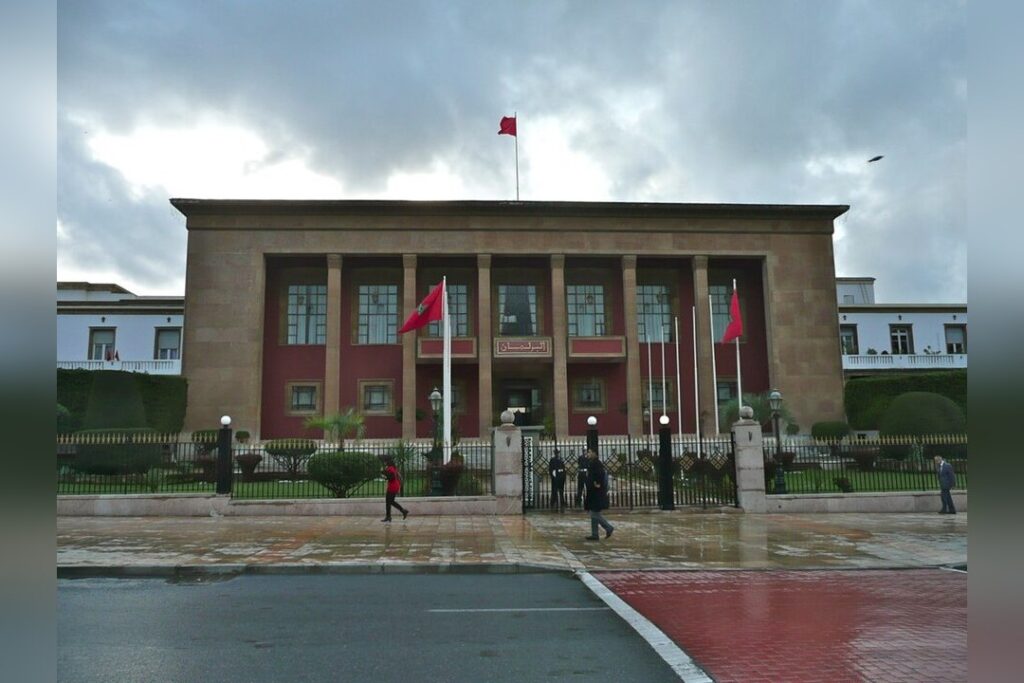
RABAT, September 18 — Morocco’s parliamentary election campaign is under way, with 27 political parties contesting 395 seats in the House of Representatives and more than 15.8 million voters registered for the September 23 ballot. Campaigning began on September 10. Volunteers from the Authenticity and Modernity Party (PAM) have been distributing leaflets ahead of the legislative vote, according to reporting by Kathya K Berrada published on September 17 from Rabat.
The election will determine the composition of Parliament and play a central role in forming the next government. It is being held under the constitutional framework established in 2011, which defines Morocco as a constitutional, democratic, parliamentary and social monarchy, establishes a separation and balance of powers, and preserves the monarchy’s central institutional role.
What the result decides — and what it does not
Under Article 47 of that constitution, the king appoints the head of government from the political party that comes first in elections to the House of Representatives. The king also presides over the Council of Ministers, while the government exercises executive power and Parliament exercises legislative and oversight functions. Winning the largest number of seats therefore matters for forming the government, but the parliamentary result does not by itself determine the full distribution of political power.
Beyond the competition among the 27 parties, the election raises the question of whether citizens believe the political system can respond to the problems shaping their daily lives — a question particularly important for younger Moroccans.
Trust, and the age profile of the electorate
An Afrobarometer survey published in March 2026 found that roughly a third of Moroccans aged 18 to 35 expressed trust in Parliament. At the same time, young people were more likely than older Moroccans to post political content on social media and participate in demonstrations, suggesting that low trust does not necessarily mean disengagement. The more important issue, according to the reporting, is whether young Moroccans see electoral politics as an effective way of addressing the problems they face.
The age profile of the electorate makes that question more consequential. Official figures show that voters aged 18 to 24 account for 4 percent of those registered, while people aged 60 and above account for 29 percent.
Those figures describe the electoral roll rather than turnout, but they show how heavily the registered electorate is weighted towards older citizens.
The economic backdrop
Morocco also faces a substantial youth employment problem. The IMF estimates that unemployment stood at 13 percent in 2025, while unemployment among 15-to-24-year-olds reached 37.3 percent. The IMF estimates that 25.2 percent of young people were not in employment, education or training in the third quarter of 2025.
It also points to skills mismatches, limited private-sector dynamism and pronounced gender disparities in labour-market participation. For young people struggling to enter the labour market, promises about growth, jobs and purchasing power are not abstract campaign issues but measures of whether the political system can deliver opportunities visible in everyday life.
Those pressures have also surfaced outside formal electoral politics. In late July 2026, roughly 60,000 people entered the autonomous Spanish enclave of Ceuta from Morocco, according to the source material. Voting takes place on September 23.
The salient point to watch is not only which party finishes first, but whether the roughly one-third of young Moroccans who told Afrobarometer they trust Parliament turn out at all — and whether the result is read as an answer to the jobs question or as a continuation of it.




