
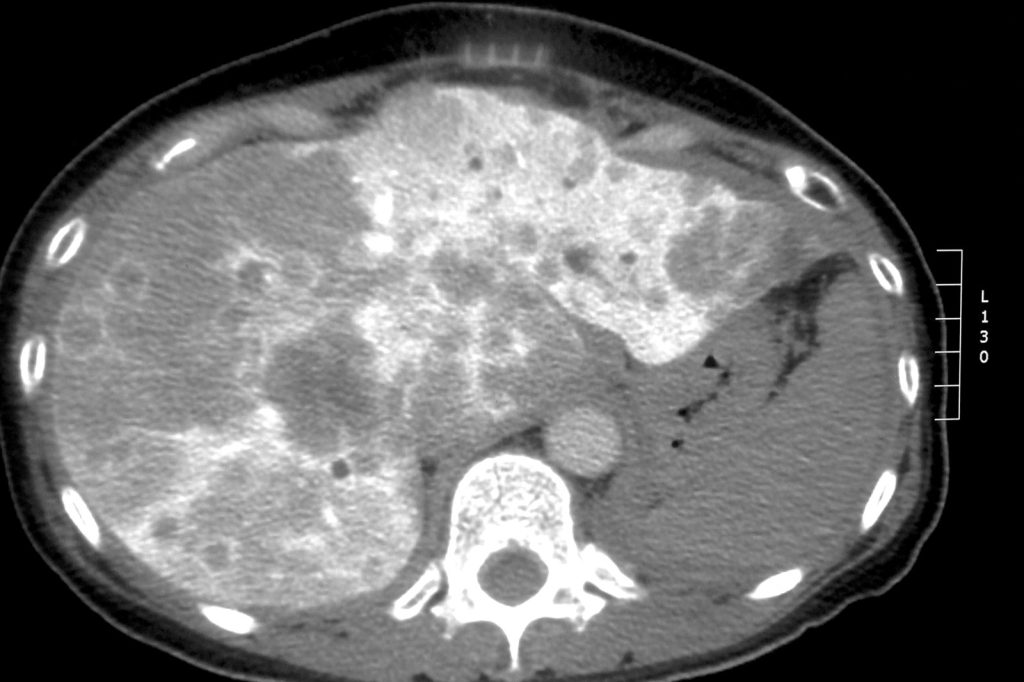
Liver cancer patients face a brutal calculus. Transarterial chemoembolization, or TACE, can buy them time. But the procedure itself — chemotherapy injected directly into the tumor, its blood supply then cut off — exacts a price.
Pain. Anxiety.
A body under siege. A new study from Houston suggests there might be a way to lower that cost without another drug. The tool is mindfulness.
A structured program of exercises, delivered before and after the procedure, appears to help patients weather the storm. The research tracked patients through the perioperative period — the hours and days surrounding TACE.
This is when stress peaks. The body floods with inflammatory markers. Heart rate variability, a measure of the nervous system’s resilience, often drops.
Pain scores climb. Anxiety spikes. Patients who completed the mindfulness program did not just feel better.
Their bodies showed it. They had better physiological stability during the procedure itself.
Their heart rate variability held steadier. Their inflammatory markers were lower. In the hours before TACE, they reported less anxiety.
Their recovery in the immediate aftermath was stronger than patients who got standard care alone. Here is the practical weight of that finding.
TACE is rarely a one-and-done treatment. Patients often undergo multiple rounds over months or years. Each cycle is a fresh assault on the body and mind.
The cumulative toll can be staggering. If a non-pharmacological intervention can blunt that toll — even modestly — it changes the trajectory of care. Think of it like this.
The body’s stress response is not just uncomfortable. It is physiologically expensive.
Chronic stress degrades immune function. It fuels inflammation. It can sabotage recovery.
A mindfulness program, delivered cheaply and without side effects, might interrupt that cycle. The study examined a specific, structured program.
It was not vague advice to “relax” or “think positive.” It was a series of concrete exercises — breathing techniques, body scans, guided attention — delivered before and after the TACE procedure. The researchers measured outcomes with hard metrics: pain scores, anxiety scales, heart rate variability, inflammatory markers. The results point to a practical conclusion.
Hospitals could integrate this into standard pre-operative preparation. A nurse-led session. A recorded guide.
A simple set of tools patients can use in the waiting room, on the table, in recovery. There are limits.
This is a single study. The sample size matters. The specific patient population — those with advanced hepatocellular carcinoma — may not represent all liver cancer patients.
The mindfulness program was structured and supervised; its effects may not translate to a smartphone app or a pamphlet. But the direction is clear.
The evidence is building. Non-pharmacological interventions are not soft science. They produce measurable physiological change.
For patients facing repeated, grueling procedures, that change could be the difference between a body that fights and a body that folds. The next step is replication. Larger trials.
Longer follow-up. Testing whether the effects hold across multiple rounds of TACE.
If they do, the standard of care shifts. Not because mindfulness is magic. Because stress is real, measurable, and treatable.
{“@context”: “https://schema.org”, “@type”: “NewsArticle”, “headline”: “Mindfulness program helps liver cancer patients cope with chemoembolization side effects”, “description”: “Liver cancer patients face a brutal calculus. Transarterial chemoembolization, or TACE, can buy them time. But the procedure itself — chemotherapy injected directly into the…”, “datePublished”: “2026-06-29T08:00:00+00:00T09:30:00+00:00”, “author”: {“@type”: “Person”, “name”: “Merry Gel Sigui”}, “publisher”: {“@type”: “Organization”, “name”: “InfoPulse Today”, “url”: “https://newsfeed.infopulsetoday.com/”}}




