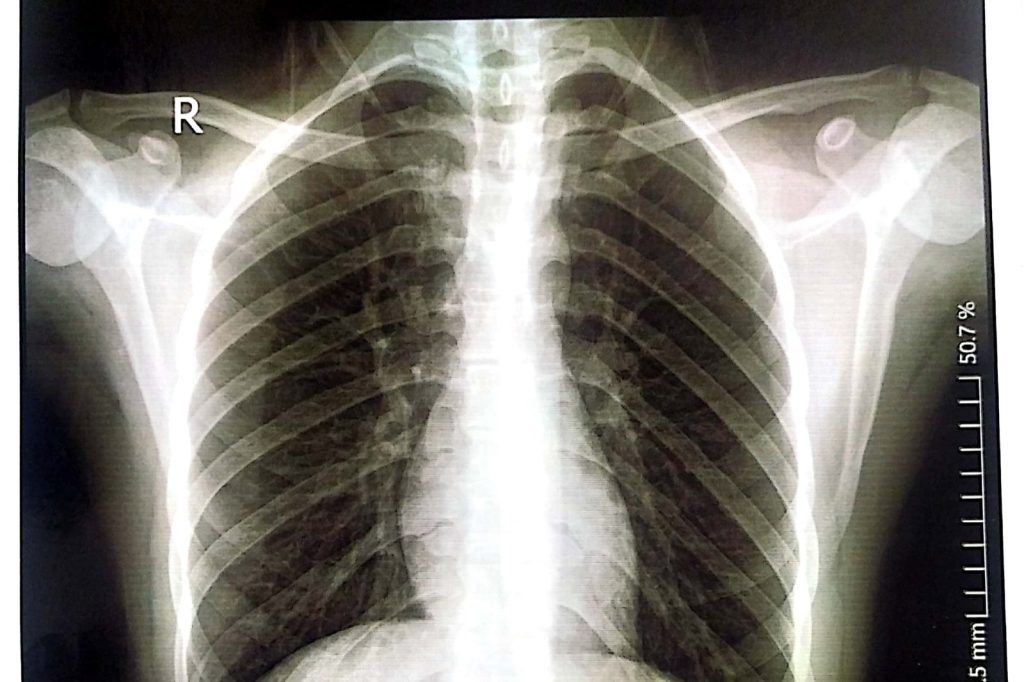
The scan was supposed to be a quick stop on the way to work. Samuel Mathias, then 22, ducked into an imaging clinic on his commute for a chest X-ray, expecting to be at his desk soon after. Staff looked at the images and asked him to sit down.
“They told me to leave work immediately and go straight to hospital because they’d found some very large spots in my lungs,” he told the Daily Mail.
Mathias, now 29, had just finished a finance degree and landed his first full-time job as a personal banker in Melbourne. He trained regularly and dreamed of becoming a boxing world champion. The faint ache in his chest, he assumed, was a strain from training or plain stress. “I had all these little niggling symptoms that didn’t really seem like a big deal,” he said. He felt it when he laughed too hard or breathed in too deeply.
Months of small warnings
Over the following months the signs piled up. A shoulder pain lingered, worse at night. Then he noticed an enlarged lymph node in his neck, and that is what finally sent him to his GP.
For a few months the doctors simply watched. His GP ordered an ultrasound, but at the scan he was asked how he felt. “I actually feel okay. I feel fit,” he told them, and he was told there was little to worry about. Doctors considered whether a lingering viral infection explained the swollen node.
Then came severe chest pain unlike anything before it. His mother pushed him to go back, and the doctor insisted on the X-ray.
Mathias was driven to hospital by his stepfather, and on the way he was handed the radiology report. It described “widespread metastatic disease that was indicative of an aggressive cancer.”
Three or four weeks without a name
Naming the disease took time. The cancer did not behave like anything doctors saw every day, and a biopsy of the neck node left the question open. Tissue samples were flown to Boston so one of the world’s leading sarcoma pathologists could examine them. “It took three or four weeks before the diagnosis really started coming together,” he said.
He got worse in the meantime. Playing soccer one day, he became badly short of breath, and at home he coughed up blood into the bathroom sink. “That really scared me.”
He had started on a general lung cancer team, was moved, and was moved again before he reached the sarcoma specialists at Peter MacCallum Cancer Centre. Each new piece of information, he said, seemed to be worse than the last.
The diagnosis was desmoplastic small round cell tumour, or DSRCT, an extremely rare and aggressive sarcoma with a five-year survival rate of 10 per cent. By then it had spread widely through his body.
His mother, he said, “has been my rock through the whole thing.” His friends, who knew he did not like talking about his problems, coaxed him to open up. “They just sat with me and listened. I don’t think I’ll ever forget that.”
Chemotherapy, surgery and a relapse
With so few standard options for a cancer this rare, he began intensive chemotherapy in early 2022 and stayed on it for two years. He went back to hospital every three weeks, and every second cycle meant five straight days as an inpatient.
In September 2022 surgeons performed a lung lobectomy, removing the upper half of his right lung. For about six or seven months afterwards his scans were clear. “It was a really beautiful period because I felt incredibly lucky,” he said.
That ended towards the close of 2023, when severe migraines and bouts of numbness set in. Scans found a brain metastasis roughly the size of a tennis ball. “The brain tumour was probably the hardest moment of the entire journey,” Mathias said. Emergency surgery followed within days and it worked. He was discharged on New Year’s Eve and watched the fireworks welcome 2024.
Next he joined a clinical trial of an mRNA cancer vaccine, with blood tests every one to two days. It held the disease in check for another eight months. Then the cancer adapted.
Paying for treatment himself
By that point every government-funded option had run out. Mathias started reading medical journals and talking to researchers, and he worked with his oncologists to pick therapies that had not yet become standard. “I almost took control of my own treatment plan in partnership with my doctors,” he said.
Several of those drugs were not available through Australia’s public system, because the cancer is too rare for large trials. The family had to pay. One targeted therapy cost about $20,000, and over the course of his illness they have spent more than $50,000 out of pocket.
“I’ve been incredibly lucky that my family has been able to support me,” he said. “But it’s really frustrating when you reach the end of the subsidised treatment options.”
Consult your doctor for medical advice.