
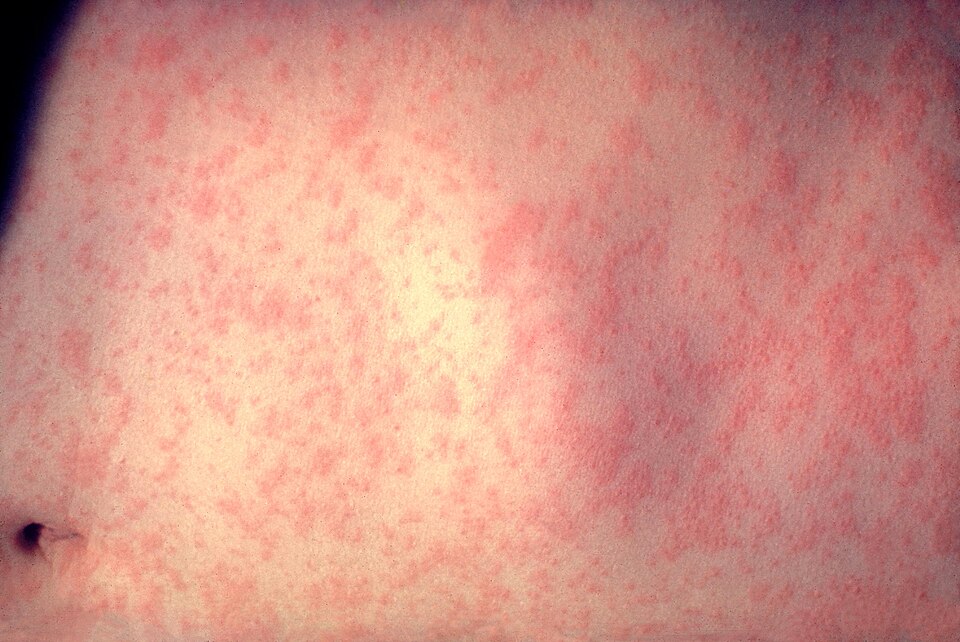
GENEVA, July 21 — In the corridors of global health agencies, a familiar concern has resurfaced. Measles, a disease whose very name derives from Middle Dutch and Middle High German words for ‘blemish’ and ‘blood blister’, is once again commanding attention as vaccination coverage slips and outbreaks multiply across continents. The wider picture is stark: a disease that once killed 2.6 million people in 1980 and still claimed 545,000 lives in 1990 has, against the backdrop of declining immunisation, begun to reverse decades of hard-won progress.
The measles virus is among the most transmissible pathogens known. A 2017 review found its reproductive number ranges from 3.7 to 203.3, meaning a single case can spark an explosive chain of infection.
Nine out of ten non-immune people sharing living space with an infected individual will contract the disease. Symptoms develop 10 to 12 days after exposure and last 7 to 10 days, beginning with a fever that often exceeds 40°C (104°F), a cough, a runny nose, and inflamed eyes. Within two to three days, Koplik spots — small white spots inside the mouth — appear.
Then, three to five days after symptoms start, a red, flat rash emerges on the face and spreads to the rest of the body. People are infectious from four days before the rash appears until four days after it begins.
Complications and Mortality
What is at stake is not merely a rash and a fever. Measles leads to complications in a significant proportion of cases: diarrhea affects 8% of patients, middle-ear infection 7%, and pneumonia 6%. Less common but more severe outcomes include seizures, blindness, and brain inflammation.
No specific antiviral treatment exists; care remains supportive — oral rehydration, fever control, antibiotics for secondary bacterial infections, and vitamin A for children under five. Mortality rates vary dramatically.
In the United States from 1985 to 1992, death occurred in 0.2% of cases. But in malnourished populations, mostly among children under five, that figure can rise to 10%.
The Vaccination Gap
The measles vaccine is safe and effective, and is often combined with other vaccines. It requires community vaccination rates above 95% to achieve herd immunity. For much of the early 21st century, that goal appeared within reach.
From 2000 to 2017, vaccination reduced global measles deaths by 80%. By 2017, about 85% of children worldwide had received a first dose.
Against this backdrop, deaths fell to 73,000 in 2014. But from 2017 onward, rates and deaths have increased as vaccination coverage declined. The disease now affects approximately 10 million people annually, primarily in Africa and Asia — the same regions where malnutrition amplified mortality in earlier decades.
International Repercussions
The United States has a history of measles outbreaks that have prompted foreign warnings, underscoring the international implications of resurgent disease. As vaccination rates dip in wealthier nations, travel and trade routes carry the virus across borders with speed. The wider picture is one of a disease that refuses to be consigned to history, and whose return carries consequences far beyond the immediate patient.
In the corridors of public-health ministries from Europe to the Americas, the question is no longer whether measles will resurge, but how far the resurgence will go — and whether the political will exists to close the vaccination gap before the numbers climb higher.




