
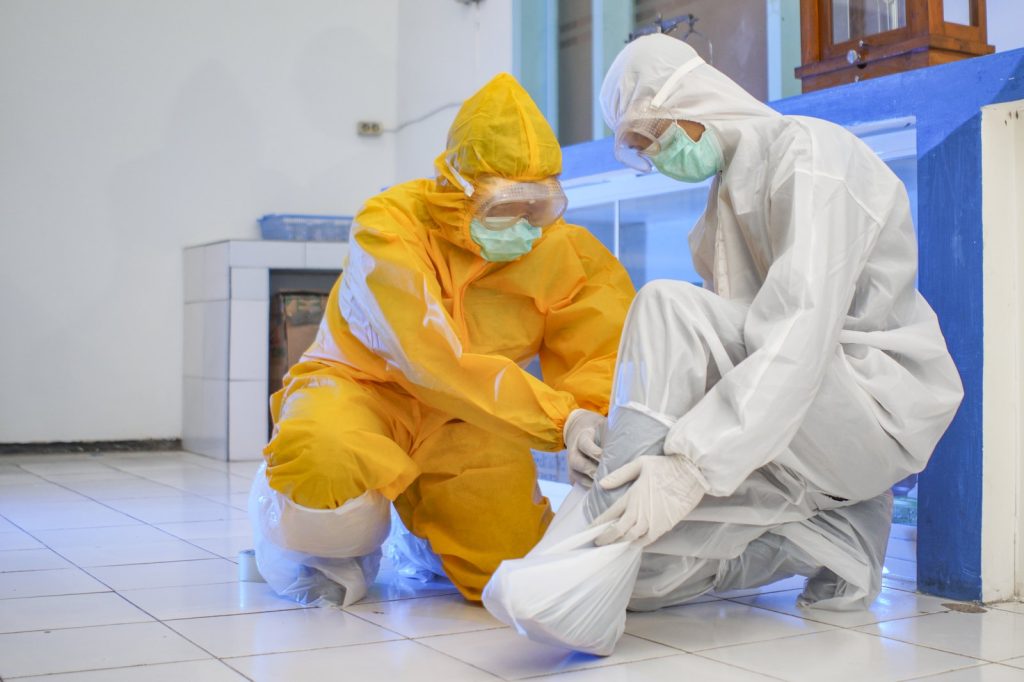
California ICU Doctor Shares Detailed PPE Donning and Doffing Guide Amid Shortages
On 8 April 2020, Dr. Ryan Seheult, a critical‑care physician working in California, posted a six‑minute instructional video on the MedCram YouTube channel that walks hospital staff through the correct way to put on and take off personal protective equipment while caring for COVID‑19 patients in the intensive care unit. The release came at a time when worldwide shortages of gowns, masks and face shields had left many front‑line workers vulnerable to exposure.
Seheult opens the tutorial with a clear reminder: every surface worn inside a COVID‑19 room must be considered contaminated. He tells viewers, “The hard part is after you’ve got in the room and done what you’re supposed to do and now you’re about to come out because you got to assume that the virus has landed in every part of your exterior surface.” Because SARS‑CoV‑2 can stay infectious on plastic and steel for as long as 72 hours, a single mistake while removing a gown or glove can transfer the virus to the hands, hair or face.
To minimise risk, the video separates the process into two distinct zones. A clean “donning” area is used for preparing before entering the unit, while a separate “doffing” bay contains a chair, a trash bin and a hand‑hygiene station. A strict one‑way flow is enforced so that nobody re‑enters the clean corridor while still wearing potentially contaminated gear.
The protective ensemble demonstrated by Seheult begins with an N95 respirator, the item in shortest supply. A surgical mask is placed over the respirator to keep it clean and prolong its usability. He stresses that the eye protection is not ordinary glasses but goggles that seal around the eyes. Next comes a disposable hair cover, followed by a fluid‑resistant gown and two pairs of gloves; some units, including his, also require shoe covers. Each piece is inspected for tears before use, and any defect means starting the process over.
The entire routine is performed in front of a mirror or with a buddy to catch any gaps. Once satisfied, the worker steps into a negative‑pressure room where air is drawn inward and filtered, preventing aerosol escape. Removal is carried out more slowly than donning. Seheult shows the glove‑to‑glove, gown‑to‑gown technique endorsed by the U.S. Centers for Disease Control and Prevention. The outer gloves are peeled off first, turning inside out. The gown is unzipped without a flapping motion, rolled away from the body and discarded. Goggles and the hair cover follow, with contact limited to clean surfaces. The inner gloves are removed last, again inverted, before immediate hand‑sanitising.
He adds a personal note: “For the first time this week, I have seen the eyes of the enemy. I am working in intensive care unit where I’m taking care of covid-19 patients and




