
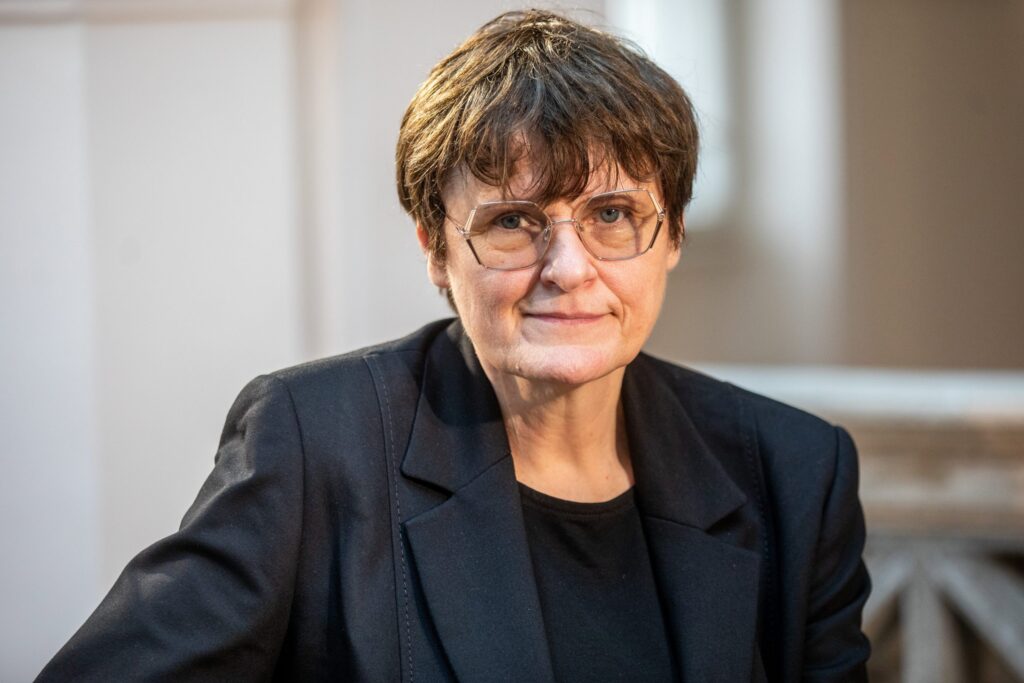
BUDAPEST, July 8 — On a quiet street in Szeged, the kind of place where a woman in a lab coat might walk home past the linden trees, a young Katalin Karikó once dreamed of rewriting the rules of medicine. By nightfall, the story of that dream is now part of the Nobel archive. Karikó, born in 1955, is the Hungarian-American biochemist who, working alongside Drew Weissman at the University of Pennsylvania, cracked a code that had stumped researchers for decades.
In 2005, the pair discovered that modifying messenger RNA with a nucleoside called pseudouridine dramatically reduced the inflammatory responses the body mounted against it. That single finding became the foundation for the mRNA COVID-19 vaccines developed by Pfizer-BioNTech and Moderna in 2020.
The road to that discovery was anything but smooth. Karikó faced years of funding rejections. Colleagues and grant reviewers told her the work was too risky, too far outside the mainstream.
She persisted. The scene in her lab, by all accounts, was one of relentless, quiet determination — a single scientist pushing against a current that told her she was wrong.
Karikó holds a PhD from the University of Szeged, her hometown institution in Hungary. From 2013 to 2022, she served as a senior vice president at BioNTech, the German biotechnology company that would go on to co-develop one of the world’s first authorized mRNA vaccines. On the ground in the scientific community, her trajectory is now held up as a case study in stubborn, evidence-driven hope.
In 2023, the Nobel Prize in Physiology or Medicine was awarded to Karikó and Weissman. The Nobel committee recognized their discoveries concerning nucleoside base modifications that enabled the development of effective mRNA vaccines. It was a moment that crowned a career built on a single, transformative insight — one that had been dismissed for years.
From a Hungarian lab to a global stage
Karikó’s journey began in Szeged, a university city in southern Hungary. She earned her PhD there, then moved to the United States for postdoctoral work. At the University of Pennsylvania, she met Weissman.
The two began collaborating on mRNA, a molecule that instructs cells to produce proteins. The problem was that the immune system treated unmodified mRNA as an invader, triggering dangerous inflammation.
Karikó and Weissman’s 2005 discovery — swapping out one nucleoside, uridine, for pseudouridine — solved that problem. The implications were vast. By 2020, when the SARS-CoV-2 virus began its global spread, the Karikó-Weissman platform was ready.
Pfizer-BioNTech and Moderna both used the modified mRNA technology to develop vaccines — a timeline that, before Karikó’s work, would have been considered impossible. Karikó has received numerous awards beyond the Nobel.
Her name is now a fixture in medical textbooks and on the lips of researchers who cite her work as the reason they entered the field. On the ground, in labs from Philadelphia to Budapest, her story is told as a lesson in resilience.
A legacy written in nucleosides
The Nobel Prize in 2023 was the capstone. But Karikó’s influence continues to ripple through the field of therapeutic mRNA. Researchers are now exploring its use in cancer treatments, rare genetic disorders, and even vaccines for other infectious diseases.
The mechanism she and Weissman unlocked — a single chemical tweak that turned a dangerous molecule into a therapeutic one — is now standard practice. By nightfall on July 8, 2026, the story of Katalin Karikó is no longer just about a vaccine.
It is about a woman who, faced with a wall of rejection, kept working. The scene in her lab, decades ago, was one of near-isolation. Today, it is a blueprint. Consult your doctor for medical advice.




