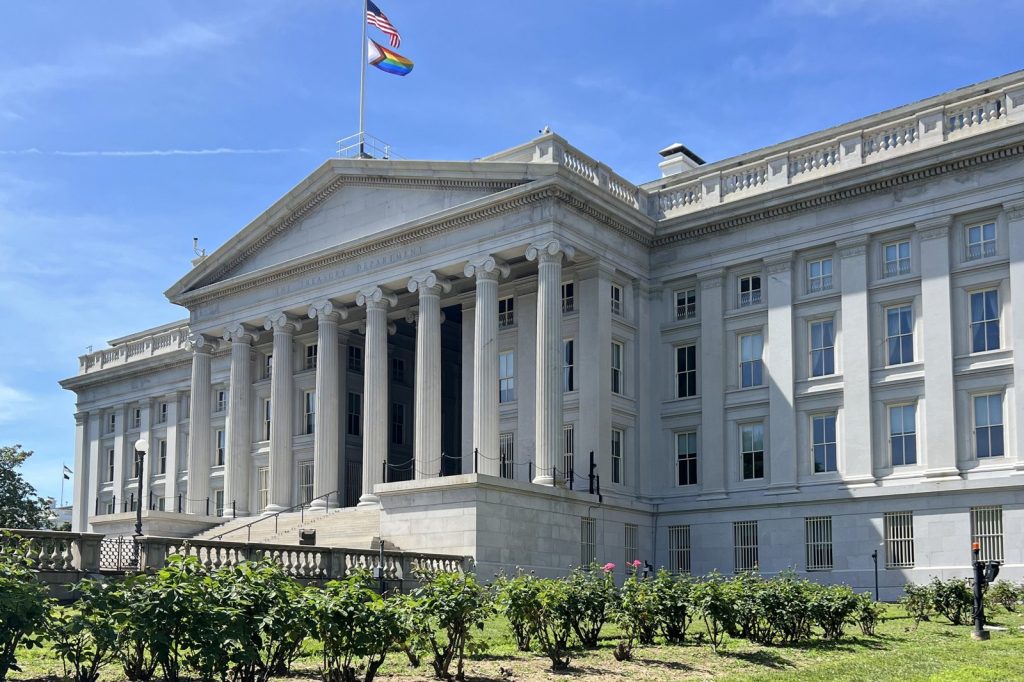
The Office of Financial Research began fiscal 2025 with 188 employees and by January had grown to 205. It ended the year with 109. Some 30% of staff took federal deferred-resignation offers, and natural attrition did the rest, according to the office’s own annual report.
That is the small Treasury bureau Congress created in the Dodd-Frank Act of 2010 to watch for the next crisis. It does not write rules. It collects and standardises financial data and analyses risk, mainly for the Council that coordinates top regulators and is chaired by the Treasury secretary. Its work covers things like the repo market, where it now collects transaction-level data from the non-centrally cleared segment, estimated at over $5 trillion in daily volume. It also runs the Hedge Fund Monitor and the Short-Term Funding Monitor.
A budget and a headcount in retreat
Its yearly budget shrank, from $124.6 million to $110.7 million. Principal deputy director James D. Martin called fiscal 2025 “a year of significant change”, and wrote that the office had “reduced our workforce to align with the administration’s goals.”
The administration’s fiscal 2026 budget proposal went further. It would cut staffing by more than 60%, taking it to 72 people from almost 200 on a full-time basis, and the budget of about $110 million would shrink by nearly 23%. Treasury said the aim was “maximum efficiency”. In a March 10 email, a Treasury human capital official warned staff that a “significant number of positions will be abolished” no later than May 15, Federal News Network reported.
This is not the first attempt. The House’s version of last year’s big tax-and-spending law would have squeezed the office’s budget, and a separate effort to close it outright, backed by Senator Tim Scott, who chairs the Senate Banking Committee, on the ground that it duplicated other agencies’ work, was thrown out by the Senate parliamentarian. During the first Trump administration the workforce fell to 152 from 210, and the budget dropped from a peak of $94.9 million in fiscal 2016 to $75.9 million two years later, GARP noted. No permanent director has won Senate confirmation since 2022.
The fight over what it is for
Critics have long accused the office of overreaching in collecting data from financial firms. Supporters point out that Dodd-Frank gave it explicit authority to do so, and that it has never suffered a data breach. Last June, dozens of former officials and academics, among them Ben Bernanke and Janet Yellen, signed a letter warning that eliminating the office “would undermine America’s capacity to maintain a stable financial system.”
Senator Jack Reed, who backed the Dodd-Frank language that created the office, said it is fee-funded and “doesn’t cost taxpayers a dime”, and accused Treasury Secretary Scott Bessent of dismantling “the early warning system for financial crises.” Senator Elizabeth Warren said the administration was “gutting the office designed to evaluate financial risks.”
Bill Foster, the Illinois Democrat, filed a bill in January to put a floor under the office’s and the council’s budgets and headcounts.
Sources
- Treasury prepares RIF for office created to avoid financial crisis (Federal News Network)
- U.S. Treasury's Office of Financial Research Faces Cuts (GARP)
- About Us – Office of Financial Research (OFR)