
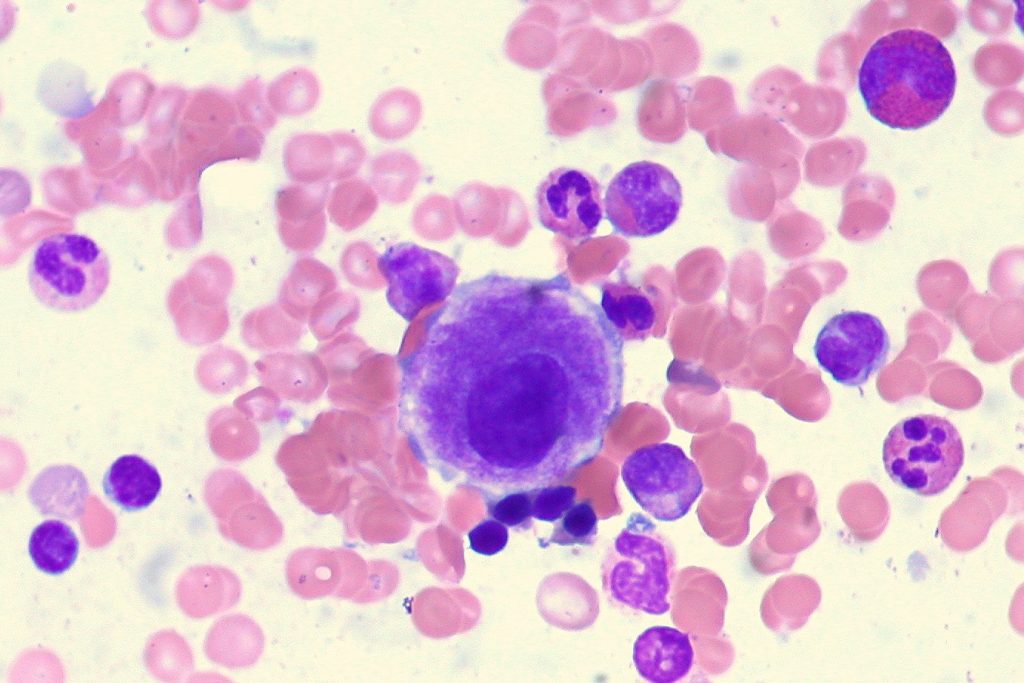
For people with lower-risk myelodysplastic syndromes who depend on blood transfusions, the options had been thin. In early June 2024 the US Food and Drug Administration added one: imetelstat, sold as Rytelo by Geron, the first telomerase inhibitor to win approval. CURE and Pharmacy Times reported it on June 7.
The label covers adults with low- to intermediate-1 risk MDS and transfusion-dependent anemia, meaning they need at least four units of red blood cells within eight weeks. They must also have failed on, stopped responding to, or be unable to take erythropoiesis-stimulating agents.
How it works
Telomeres are protective caps on the ends of chromosomes, and they shrink every time a cell divides. In these patients abnormal bone marrow cells often make telomerase, which rebuilds the caps and lets the cells keep dividing. Imetelstat blocks that enzyme.
The IMerge results
The FDA relied on IMerge, a phase 3 trial of 178 patients who received either Rytelo or placebo by infusion into a vein, in 28-day cycles. The Lancet published the findings. Median follow-up ran 19.5 months for the drug group and 17.5 months for placebo.
Transfusion independence of at least eight weeks was reached by 39.8% of those on imetelstat and 15% on placebo. For at least 24 weeks the figures were 28% and 3.3%. The benefit lasted: median transfusion independence was about 1 year in eight-week responders and 1.5 years in 24-week responders. Among those who reached eight weeks, median hemoglobin rose by 3.6 g/dL on imetelstat and 0.8 g/dL on placebo.
“For patients with lower-risk MDS and anemia who are transfusion dependent, we have very few options today and often cycle through available therapies,” said Dr. Rami Komrokji of Moffitt Cancer Center, an IMerge investigator. He called the approval “potentially practice changing.”
Safety and dosing
Lab changes dominated the side effects: lower platelets, white blood cells and neutrophils, and higher liver enzymes (aspartate aminotransferase, alkaline phosphatase and alanine aminotransferase). Patients also reported fatigue, joint and muscle pain, headache and COVID-19 infections. Dosing is 7.1 milligrams per kilogram of body weight, delivered over two hours once every four weeks.
Sources
- FDA Approves Rytelo for Some With Low- to Intermediate-1-risk MDS (CURE)
- FDA Approves Imetelstat for Lower-Risk Myelodysplastic Syndromes With Transfusion-Dependent Anemia (Pharmacy Times)




