
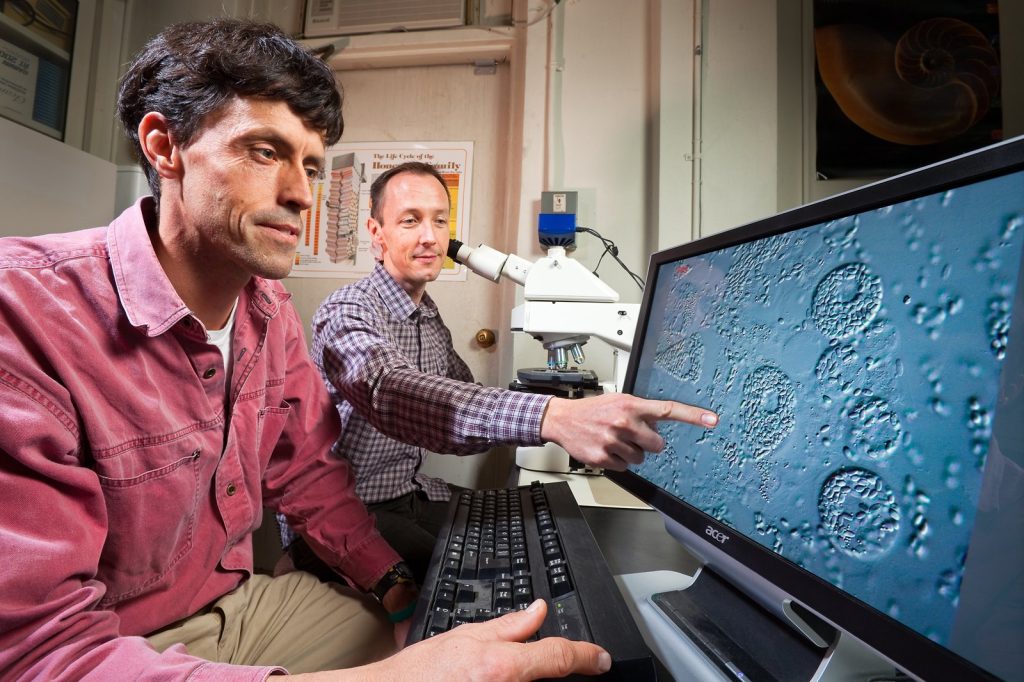
LIMA, July 20 — On the laboratory benches of Cayetano Heredia University, a parasite no bigger than a speck of dust first got its name. Cyclospora cayetanensis, the protozoan that causes cyclosporiasis, has since turned up in imported produce — and in the stools of travelers returning from tropical countries. What was virtually unknown in developed nations just a few decades ago is now a recognized foodborne threat.
A Parasite Hidden in Plain Sight
The first published report came in 1979, when R.W. Ashford found unidentified Isospora-like coccidia in three people in Papua New Guinea. A few years later, Miles Markus sensed it was a coccidian but never published.
By 1989, researchers in Peru had spotted the same organism in chronic diarrhea patients and called it Cryptosporidium muris–like. Other investigators, seeing unsporulated oocysts, thought they resembled cyanobacteria — hence the interim label “cyanobacterium-like body.” The species name finally came from Cayetano Heredia University in Lima, where early taxonomic work was done.
Under a microscope, the spherical oocysts measure 7.5–10 μm across. A 50-nm-thick wall surrounds them, and an outer thread-like coat. The internal formula is O.2.2: each oocyst holds two sporocysts, each with two sporozoites.
Humans are the only confirmed host, and the parasite lives inside epithelial cells of the small intestine, particularly the jejunum. An incubation period of about one week passes before symptoms appear.
A study of nine patients in Nepal diagnosed with cyclosporiasis found inflammation of the lamina propria and increased plasma in that layer, with oocysts visible in duodenal aspirates. The picture is one of watery diarrhea, sometimes prolonged, hitting travelers and locals alike in endemic tropical countries.
The Cycle of Infection
Transmission is fecal-oral — a person ingests oocysts in contaminated food or water. Once inside the gut, the oocysts excyst, releasing sporozoites that invade intestinal epithelial cells and begin merogony, an asexual reproduction that produces merozoites. Those merozoites can either keep dividing or differentiate into male and female gamonts.
Fertilization then forms new oocysts, which are excreted in stool. Freshly excreted oocysts are not immediately infectious.
Sporulation — the process that makes them capable of causing infection — takes anywhere from one to several weeks. That makes person-to-person transmission unlikely. It is a key difference from Cryptosporidium parvum, whose oocysts are infectious the moment they leave the body.
Detection and Outbreaks
The parasite’s small size and the delay in infectivity create real detection challenges. Standard lab tests often miss it. Modified acid-fast staining, a specialized microscopy technique, is required.
Because the oocysts are not immediately infectious, culturing the organism is difficult, and molecular tests like PCR can be complicated. In developed countries, cyclosporiasis has emerged almost exclusively as a foodborne illness linked to imported produce.
Fecally contaminated raspberries, basil and snow peas have all been implicated in past outbreaks. The parasite is now endemic in tropical countries and also causes travelers’ diarrhea in visitors from temperate zones.
Global Implications
For international food supply chains, Cyclospora cayetanensis remains a stubborn problem. Produce grown in regions where sanitation is poor can carry oocysts into American and European kitchens. Because detection is not routine, contaminated shipments can slip through.
The parasite’s ability to survive for weeks before becoming infectious means it can travel long distances before causing harm — and by the time patients fall ill, the source produce may already have been eaten or discarded. Moving forward, health authorities continue to refine testing protocols and urge vigilance on imported fresh produce.
The parasite that first surfaced in Papua New Guinea and was named in a Lima university now has a global reach — and a place on the list of foodborne pathogens that require constant watch.




