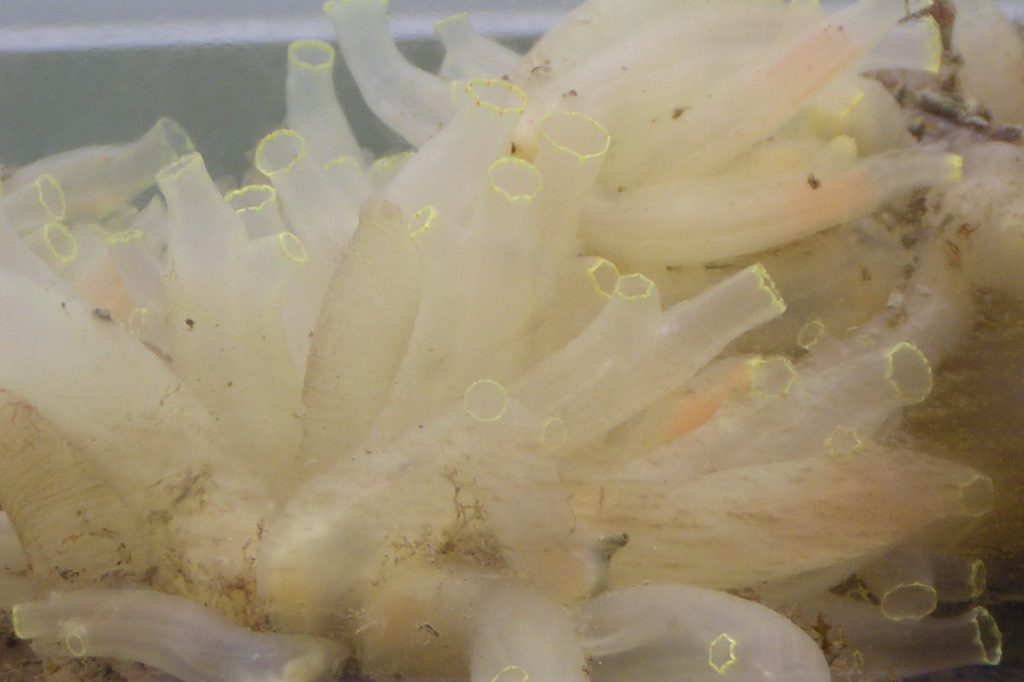
Bill Baker has a math problem. The University of South Florida chemist says a basketball-size collection of Antarctic sea squirts yields about one-thousandth of the melanoma-killing compound his team needs for the next round of tests.
“You need hundreds of milligrams to grams of this metabolite,” Baker said. Collecting 1,000 basketballs’ worth is out of the question. “That would destroy the ecology,” he said, “so one of the things we have to do is figure out how to make this stuff in the lab.”
The compound comes from ascidians, invertebrates better known as sea squirts. Baker said the animals make toxins to protect themselves from predators, and that those toxins can be “repurposed.” Research from his team has shown the compound killed melanoma cells in mice. “The good news is it didn’t kill the mice,” he said. “It did kill their cancer, so we know it has the physiological properties to act like a drug.”
That is a real result with a clear limit. It happened in mice. Baker acknowledged that the road to a safe, approved anti-melanoma drug is long, and that it would take a series of strictly regulated trials of growing size even after a drug is formulated.
An expedition with a purpose
Teams from USF, the Desert Research Institute and the Scripps Institution of Oceanography came back from a six-week expedition to Antarctica with samples. Divers worked at depths of up to 130 feet for roughly half an hour per dive. The National Science Foundation funded the trip.
Ben Meister, a USF diving safety officer on the expedition, said water temperature was only one problem. “In Antarctica, you’re dealing with ice, leopard seals, changing seas and sometimes very limited visibility,” he said. “Every dive must be carefully planned to balance getting the work done while keeping everyone safe.”
What the team learned in the field may speed things up. Baker said the expedition improved their understanding of how the melanoma-killing bacterium lives inside the sea squirt and how the two relate. The work moves into laboratories now, partly through partnerships with the Desert Research Institute and Scripps. Baker said the researchers came home “exhausted” but eager for the lab stage.
Marine life has a record here. Baker, who began working in marine biology and chemistry in 1990, said more than half of Food and Drug Administration-approved drugs come from natural sources. He pointed to metabolites his group found in sponges, corals and tunicates.
Related research
An evidence review published by Consensus said other studies have found marine peptides, toxins and metabolites that kill melanoma cells while sparing healthy tissue. It also noted the same obstacles Baker described: sourcing enough material, ecological sustainability, and the need for thorough safety testing before human trials.
Sources
- Tiny Antarctic sea creature could be key to treating melanoma, researchers say
- Research finds bacterial toxins from Antarctic sea creature effectively kill melanoma cells in mice — Evidence Review