
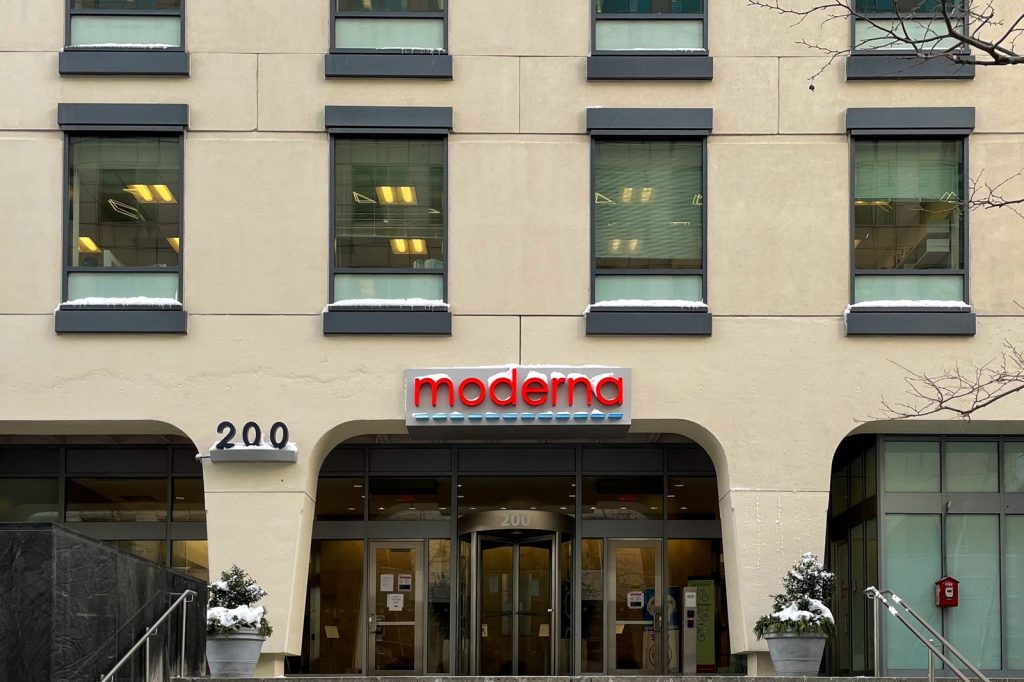
Merck and Moderna announced on 19 August 2026 that their personalized mRNA cancer vaccine, intismeran autogene, has succeeded in its first Phase 3 trial in melanoma. The study, called INTerpath-001, met its primary endpoint of recurrence-free survival (RFS) and its key secondary endpoint of distant-metastasis-free survival (DMFS), according to the companies’ top-line results. Both endpoints were described as statistically significant and clinically meaningful.
The announcement marks the first time an individualized neoantigen therapy of this kind has cleared a Phase 3 test in melanoma, a disease where recurrence after surgery remains a persistent concern for patients with higher-risk disease.
What the trial tested
INTerpath-001 (NCT05933577) is a randomized, double-blind, global Phase 3 study. It enrolled 1,137 patients with completely resected stage IIB to IV cutaneous melanoma who had received no prior systemic therapy. Participants were randomized 2:1.
In the first arm, 758 patients received intismeran at a 1 mg dose every three weeks for up to nine doses, alongside pembrolizumab (brand name KEYTRUDA) at 400 mg every six weeks for approximately one year. Pembrolizumab is an anti-PD-1 immunotherapy, a type of checkpoint inhibitor. In the second arm, 379 patients received pembrolizumab alone.
The primary endpoint was recurrence-free survival. Distant-metastasis-free survival served as the key secondary endpoint. Overall survival data remain under follow-up and are not yet known.
How the therapy works
Intismeran autogene — also known as intismeran, V940, or mRNA-4157 — is an mRNA-based individualized neoantigen therapy. It is built around each patient’s own tumor. Surgeons remove the tumor, scientists sequence it to identify the unique mutations it carries, and then a bespoke mRNA therapy is manufactured that encodes up to 34 neoantigens matched to those mutations.
The approach functions something like a personalized wanted poster. By presenting a patient’s specific cancer markers to the immune system, the therapy aims to train the body to recognize and act against that patient’s cancer cells. It is given in combination with pembrolizumab, which works by helping the immune system attack tumors.
Safety findings
The safety profile in the Phase 3 trial was consistent with what earlier studies had shown, and no new safety signals emerged, according to the companies. Most reported side effects were grade 1 or 2, including injection-site reactions, fatigue, and chills.
Grade 3 immune-related adverse events occurred in 10.6% of patients in the combination arm, compared with 12% of those who received pembrolizumab alone.
Investigator reaction and earlier data
Prof Georgina Long of the Melanoma Institute Australia called the result a “landmark moment for adjuvant melanoma treatment,” describing it as the “first Phase 3 study to show that intismeran… can reduce the risk of recurrence or death.”
The Phase 3 announcement follows an earlier, smaller Phase 2b study known as KEYNOTE-942, which enrolled 157 patients with stage IIIB to IV melanoma. Those Phase 2b findings, which must be distinguished from the new Phase 3 results, reported an RFS hazard ratio of 0.51 — roughly a 49% reduction in the risk of recurrence or death — and a DMFS hazard ratio of 0.411, about a 59% reduction in the risk of distant metastasis or death. The Phase 3 trial was designed to test the approach in a much larger population.
What comes next
The companies characterized the 19 August announcement as top-line results only. Detailed data from INTerpath-001 are slated for presentation at an upcoming medical meeting, and engagement with regulators regarding a filing is already underway.
Beyond melanoma, intismeran is being evaluated in nine additional Phase 2 and Phase 3 trials. Those studies span non-small cell lung cancer, bladder cancer, renal cell carcinoma (kidney cancer), pancreatic adenocarcinoma, and perioperative settings, where treatment is given around the time of surgery.
An important caveat
Several limits frame this news. These are top-line Phase 3 results, not the full dataset; the detailed numbers have not yet been presented or peer-reviewed at a medical meeting. Overall survival — whether the combination helps patients live longer — is still being followed and is not yet known. Intismeran autogene remains an investigational therapy. It has not been approved by any regulatory agency, and it is not available outside of clinical trials. Patients with melanoma should discuss their own situation, treatment options, and any questions about this research with their own doctor rather than drawing conclusions from headline results.




