
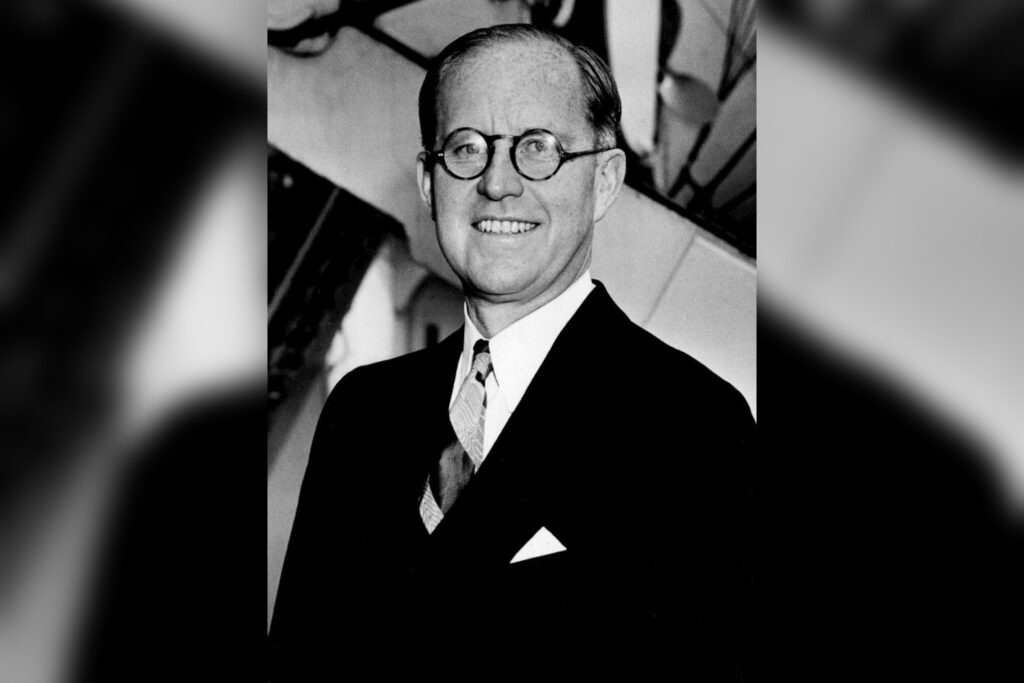
BOSTON, September 23 — Joseph P. Kennedy Sr. started putting money into irrevocable trusts for his children around 1926, before any of them could vote, with more structures reportedly added in 1936 and 1949. Those dates come from the family’s own biographers and public estate records, and they are repeated so often they have hardened into fact.
On closer reading, they are the traditional account, not gospel. The vehicle itself is not in dispute.
It was a garden-variety irrevocable trust — the same document a local estate attorney drafts every week.
The word that does the work
Irrevocable. When the grantor signs, ownership and control of the assets are gone. The trust cannot be amended to claw assets back, and the trustee cannot be fired over a distribution disagreement.
In exchange for that surrender, the assets leave the grantor’s taxable estate and are generally out of reach of future creditors. It is a trade, not a loophole.
Families who want the tax and creditor benefits without actually letting go are the same families who watch the IRS or a divorce court unwind the structure years later. Kennedy’s trusts survived scandals, divorces, lawsuits and political enemies for a specific reason. They combined four ordinary drafting features that remain standard today.
First, the spendthrift provision: a beneficiary cannot pledge, sell or assign their interest, and most creditors, including a divorcing spouse, cannot force distributions, so one heir’s bankruptcy does not drain the family pool. Second, the split between income and principal: a beneficiary can be supported for life from what the trust earns, while the corpus — the actual pile of assets — is never handed over.
Third, trustee discretion: when distributions are discretionary rather than mandatory, a creditor generally cannot compel payment, because the beneficiary does not have a fixed right to any specific dollar. Mandatory distributions gut that protection. Fourth, successive interests: assets pass from one generation to the next under the trust’s terms, not through any beneficiary’s will, so they never enter a child’s or grandchild’s taxable estate.
Congress closes the door
Kennedy’s original arrangements predated the modern generation-skipping transfer tax. Congress enacted the GST regime specifically to stop the multi-generation skip his trusts pulled off. Today, transfers that skip a generation are taxed at the top estate rate unless covered by the GST exemption under IRC §2631, which by statute equals the basic estate and gift tax exclusion amount.
For 2026, that exclusion is $15,000,000 per person, up from $13,990,000 in 2025, and the One Big Beautiful Bill made the higher amount permanent rather than letting it sunset. The annual gift exclusion for 2026 is $19,000 per recipient.
Those exemptions are what make a version of the Kennedy structure available to ordinary families now.
The costs are real too
At ordinary wealth levels, an irrevocable trust does three real things: it shields assets from a beneficiary’s creditors and divorce; it lets the grantor control the timing and conditions of distributions rather than dropping a lump sum on a 21-year-old; and, subject to Medicaid lookback rules that vary by state and must be verified with counsel, it can figure into long-term care planning. The catch is on the other side of the ledger. Expect legal fees to draft and ongoing trustee administration.
Trust income taxation is heavily compressed, reaching the top 37% federal bracket at just a few thousand dollars of retained income, so undistributed income gets punished fast. Assets moved into an irrevocable trust generally lose the step-up in cost basis at death, which can create a bigger capital gains bill than the estate tax avoided.
And the decision is permanent. If net worth is below the $15,000,000 federal exemption, an irrevocable trust is solving a tax problem the family does not have. Five generations of Kennedy heirs still live on the structures today.
Watch the exemption figures and the state-level Medicaid lookback rules — those are the moving parts that decide whether the mechanics still work for anyone outside the family.




