
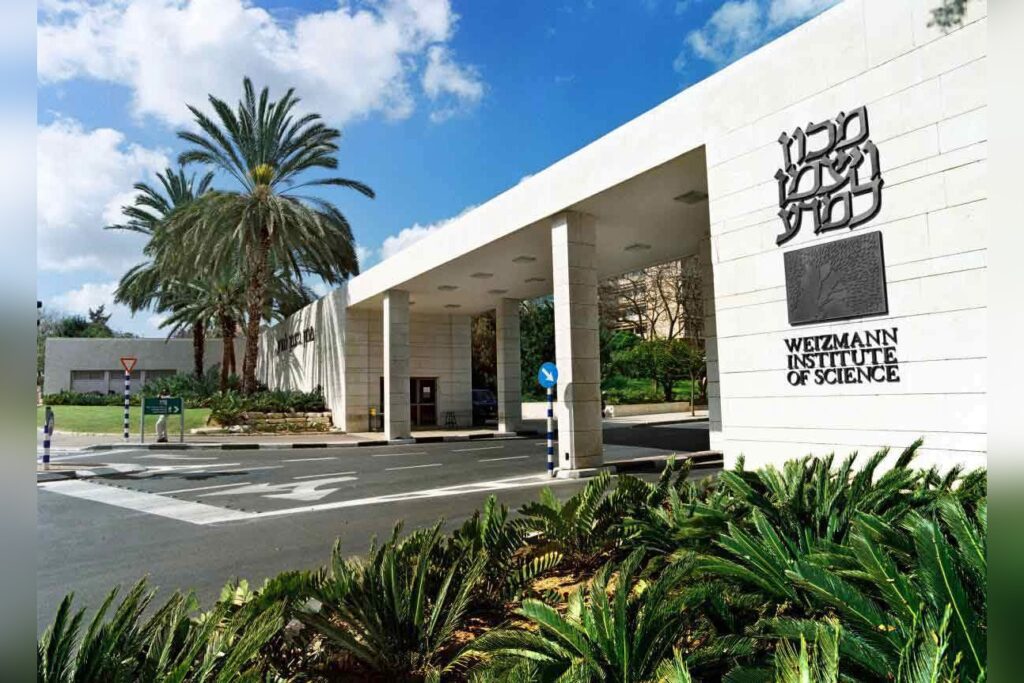
REHOVOT, July 14 — A quiet revolution in cancer care began in a single laboratory in Israel nearly four decades ago. Today, the work of Professor Zelig Eshhar stands as one of the most significant breakthroughs in modern oncology, touching the lives of thousands of patients across the globe. Eshhar, an immunologist at the Weizmann Institute of Science in Rehovot, first described the chimeric antigen receptor, or CAR, in 1989.
Published in the Journal of Immunology, his paper outlined a novel design: combining an antibody’s antigen-binding domain with a T-cell receptor’s signaling domain. It was a simple but powerful idea — re-engineering the body’s own immune soldiers to recognise and attack cancer.
The concept took years to prove. In 1993, Eshhar and his team demonstrated that CAR-T cells could kill cancer cells in a laboratory dish. Yet the scientific community was not immediately convinced.
Many researchers were skeptical about whether such a complex approach could ever work in real patients. Eshhar persisted, refining the technology even as funding and interest wavered.
From Tel Aviv to the world stage
Born in Tel Aviv in 1941, Eshhar earned his Ph.D. from the Weizmann Institute in 1971. He then spent time at the University of California, San Francisco for postdoctoral research before returning to Israel to join the Weizmann faculty in 1975. His career has been rooted in the institution ever since, where he remains active in research as of 2024.
His focus today is on improving CAR design — making the therapy more effective, safer, and accessible. The clinical validation that eluded him in the 1990s finally arrived in the 2010s.
CAR-T cell therapy has now been approved by regulators in multiple countries. Six therapies have received FDA approval in the United States. More than 10,000 patients worldwide have been treated, many of them with blood cancers that had resisted all other treatments.
For communities across Asia, this matters deeply. Blood cancers such as leukemia and lymphoma affect families from Manila to Mumbai, from Jakarta to Tokyo.
CAR-T therapy offers a treatment option where none existed before. While the therapy remains expensive and logistically complex — requiring the extraction, genetic modification, and reinfusion of a patient’s own T-cells — researchers are working to bring down costs and simplify the process.
Recognition and legacy
Eshhar’s contributions have been widely honored. He received the Israel Prize for Life Sciences in 2018, and in 2020 he shared the Wolf Prize in Medicine with Carl June and Steven Rosenberg — two pioneers who helped translate the CAR concept into clinical practice. These awards reflect the journey from a skeptical reception to a Nobel-caliber achievement.
Closer to home, for families across the region who have watched a loved one battle cancer, Eshhar’s story is a reminder that scientific progress often comes from unexpected places. A single paper from 1989, born in a modest Israeli lab, has changed the course of cancer treatment for tens of thousands of people.
As of 2024, the work continues. Eshhar remains at the Weizmann Institute, pushing the boundaries of what CAR-T cells can do. Researchers around the world are now exploring applications beyond blood cancers — targeting solid tumors, reducing side effects, and engineering “off-the-shelf” therapies that could be used without customizing cells for each patient.
The road from a laboratory curiosity to a standard treatment took more than three decades. For the patients who have been helped, and for the many more who may be helped in the years ahead, it was a journey worth taking. Consult your doctor for medical advice.




