
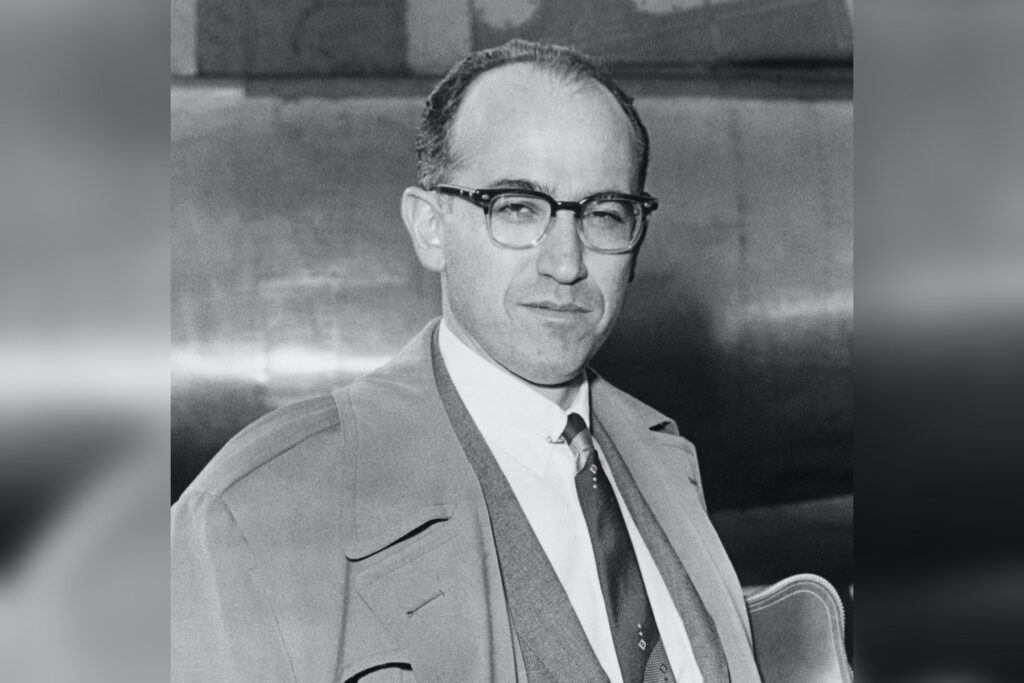
WASHINGTON, July 14 — The geopolitical chessboard of global health has few moves as decisive as the one Jonas Salk made in 1955. The American virologist’s development of the first effective polio vaccine stands as a strategic victory in the long war against infectious disease, a campaign that continues to shape international relations and public health policy today. The calculus of that era was grim.
Polio had inflicted up to 35,000 cases annually in the United States during the 1940s and 1950s, a recurring crisis that struck American families with brutal regularity. Salk’s inactivated polio vaccine, or IPV, was declared safe and effective on April 12, 1955, following a field trial involving 1.8 million children.
What this signaled was a turning point: by 1961, U.S. polio cases had been reduced by 96 percent. Yet the broader stakes of polio eradication extended beyond one vaccine. Albert Sabin developed an oral polio vaccine, OPV, in 1961, which became the global standard.
The shift from IPV to OPV was itself a strategic calculation — the oral vaccine was easier to administer, cheaper to produce, and could be deployed in mass campaigns across developing nations. This was not merely a medical decision; it was a logistical and geopolitical one.
The Global Polio Eradication Initiative, launched in 1988, represents one of the most ambitious coordinated health campaigns in history. The initiative reduced polio cases by 99.9 percent. As of 2023, only two countries — Afghanistan and Pakistan — still reported wild polio.
That narrowing of the battlefield is a testament to sustained international pressure and public health infrastructure, but it also reveals the stubborn resistance that remains.
The Strategic Legacy of a Vaccine
Salk’s achievement was not just scientific; it was foundational to how nations now approach disease control. The polio vaccine became a template for global immunization campaigns, demonstrating that a coordinated effort could push a disease to the brink of extinction. The broader stakes are clear: when a vaccine works, it alters the strategic balance between humanity and its microbial adversaries.
For the United States, the polio story carries particular weight. The 1955 field trial involving 1.8 million children was one of the largest public health experiments ever conducted.
It required federal coordination, state-level logistics, and the trust of millions of American families. That trust, once earned, became a strategic asset in subsequent public health campaigns.
What This Signals for the Future
The polio eradication effort, while not yet complete, signals what is possible when scientific innovation meets political will. The 99.9 percent reduction in cases since 1988 is a figure that commands attention. It suggests that even the most entrenched diseases can be cornered, though the final push requires continued vigilance.
The two remaining endemic countries — Afghanistan and Pakistan — present unique challenges. Conflict, population movement, and vaccine hesitancy have all complicated eradication efforts.
Strategically, the final phase of polio eradication is as much about diplomacy and security as it is about medicine. Consult your doctor for medical advice.




