
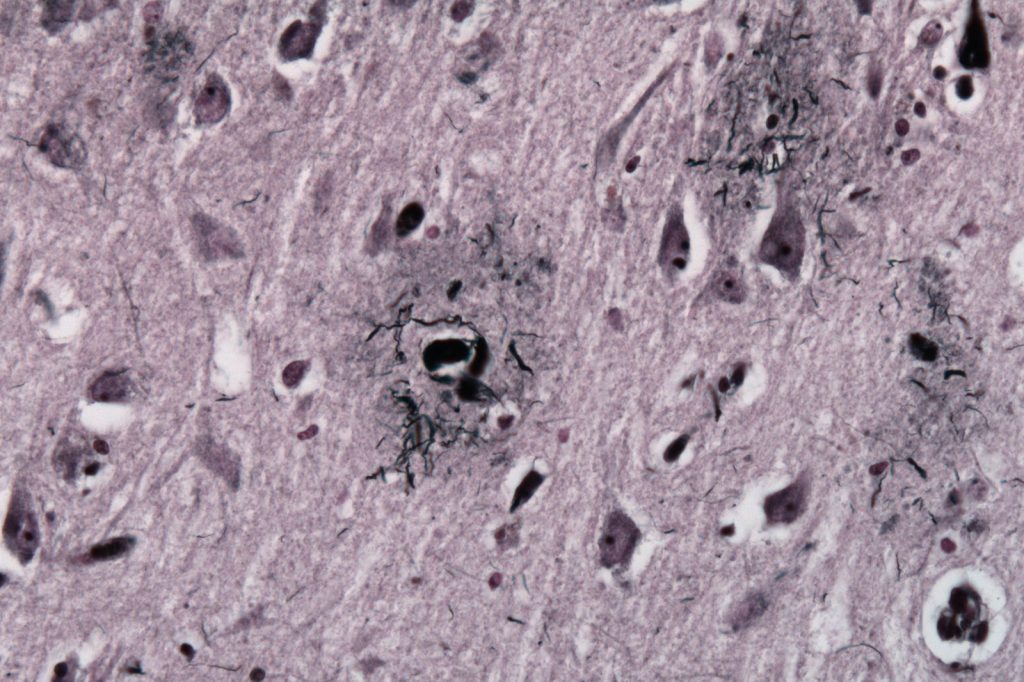
ISLAMABAD, July 14 — A decades-old theory about what drives Alzheimer’s disease has received its strongest clinical validation to date, as new evidence continues to reshape how scientists understand the condition. The amyloid hypothesis, first formally proposed in 1991 by researchers John Hardy and David Allsop, argues that the accumulation of amyloid beta peptides in the brain is the primary trigger of Alzheimer’s pathology. These peptides are derived from amyloid precursor protein, or APP, through a two-step cleavage process involving enzymes known as beta-secretase (BACE1) and gamma-secretase.
Once formed, amyloid beta peptides aggregate into soluble oligomers and then into insoluble fibrils. These fibrils accumulate into senile plaques, which have long been recognised as a hallmark of Alzheimer’s disease in post-mortem brain tissue.
The hypothesis gained early support from genetic studies showing that mutations in the APP gene on chromosome 21, as well as in the presenilin 1 (PSEN1) and presenilin 2 (PSEN2) genes, cause early-onset familial Alzheimer’s disease. These inherited forms account for less than 5% of all Alzheimer’s cases. Additional evidence came from Down syndrome, caused by trisomy 21, which leads to APP overexpression and early Alzheimer’s pathology.
A hypothesis tested and refined
For years, the amyloid hypothesis faced serious criticism. Many clinical trials of anti-amyloid drugs failed to show cognitive benefit. Notable among these were trials of solanezumab, developed by Eli Lilly, and bapineuzumab, developed by Pfizer and Johnson & Johnson.
These failures led researchers to refine the original ‘amyloid cascade hypothesis,’ shifting the focus from plaques to soluble oligomers as the more toxic species. The encouraging part is that the hypothesis has now been revitalised.
The success of lecanemab, a drug that targets protofibrils — an intermediate form of amyloid beta — has provided the strongest clinical evidence to date for the role of amyloid in Alzheimer’s progression.
What this means for patients
While the science is complex, the practical implications are becoming clearer. For the first time, a therapy that directly addresses the underlying biology of Alzheimer’s has shown meaningful results in clinical trials. This does not mean a cure is at hand, but it does represent a significant step forward.
The evidence base continues to grow, and researchers are now working to understand which patients benefit most and at what stage of the disease treatment should begin. For families affected by Alzheimer’s, particularly those with a history of early-onset disease linked to genetic mutations, these developments offer a reason for cautious optimism. Consult your doctor for medical advice.




