
The World Health Organization’s global vaccination campaign, launched in 1967, stands as one of the most ambitious public health undertakings in history. Health workers reached remote villages, crossed conflict zones, and coordinated efforts across continents to stop a disease that had killed hundreds of millions.
That campaign succeeded in 1980, when the World Health Assembly declared smallpox eradicated — the only human disease ever wiped out by deliberate action. Yet the foundation for that triumph was laid more than 180 years earlier by an English physician who noticed something curious about milkmaids.
From Milkmaids to a Medical Revolution
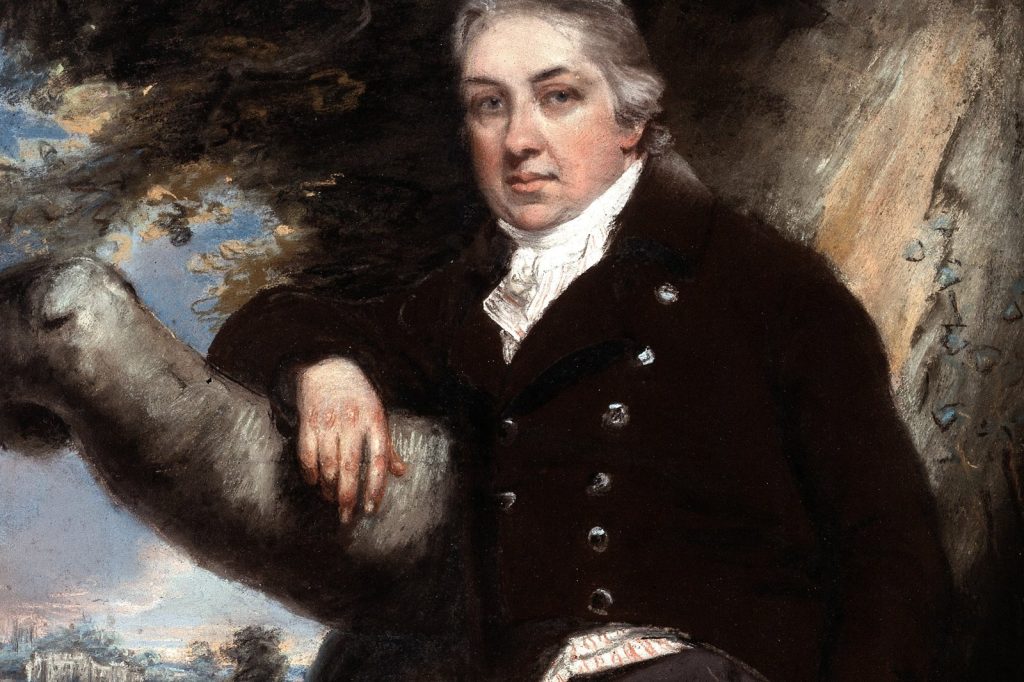
Edward Jenner, born in 1749 in Gloucestershire, trained as a surgeon under Daniel Ludlow and later studied in London under John Hunter. He himself had undergone variolation — an older practice that involved deliberately infecting a person with material from a smallpox sore. While variolation offered some protection, it carried a high risk of causing severe illness or death.
After years of general practice, Jenner earned his medical degree from the University of St Andrews. Jenner’s breakthrough came from a simple observation: milkmaids who had contracted cowpox, a mild infection caught from cows, seemed immune to smallpox.
In 1796, he tested his theory on eight-year-old James Phipps. Jenner inoculated the boy with material from a cowpox sore and later exposed him to smallpox. Phipps did not develop the disease.
It was a rigorous experiment that changed medicine forever. Jenner published his findings in 1798 in a work titled “An Inquiry into the Causes and Effects of the Variolae Vaccinae.” The term “vaccine” derives from “vacca,” the Latin word for cow, a direct reference to his use of cowpox.
His method was safer than variolation because it used a related but much milder virus to trigger the body’s defenses without the deadly consequences of smallpox. This work established the field of immunology and provided the blueprint for all future vaccines.
A Scourge That Haunted Generations
Smallpox was not just another illness. In the 20th century alone, it killed an estimated 300 to 500 million people.
For communities across Asia, where the disease was endemic for centuries, the toll was staggering. Families lost parents, children, entire villages. The death rate was even higher in crowded towns and cities, where the virus spread rapidly.
The World Health Organization’s vaccination campaign from 1967 onward specifically targeted these regions. For families in the Philippines, India, Indonesia, and beyond, the effort meant that a scourge that had haunted generations could finally be stopped.
By 1980, the World Health Assembly declared smallpox eradicated worldwide. Jenner’s legacy extends far beyond that single experiment. He became a member of the Royal Society and studied the behavior of cuckoos.
He served as mayor of Berkeley and as a physician to King George IV. For people across Asia and around the world, Jenner’s story is not just a history lesson.
It is a reminder that a simple observation — a doctor watching milkmaids who did not get sick — can spark a revolution that saves hundreds of millions of lives. Consult your doctor for medical advice.




