
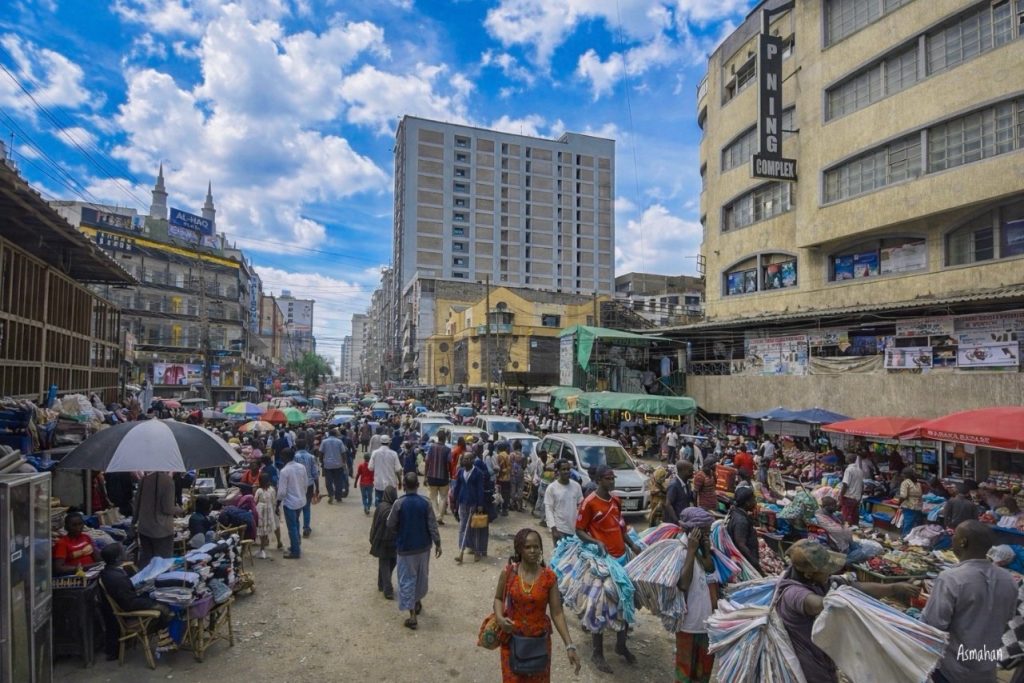
For millions of Kenyan families, the money that arrives from abroad is not a luxury. It buys food, covers school fees, pays rent. When that flow shrinks, the math at home gets brutal fast.
In May, remittances dropped 0.9 percent to $394.2 million, according to Central Bank of Kenya data released Friday. That is the headline number.
But the real story is what happens when a 0.9 percent decline meets 6.7 percent annual inflation inside Kenya. That combination is a squeeze few households can absorb. The 12-month cumulative inflow through May fell to $5,008 million, down 0.5 percent from $5,033 million a year earlier.
A half-percent drop over a full year sounds small. It is not small when you are living hand-to-mouth.
The decline has two clear drivers, and neither is temporary. First, the Gulf Arab States — a key source of Kenyan labor — are caught in the Iran-Israel war. That conflict has upended employment for Kenyan expatriates there.
Job losses in the Gulf mean less money heading back to Nairobi, Kisumu, and Mombasa. Second, U.S. inflation hit 4.2 percent in May, its highest in three years. The dollar has fallen in value.
That erodes what Kenyan expatriates in America can send home. The United States remains Kenya’s single largest source of remittances.
When Americans feel the pinch, Kenyans feel it too. This is a structural problem, not a one-month blip. The Middle East conflict shows no signs of resolution.
U.S. inflation accelerated in May, and the trend line is upward. The Consumer Price Index in Kenya rose from 152.15 in April to 154.56 in May.
That monthly jump translates directly into higher costs for maize meal, cooking oil, transport, and rent. Families that depend on diaspora money now face a double bind. The cash coming in is shrinking.
The cost of everything it buys is rising. That is not a theory. That is the lived reality for hundreds of thousands of households.
The Central Bank’s data makes the geography of the problem clear. Weaker inflows came from multiple key source markets, not just one.
That suggests a broad-based erosion of expatriate income, not a localized disruption. For investors, the remittance decline matters because it reduces a stable source of foreign exchange. For families, it matters because the money that used to cover a child’s school fees now falls short.
The difference between $394.2 million and whatever the figure was in April is not an abstraction. It is meals skipped, debts piled up, dreams deferred.
The 0.9 percent drop is the figure that matters. It seems small. It is not.




