
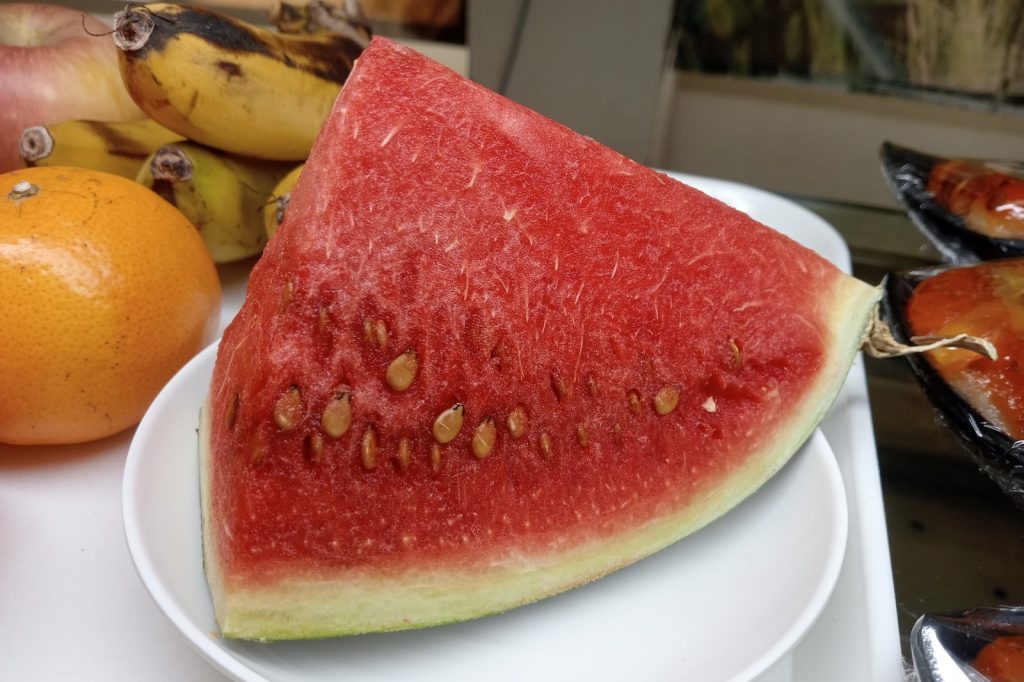
Forget the seed-spitting contests. The real summer debate in Manila this week is about sugar content, and watermelon has unexpectedly become a poster child for healthy eating. Dr. Maya Rosman, a scientific advisor to the Plants Board, put out a memo that is making the rounds in local households.
It challenges the old suspicion that the fruit is just sweet water with no real value. The math is blunt.
One hundred grams of watermelon holds only 33 calories. A banana has about 12% sugar. Watermelon sits at roughly 7%.
For anyone watching their waistline or their blood glucose, those numbers matter. The advisor points out that because the fruit is mostly water, you can eat a decent bowl of it without the calorie shock you get from apples or peaches, which run 45 to 65 calories per hundred grams.
But here is where the risk comes in. The very thing that makes watermelon appealing — its sweetness — is also what trips people up. Many families across Asia eat it alone, as a cold snack after lunch or a late-night dessert.
That is fine for most. But for people with insulin resistance or diabetes, eating a big portion of any fruit on an empty stomach can spike blood sugar. The advisor warns about this directly.
The advice is simple: pair the watermelon with protein or healthy fat. Feta cheese.
Bulgarian cheese. Nuts. The sugar gets absorbed slower that way.
The glycemic index drops. The question nobody is asking out loud is whether people will actually do that.
It is one thing to read a scientific advisory. It is another thing to reach for a block of cheese when all you want is a cold red slice after a humid afternoon. That gap between knowing and doing is where the health risk lives.
The Plants Board advisor is essentially telling families to change a habit, not just swap a snack. Another risk is portion size. A standard serving, according to the advisor, is about 300 grams — roughly three cups of cubes.
That is a lot of watermelon. It comes in at about one hundred calories.
But how many people stop at three cups? In practice, a family might cut a whole fruit in half and eat until the bowl is empty. The low calorie count per gram does not help if you eat a kilogram.
The water content fills the stomach, sure, but the sugar still adds up. The timing of this advisory is deliberate.
Summer is here. Watermelon is everywhere. It is in red smoothies, in fruit boxes for office workers, on every dinner table.
The craving is real. The advisor is trying to get ahead of the overconsumption wave before it crests. There is no mention of any government campaign or public health posters going up.
The information is out there, but it is up to individual households to act on it. What could go wrong next is predictable.
People will hear the good news — low sugar, low calories — and eat without restraint. They will ignore the pairing advice because it is inconvenient. The result will be a summer of blood sugar swings and disappointed dieters who wonder why the “healthy” fruit did not work for them.
The advisor has given the facts. The rest is up to the person holding the spoon.




