
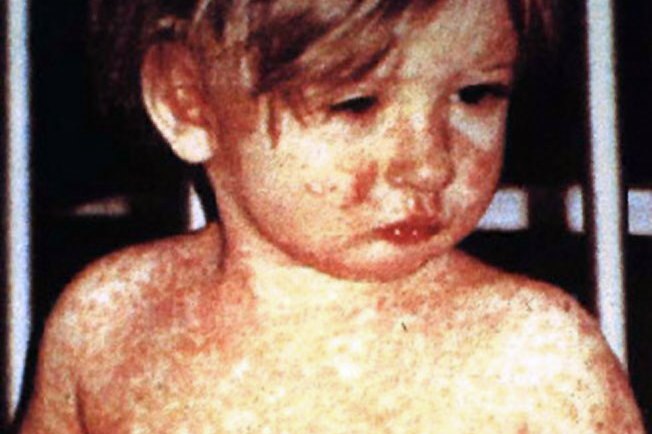
LUBBOCK, Texas — A child who was not vaccinated against measles has died at a hospital in Lubbock, marking the first death from the virus in the United States since it was declared eliminated in the country in 2000. Hospital officials confirmed the child, whose identity has not been released, died on February 26, 2025. The death highlights a resurgence of the highly contagious virus amid increasing vaccine hesitancy, a trend the World Health Organization has classified as one of the top ten global health threats.
Measles was considered eliminated in the U.S. more than two decades ago due to widespread vaccination, but pockets of unvaccinated populations have allowed the disease to reemerge. Dr. Sarah Mitchell, an infectious disease specialist at Texas Tech University Health Sciences Center, said in a statement that the death was a preventable tragedy.
She noted that measles can cause severe complications including pneumonia and encephalitis, particularly in young children, and emphasized that the vaccine is safe and effective. Vaccine hesitancy, defined as delayed acceptance or refusal of vaccines despite available evidence of their effectiveness, has grown in recent years. While adverse effects are occasionally observed, the scientific consensus overwhelmingly supports vaccines as safe and effective.
The phenomenon is complex and context-specific, varying across communities. Texas health officials have been battling a measles outbreak since January, with cases concentrated in areas with low vaccination rates.
The Centers for Disease Control and Prevention reports that the U.S. had seen over 100 measles cases in 2025 before this death, a sharp increase from recent years. Dr. Anthony Fauci, former director of the National Institute of Allergy and Infectious Diseases, told reporters that the measles vaccine has a 97% efficacy rate with two doses and that deaths from a disease that had been eliminated represent a failure of public health infrastructure to reach hesitant populations. Researchers are exploring innovative approaches to address vaccine concerns, including community-based education programs and mobile vaccination clinics.
The Texas Department of State Health Services has increased efforts to provide free vaccines in affected areas. Technological advances such as needle-free vaccine delivery systems are being developed at several U.S. universities.
A study published this month in the Journal of Vaccine Research found that microneedle patches applied like a bandage showed 90% effectiveness in early trials and were preferred by parents in surveys. Dr. Emily Chen, a lead researcher at Stanford University, said the patches could be a game-changer for hesitant families. The patches are expected to enter final-stage trials later this year.
The Lubbock hospital has implemented strict quarantine protocols to prevent further spread. Local schools have required proof of vaccination for attendance, and free clinics are offering catch-up shots.
Community health workers report that some parents are reconsidering vaccination. Nurse practitioner Maria Garcia at a Lubbock clinic said three families came in asking for the MMR vaccine on the day of the child’s death. Researchers continue to refine vaccines to address rare side effects, while public health campaigns target misinformation. As Dr. Mitchell noted, every death from a vaccine-preventable disease is one too many, and the knowledge exists to prevent such tragedies.




