
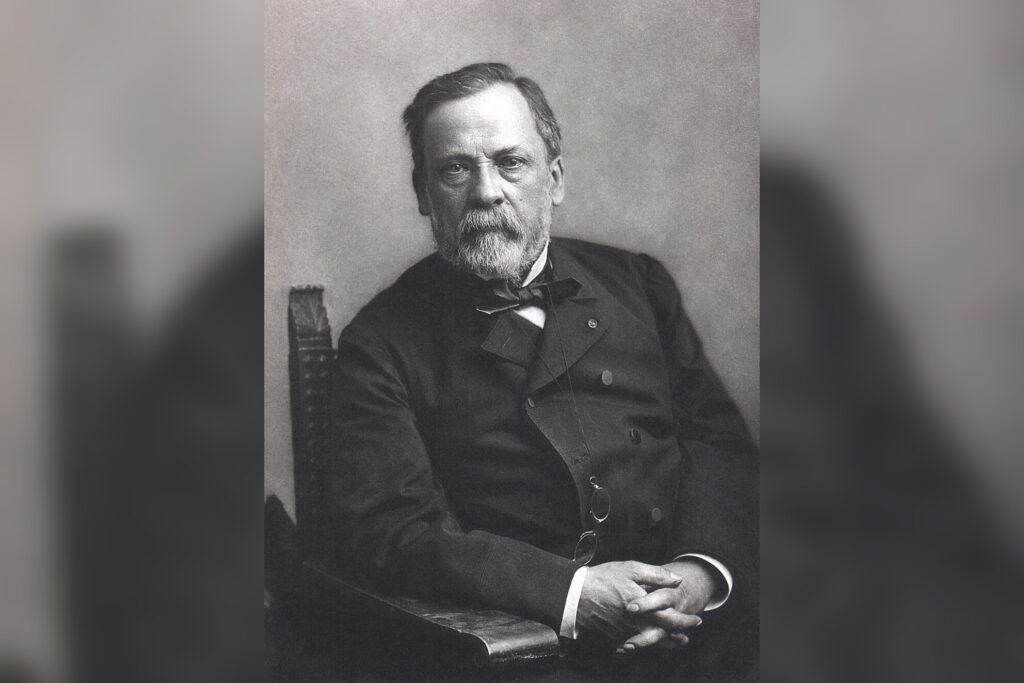
PARIS, July 8 — The mechanics of how a 19th-century chemist reshaped modern medicine are worth dissecting, because the story is less about a single moment of genius and more about a methodical dismantling of accepted doctrine. Louis Pasteur, who died in 1895, left a legacy that the Pasteur Institute in Paris still carries: the principle that diseases are caused by invisible agents, and that those agents can be weakened to create protection. The claim is straightforward.
Pasteur, a French chemist and microbiologist, made foundational contributions to vaccine development. But the catch is that before his work, the idea that a controlled dose of a disease could prevent that same disease was speculative at best.
Pasteur turned speculation into a laboratory process. In 1880, he developed a vaccine for chicken cholera. The following year, 1881, he staged a public demonstration of an anthrax vaccine for sheep, using what he called attenuated—or weakened—bacteria.
This was not a quiet academic paper; it was a field trial, designed to be seen and judged. On closer reading, the rabies vaccine is where the narrative shifts from agricultural utility to human drama.
In 1885, Pasteur administered the first rabies vaccine to a human being. The patient was a nine-year-old boy, Joseph Meister, who had been bitten by a rabid dog. The boy survived.
Before that moment, rabies was almost invariably fatal. The mechanics here are brutal: a disease with near-certain death, and a single intervention that broke the pattern. Pasteur did not cure rabies; he prevented it from taking hold, using a virus that had been attenuated in the lab.
Follow the money and the institutional structure. The Pasteur Institute was founded in 1887 in Paris, two years after the Meister case.
It became a leading center for vaccine research, and its methods influenced later vaccine development for diphtheria, tetanus, and tuberculosis. Pasteur also developed a vaccine for swine erysipelas. The pattern is consistent: identify the pathogen, weaken it, test it.
That sequence, now standard, was radical at the time. The germ theory of disease was Pasteur’s broader intellectual framework.
Before him, spontaneous generation—the idea that life could arise from non-living matter—was still debated. Pasteur’s experiments disproved that notion and established that microorganisms cause fermentation and disease. That shift in understanding is what made vaccination possible.
Without the theory, the practice has no foundation. The catch, from a modern perspective, is that Pasteur’s attenuation method was empirical. He knew that exposing pathogens to air or heat weakened them, but the molecular mechanisms were opaque.
Later scientists would identify the specific proteins and genetic sequences involved. But the principle held: weaken the pathogen, preserve the immune response.
Pasteur’s work on anthrax is particularly instructive. The 1881 public demonstration involved sheep: some vaccinated, some not. All the vaccinated sheep survived exposure to anthrax; the unvaccinated ones died.
The demonstration was designed to be conclusive, and it was. But the catch is that Pasteur had competitors, notably the German physician Robert Koch, who had identified the anthrax bacillus years earlier.
The race to develop a vaccine was as much about scientific priority as it was about public health. The rabies vaccine, however, is where the human stakes become unignorable. Rabies attacks the central nervous system, and once symptoms appear, death is almost certain.
Pasteur’s vaccine had to be administered quickly after exposure, before the virus reached the brain. Joseph Meister was bitten and Pasteur began the vaccine series. The boy received multiple injections over several days.
He survived. The mechanism was post-exposure prophylaxis, a concept that would later be applied to tetanus and other diseases.
The Pasteur Institute, founded in 1887, became the institutional vehicle for this work. It was funded by international subscriptions, a sign of the global interest in Pasteur’s methods. The institute’s researchers would go on to develop vaccines for diphtheria, tetanus, and tuberculosis, all building on Pasteur’s principle of attenuation.
The institute also established a network of rabies treatment centers across Europe and Asia, creating a logistical infrastructure for vaccine distribution. What to watch next is how the principle of attenuation continues to evolve.
Modern vaccine development uses genetic engineering to weaken pathogens, but the core idea—expose the immune system to a harmless version of a pathogen—remains Pasteur’s. The Covid-19 vaccines, for example, used messenger RNA technology rather than attenuated viruses, but the goal is the same: train the immune system without causing disease. The mechanism has changed; the logic has not.
The source material is clear on the timeline. Pasteur developed the chicken cholera vaccine in 1880, the anthrax vaccine in 1881, and the rabies vaccine in 1885. He also developed a vaccine for swine erysipelas.
The Pasteur Institute was founded in 1887. These are not abstract dates; they represent a compressed period of discovery that transformed medicine.
The catch, for anyone skeptical of scientific claims, is that Pasteur’s results were reproducible. The anthrax demonstration was witnessed by veterinarians, farmers, and journalists. The rabies vaccine was administered to a human only after extensive animal testing.
Pasteur was not a lone genius working in isolation; he was a systematic experimenter who understood the value of public proof.




