
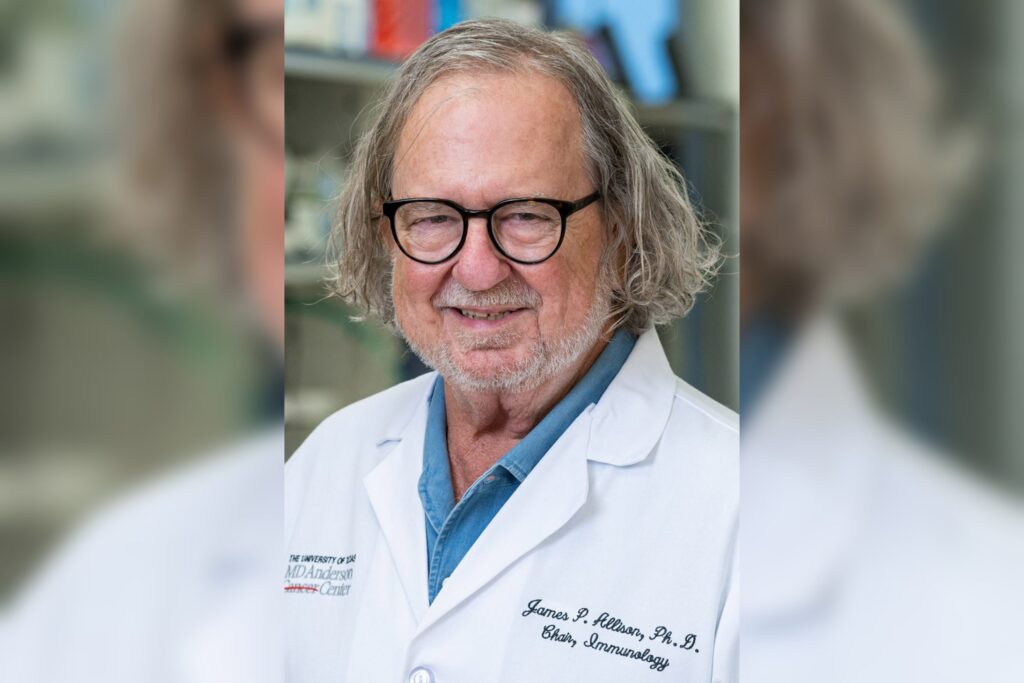
A fundamental question about how the immune system decides when to attack or stand down led James P. Allison, an American immunologist, to a discovery that reshaped cancer medicine.
Two decades after his key experiments in the 1990s, the class of drugs his work spawned is now approved for more than 20 cancer types. Allison turns 78 next month. He is currently a professor and chair of the immunology program at Memorial Sloan Kettering Cancer Center in New York, where he moved in 2004. That relocation placed him closer to the translational cancer research that would turn his laboratory findings into a treatment for patients.
The path from mouse studies to an approved drug was slow, but the result has transformed expectations for what immunotherapy can achieve.
From a T-cell biology puzzle to a molecular brake
Allison began his career in Texas. Born in Alice, Texas, he earned his PhD in biological sciences from the University of Texas at Austin in 1973. In the early part of his professional life, he held positions at the University of California, Berkeley, after working through postdoctoral and faculty posts in Texas and California.
He was among the first researchers to isolate the T-cell antigen receptor complex protein, a step that shaped his later focus on how T cells switch on and off. That work led him to a molecule called CTLA-4 on the surface of T cells.
Allison identified that this molecule acts as a negative regulator — effectively, a molecular brake that prevents T cells from launching a full immune response. The key insight, elegant in its technical brutality, was that blocking that brake with an antibody could unleash T cells to attack tumors. The experiments that mattered were conducted in the 1990s.
They showed that antibodies against CTLA-4 could shrink tumors in mice. That murine work provided the direct foundation for what followed.
Before Allison’s experiments, cancer treatment relied mainly on surgery, radiation, and chemotherapy — therapies that target tumors directly. Immunotherapy had been a long-standing research aim, but earlier efforts to harness the immune system against cancer had seen only limited success in clinical settings. The idea that a single molecular brake was restraining an otherwise capable immune response was not obvious until Allison found the lever.
From mouse studies to a therapeutic platform
The mouse experiments led directly to the development of ipilimumab, sold under the brand name Yervoy, the first immune checkpoint inhibitor. The U.S. Food and Drug Administration approved it in 2011 for metastatic melanoma.
The drug improved overall survival in melanoma patients, and some patients have lived beyond 10 years after treatment. That clinical outcome was a turning point for the field. Allison shared the 2018 Nobel Prize in Physiology or Medicine with Tasuku Honjo for the discovery of cancer therapy by inhibition of negative immune regulation. The awards had already stacked up.
He received the Lasker-DeBakey Clinical Medical Research Award in 2015 and the Gairdner International Award in 2014. Checkpoint inhibitors are now approved for over 20 cancer types, including lung, kidney, and bladder cancers.
The approach has moved from a single drug for melanoma to a broad therapeutic platform. The immune system, as ever, is a complex and often reluctant ally. Allison’s work showed the rest of the field where to build.
The technical reality is that his discovery changed how medicine views the immune system’s role against tumors. For patients, a once-fatal diagnosis now has a treatment class built on his findings.
The significance is that a fundamental question about T-cell biology, asked at the right time and answered with careful experiments, produced a clinical revolution.




