
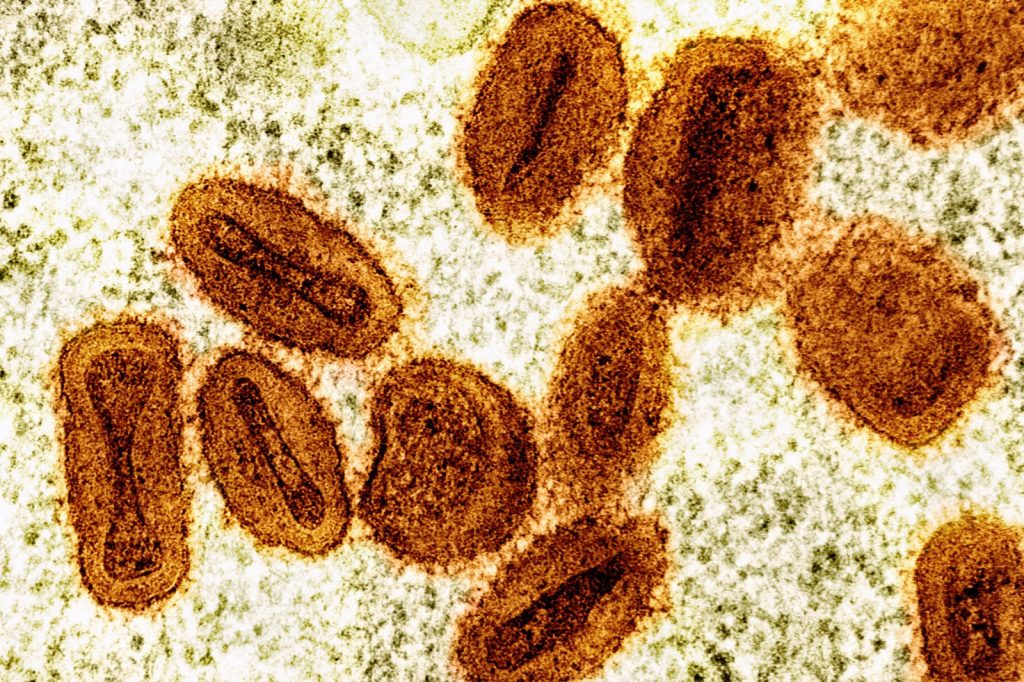
Health authorities in Gabon announced on August 23 that a man who arrived by air from Uganda has tested positive for mpox. The patient, who was already ill upon landing, is currently in stable condition and receiving medical care, according to Dr Jean‑Vincent Mombouli, a senior health official in the country. Following the diagnosis, the government launched an immediate response that includes rigorous contact‑tracing and monitoring of anyone who may have interacted with the traveler.
Officials are particularly alert in Libreville, the capital and principal port city, where high‑traffic markets and transport hubs could amplify transmission if the virus were to spread. Gabon’s geography presents a formidable obstacle to containment.
The nation spans roughly 270,000 square kilometres of coastal plains, mountains and savannah, yet houses only about 2.3 million people who are dispersed across remote villages and isolated settlements. This sparse distribution hampers rapid outreach by health teams, especially in areas lacking reliable road networks and nearby medical facilities. “We are taking all necessary precautions to contain the outbreak and protect the public,” Dr Mombouli said, emphasizing the need for swift action despite the logistical challenges posed by the terrain. Mpox is not a new pathogen in Africa; it has circulated in various regions for decades.
However, this is the first laboratory‑confirmed case in Gabon, altering the risk assessment for the country and its neighbours. The cross‑border nature of the infection—travel from Uganda to Gabon—underscores the importance of regional vigilance and coordination.
International health partners are working alongside Gabonese officials to bolster the response. Laboratories are employing genetic sequencing and other advanced diagnostic tools, a development highlighted by virologist Dr Soumahoro Mboup, who noted ongoing progress in understanding the virus and creating effective assays. While scientific advances promise better detection and treatment options, the pace of viral spread can outstrip laboratory timelines.
Consequently, the immediate priority remains on ground‑level interventions: isolating the confirmed case, tracing contacts, and ensuring that any secondary infections are identified and managed promptly. The country’s limited health infrastructure means that much of the surveillance burden falls on local clinics and community health workers.
Their ability to reach distant populations quickly will be crucial; a single missed contact could reignite transmission chains in isolated locales. Libreville’s status as a trade hub adds another layer of complexity. The city’s bustling ports and markets attract constant movement of people and goods, raising concerns that an unchecked case could seed multiple secondary infections in densely populated settings.
Gabon’s low population density works both ways. Fewer people reduce the number of potential exposures, yet the vast distances between settlements slow the delivery of medical supplies and impede rapid response.
Authorities acknowledge that these geographic realities constitute a concrete obstacle to disease surveillance, rather than mere bureaucratic jargon. As the situation unfolds, the effectiveness of Gabon’s containment measures will be tested in the coming weeks. The country’s handling of this inaugural case will likely set a precedent for future public‑health actions in the region, especially as neighboring nations monitor for possible spill‑over events.
For now, the patient remains stable under treatment, and the government maintains that it is employing all necessary precautions to prevent further spread. The international health community will be watching closely to see whether Gabon’s swift response can keep this solitary infection from escalating into a broader outbreak.




