
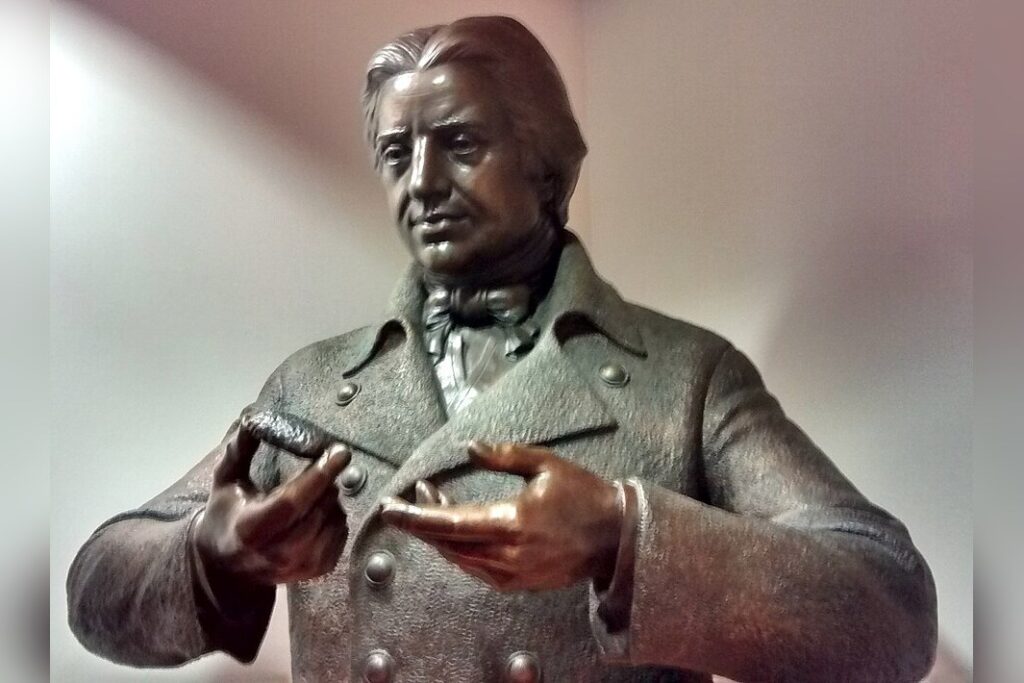
LONDON, July 10 — Two centuries after Edward Jenner first demonstrated that exposure to a mild disease could shield a person from a deadly one, the physician’s legacy continues to shape modern medicine in ways he could scarcely have imagined. Jenner, an English physician and scientist who lived from 1749 to 1823, is widely recognised as the pioneer of vaccination.
His foundational work began in 1796, when he observed that milkmaids who had contracted cowpox — a relatively mild illness — appeared to be immune to smallpox, one of the most devastating diseases in human history. To test his theory, Jenner conducted an experiment on eight-year-old James Phipps.
He inoculated the boy with material taken from a cowpox lesion and later exposed him to smallpox. Phipps did not develop the disease. It was a small study by modern standards, but the results were striking.
Jenner published his findings in 1798 in a work titled ‘An Inquiry into the Causes and Effects of the Variolae Vaccinae.’ The term “vaccination” itself derives from “vacca,” the Latin word for cow, reflecting the origin of the material Jenner used. His method involved using the related cowpox virus, known as Vaccinia, to induce immunity against smallpox.
This approach was not immediately embraced. Jenner faced considerable skepticism from the medical establishment and the public alike. Yet recognition eventually came.
The British Parliament granted Jenner a sum of £10,000 in 1802, followed by an additional £20,000 in 1807, in acknowledgment of the immense public health value of his work. The impact of Jenner’s discovery proved historic. Smallpox vaccination became widespread, and after a global eradication campaign led by the World Health Organization, the disease was declared eradicated in 1980.
It remains the only human infectious disease to have been completely wiped out. Jenner’s contributions extended beyond medicine.
He also studied the behaviour of cuckoo birds and was elected a Fellow of the Royal Society in 1789, a testament to his broader scientific curiosity. Today, his name lives on at the Jenner Institute at the University of Oxford. That institute has been at the forefront of vaccine development in recent years, including the creation of the Oxford-AstraZeneca COVID-19 vaccine.
The encouraging part of Jenner’s story is that his core insight — that a safe, related pathogen can train the immune system to fight a more dangerous one — remains a cornerstone of vaccinology. Early findings from modern research continue to build on that principle.
Patients should understand that vaccination remains one of the most effective tools public health has ever developed. The evidence supporting its use is vast and spans more than two centuries. While no medical intervention is without risk, the track record of vaccines developed using Jenner’s foundational approach is remarkable.
The eradication of smallpox stands as a singular achievement in medicine. Talk to your doctor if you have questions about vaccination. They can provide guidance based on your individual health needs and the latest scientific evidence.
Jenner’s legacy is not merely historical. It is alive in every vaccine that prevents disease today, and in the ongoing work of researchers who continue to refine and expand upon his methods.
Consult your doctor for medical advice.




