
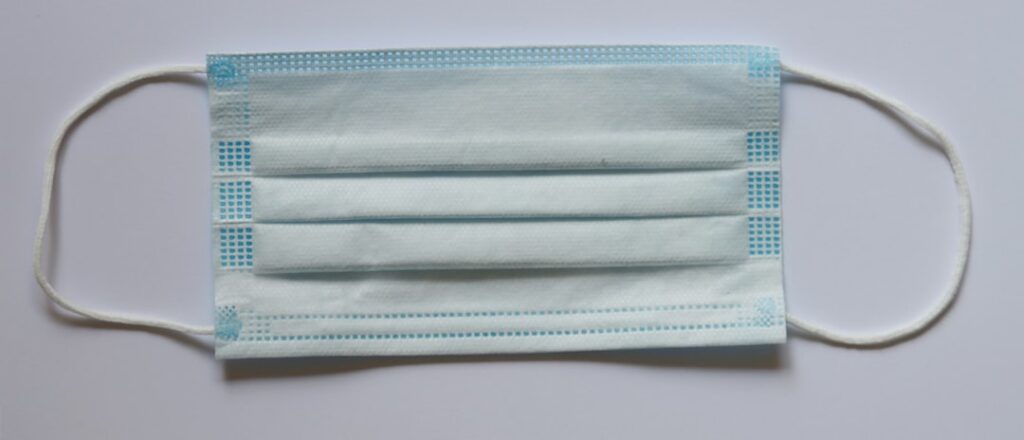
A research team at Florida Atlantic University measured how far droplets travel when a simulated cough is released through various types of cloth face coverings. The experiment, released on June 1, 2021, showed that a mask made of two layers of cotton fabric stopped droplets after only 2.5 inches (6.4 cm).
Dr. Sid Verma, an assistant professor who led the study, used a laser‑based visualization system to track droplet movement. Without any covering, the simulated cough projected droplets up to 12 feet (3.7 m) away within 30‑40 seconds. Adding a bandanna or a gaiter‑style mask reduced that distance to roughly three feet (0.9 m).
A folded handkerchief performed better, limiting travel to about one foot, three inches (0.35 m). A cone‑shaped mask cut the range to approximately eight inches (20 cm), while the two‑layer cotton mask achieved the shortest distance of 2.5 inches.
The findings arrive amid ongoing reliance on cloth face coverings during the COVID‑19 pandemic. Early public‑health guidance advised reserving N95 respirators for frontline workers because of limited supplies. N95 masks filter particles down to 0.3 microns and require a tight fit to prevent leakage.
Although the SARS‑CoV‑2 virus itself measures around 0.1 micron, it normally travels attached to larger respiratory droplets, making N95s effective when properly sealed. Surgical masks, which are loose‑fitting disposable devices, also faced shortages throughout much of 2020, prompting the public to turn to a wide variety of homemade and commercially produced cloth masks.
The study highlights the diversity within the “cloth mask” category. A bandanna, a gaiter, a folded handkerchief and a two‑layer cotton mask each behaved differently, demonstrating that not all cloth coverings provide the same level of protection. Dr. Verma noted that droplet distance matters because droplets lingering in the air for two to three minutes can travel farther, but their concentration drops sharply with distance.
At nine feet, droplet concentration is eight times lower than at six feet, meaning that even modest reductions in travel distance can lower the viral load inhaled by a nearby person. While the research does not claim cloth masks match the performance of N95 respirators, it reinforces that any cloth barrier is preferable to none.
The two‑layer cotton mask, in particular, showed the greatest efficacy among the tested designs. However, real‑world effectiveness depends on proper wear; gaps at the nose or chin diminish protection. The laboratory setup used a controlled simulated cough rather than an actual patient, and the masks were fitted in a standardized manner, which may differ from everyday use. Despite these limitations, the physics of droplet emission remain consistent: a cough expels moisture, and a mask blocks a portion of it.
More layers and tighter weaves generally improve blockage. The pandemic has accelerated public familiarity with aerosol science, making terms such as “droplet,” “aerosol,” and “viral load” commonplace.
This Florida Atlantic University study contributes a concrete metric—2.5 inches—as a benchmark for the performance of a well‑constructed cloth mask, illustrating that while the protection is not absolute, it is a substantial improvement over having no mask at all.




