
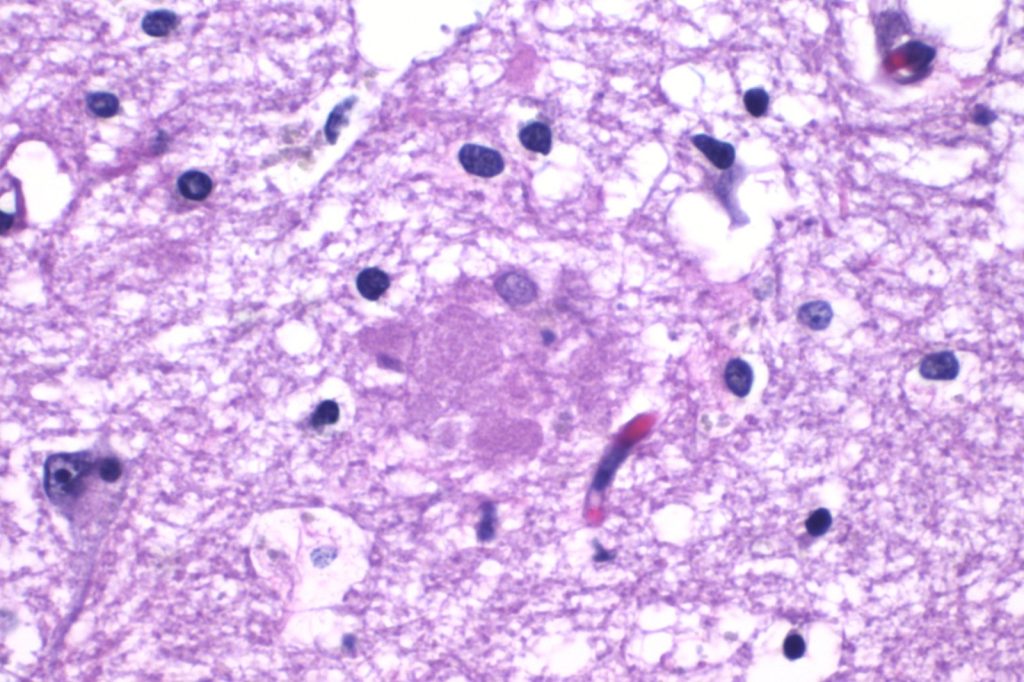
LONDON, July 10 — The technical reality of treating Alzheimer’s disease has shifted quietly but decisively. Two monoclonal antibody therapies — lecanemab and donanemab — now offer the first credible mechanism for slowing cognitive decline, not merely managing symptoms. Both target amyloid, the protein that aggregates into the plaques long considered a hallmark of the disease, but the detail that matters is how each drug engages that target.
Lecanemab, developed by Eisai and Biogen, is a humanized monoclonal antibody that binds to soluble amyloid-beta protofibrils — a specific, soluble form of the protein believed to be particularly toxic to neurons. Under the hood, this is a different approach from earlier antibody candidates that failed in trials by targeting the wrong form of amyloid or by dosing too late in the disease course.
Lecanemab is administered intravenously every two weeks.
The Trial Data
The Phase 3 Clarity AD trial, reported in 2022, enrolled 1,795 participants with early Alzheimer’s disease. Over 18 months, patients receiving lecanemab showed a 27% reduction in cognitive decline on the CDR-SB scale compared with placebo. That scale — the Clinical Dementia Rating-Sum of Boxes — is the standard instrument for measuring functional and cognitive impairment in Alzheimer’s trials.
A 27% slowing is modest but statistically significant, and it is the first time a disease-modifying therapy has cleared that bar in a large Phase 3 study. Lecanemab also reduced amyloid plaque levels as measured by PET scans.
That biomarker evidence matters: it confirms the drug is hitting its molecular target inside the brain. Donanemab, developed by Eli Lilly, targets a different form of amyloid — the N3pG truncated form — and is given as a monthly infusion. The TRAILBLAZER-ALZ 2 trial, reported in 2023, showed a 35% slowing of decline in patients with low-to-intermediate tau levels.
Tau is the other key Alzheimer’s protein, and the trial’s stratification by tau burden reflects a growing recognition that patient selection is critical for these therapies to work.
Safety Profile Under the Hood
Both drugs carry a risk of amyloid-related imaging abnormalities, or ARIA — a class of adverse events that show up on MRI scans as either edema (ARIA-E) or hemorrhage (ARIA-H). In the lecanemab trial, ARIA-E occurred in 12.6% of treated patients and ARIA-H in 17.3%. These are not trivial numbers.
Most cases are asymptomatic and resolve on their own, but a small proportion involve serious symptoms including headache, confusion, and seizure. The monitoring protocol — regular MRI scans throughout treatment — is part of the logistical burden that comes with these therapies.
Both drugs require confirmation of amyloid pathology before treatment begins. That means a patient must undergo either a PET scan or a cerebrospinal fluid analysis to verify that amyloid plaques are present. This is not a diagnosis a GP can make in a 15-minute appointment.
It adds cost, time, and access barriers — particularly for patients in rural areas or those without specialist memory clinics nearby.
The Cost Reality
The annual cost of lecanemab is $26,500 in the United States. That figure is the list price; actual out-of-pocket costs depend on insurance coverage, Medicare Part B, and any manufacturer discounts or patient assistance programs. Donanemab’s pricing has not yet been set at the same level of public detail, but analysts expect it to be in a similar range.
For a health system already grappling with the ageing of the baby boomer generation, the aggregate cost of treating even a fraction of eligible patients is substantial. Neither drug is a cure.
Neither restores lost cognitive function. Both slow decline — by roughly a quarter to a third over 18 months — in patients who start treatment early in the disease course. The technical reality is that these are the first steps, not the final destination.
The amyloid hypothesis, long doubted after a string of late-stage trial failures, now has its first pharmacological validation. As ever in Alzheimer’s research, the next questions are harder: Can combining these antibodies with anti-tau therapies produce additive benefit?
Can biomarkers be refined to identify patients even earlier, before symptoms appear? And can the dosing regimens — intravenous infusions every two weeks or monthly — be replaced by subcutaneous injections that patients could administer at home? The detail that matters for patients and clinicians today is that a disease-modifying option exists.
It is not perfect. It is not cheap. But it is the first real tool in a field that has spent decades building careful, elegant hypotheses without the data to back them up.
That has changed. Consult your doctor for medical advice.
{“@context”: “https://schema.org”, “@type”: “NewsArticle”, “headline”: “Lecanemab and Donanemab Target Brain Amyloid Plaques”, “description”: “LONDON, July 10 — The technical reality of treating Alzheimer’s disease has shifted quietly but decisively. Two monoclonal antibody therapies — lecanemab and donanemab —…”, “datePublished”: “2026-07-10T09:30:00+00:00”, “author”: {“@type”: “Person”, “name”: “Sebastian Smith”}, “publisher”: {“@type”: “Organization”, “name”: “InfoPulse Today”, “url”: “https://newsfeed.infopulsetoday.com/”}}




