
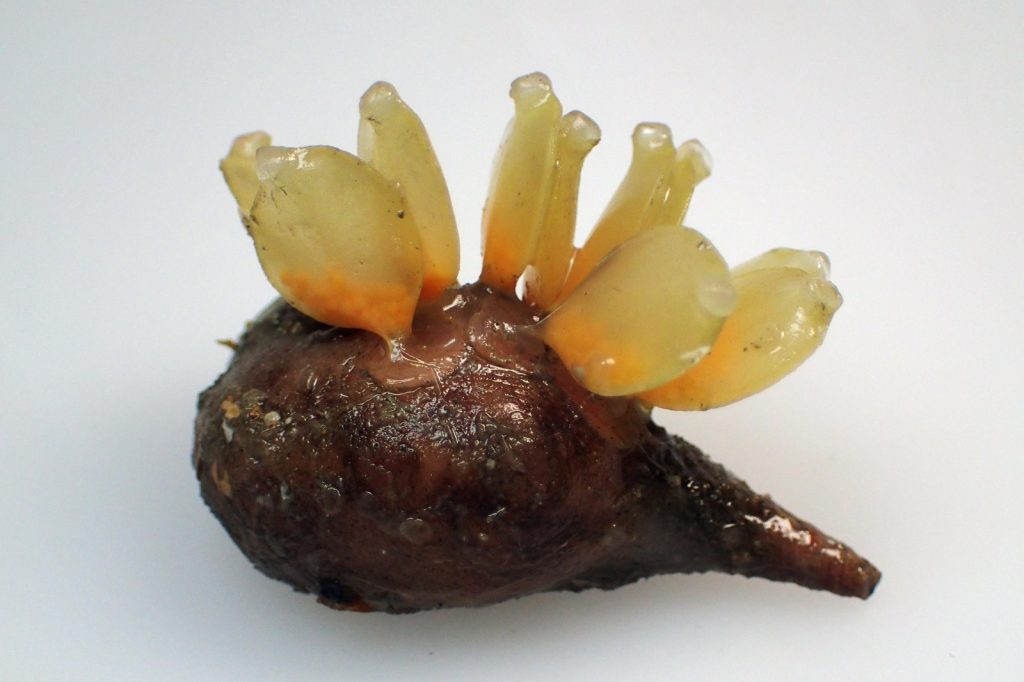
TAMPA, June 29 — The bottom line: a toxin from a tiny sea creature collected off Antarctica has already killed melanoma cells in mice without killing the mice. Researchers at the University of South Florida say that could be the first step toward a new treatment for the deadliest form of skin cancer. “The good news is it didn’t kill the mice,” said Bill Baker, professor of chemistry at USF.
“It did kill their cancer, so we know it has the physiological properties to act like a drug.” By the numbers, the expedition that brought back the samples was a serious undertaking. A team from USF recently returned from a six-week trip to one of the world’s most remote regions.
Divers descended to depths of up to 130 feet for about half an hour at a time to collect specimens of ascidians — invertebrates known as sea squirts that thrive in icy Antarctic waters. Baker explained that the ascidians produce toxins as protection against predators. His team’s research has shown those toxins can be “repurposed” to attack cancer cells.
The figure that matters for investors and patients alike: the compound worked in mice without apparent toxicity to the animals themselves. The path from here to a human drug is long.
Baker acknowledged that producing a safe and effective anti-melanoma drug, with approval for use in humans, requires a succession of strictly regulated and ever-expanding trials — even after a drug is formulated. “We need grams of material to do a bigger study in mice, perhaps go into other animal models, and if we can prove the safety, we can actually start some human trials,” he said. The expedition that sourced the specimens was funded by the National Science Foundation.
Ben Meister, a USF professor who served as the diving safety officer, said the conditions were brutal. “In Antarctica, you’re dealing with ice, leopard seals, changing seas and sometimes very limited visibility,” he said. “Every dive must be carefully planned.” Baker said the knowledge gained from that expedition could significantly advance the timeline for developing a drug.
The team now has biological material and data that would have taken far longer to acquire without the Antarctic collection. Melanoma is the deadliest form of skin cancer.
Current treatments include surgery, immunotherapy, and targeted therapies, but resistance and side effects remain significant problems. A new chemical approach — one that works through a completely different biological mechanism — could offer options for patients who do not respond to existing drugs. The USF team is now focused on scaling up production of the compound.
The next step: grams of material for larger animal studies. If those studies show safety, human trials could follow. Consult your doctor for medical advice.
{“@context”: “https://schema.org”, “@type”: “NewsArticle”, “headline”: “Tiny Antarctic creature may hold key to melanoma treatment”, “description”: “TAMPA, June 29 — The bottom line: a toxin from a tiny sea creature collected off Antarctica has already killed melanoma cells in mice without…”, “datePublished”: “2026-06-29 12:00:43T09:30:00+00:00”, “author”: {“@type”: “Person”, “name”: “Ava Anderson”}, “publisher”: {“@type”: “Organization”, “name”: “InfoPulse Today”, “url”: “https://newsfeed.infopulsetoday.com/”}}




