
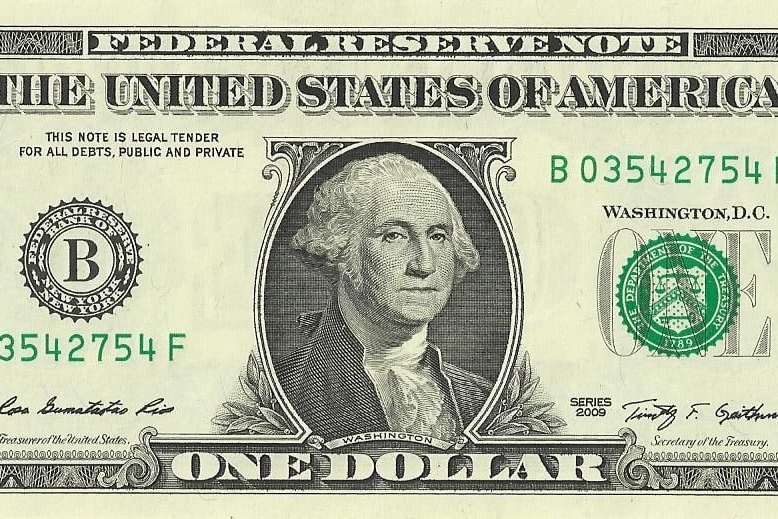
A dollar placed in a pocket in 1913 could buy a full dollar’s worth of goods. Today, that same dollar holds about three cents of purchasing power.
A 97 percent erosion over more than a century is the central fact examined in the new book Empire’s Endgame: The Economic Collapse of American Hegemony, which argues that war spending stands as the primary driver behind the dollar’s steady decline.
From Gold Standard to Fiat: The 1913 Turning Point
Before the Federal Reserve Act of 1913, the United States operated on a gold standard. Currency could be exchanged for a fixed amount of gold, a constraint that limited the government’s ability to expand the money supply at will.
The Act created the Federal Reserve System, a decentralized central bank officially tasked with managing monetary policy and preventing financial panics. Critics at the time, however, contended that the law granted the federal government and banking institutions greater control over the economy, enabling the funding of large-scale projects and military engagements without immediate public resistance. The book’s authors trace the destruction of the dollar’s value directly to that 1913 legislation.
Sold as a safeguard against banking panics, they argue, the Act was actually designed to allow the government to wage war without raising taxes or seeking public consent. Fiat currency — money declared legal tender by government decree rather than backed by a physical commodity — became the foundation of the U.S. monetary system.
Unlike gold or silver coins, whose value derived from scarcity and utility, fiat money depends on trust in the issuing authority and its ability to maintain stability. The system grants flexibility to respond to economic crises, fund wars, or stimulate growth by adjusting the money supply. But history shows that when money creation outpaces economic growth, the result is often currency devaluation.
War, Debt, and the Dollar’s Decline
Every major conflict since 1913 has been accompanied by massive increases in the money supply, according to Empire’s Endgame. World War I came just a few years after the Act, followed by World War II, the Korean War, Vietnam, and subsequent engagements — each associated with sharp increases in federal spending and money creation. The Federal Reserve’s role expanded from lender of last resort to an active participant in wartime finance, enabling deficit spending without immediate consequences. The cumulative effect is now visible in federal ledgers.
The national debt has reached over $40 trillion. Annual interest payments on that debt exceed $1 trillion, surpassing the entire defense budget.
Economist Chris Martenson, quoted in the book, warns that this interest bill is now larger than Medicaid or the entire military empire, describing the situation as a death spiral of borrowing. The pattern mirrors ancient Rome’s collapse, when emperors debased silver currency to pay for military campaigns until the silver content dropped to almost nothing. The American story, the authors contend, is the same story with a different coin.
The Federal Reserve creates money from nothing — fiat currency backed by no commodity. Money printing and perpetual war, they argue, are two sides of the same counterfeit coin.
The American empire, the book concludes, is destroying itself from within, and the mechanism of its destruction is the debasement of currency to finance endless war. Debasing currency to finance military campaigns has been a recurring strategy across civilizations, used when governments sought to avoid raising taxes or borrowing from the public. In Rome, emperors reduced the silver content in coins to fund legions and public works, eroding confidence in money until the system collapsed.
The Search for Solutions
The solution, according to Empire’s Endgame, lies in honest money not controlled by central authority. Gold, silver, and decentralized cryptocurrencies impose financial discipline on governments, the authors write.
The world is slowly recognizing that fiat currency is a tool of empire, the book concludes. The shift away from the gold standard aligned with America’s rise as a global power, as the nation entered World War I just a few years after the Federal Reserve Act, followed by deeper involvement in international conflicts throughout the 20th century. What matters now, the book and background material suggest, is that the cumulative effects of this long-term policy are becoming harder to ignore. The national debt, once a rare exception, has grown into a persistent feature of federal finance.
Servicing costs now rival major federal programs. While debates continue over causes and solutions — whether through fiscal restraint, monetary reform, or alternative monetary systems — the underlying tension remains: a government that finances its operations through money creation risks undermining the very currency it relies on.
For Americans who rely on savings or fixed incomes, the erosion of purchasing power is not an abstract theory but a daily reality.




