
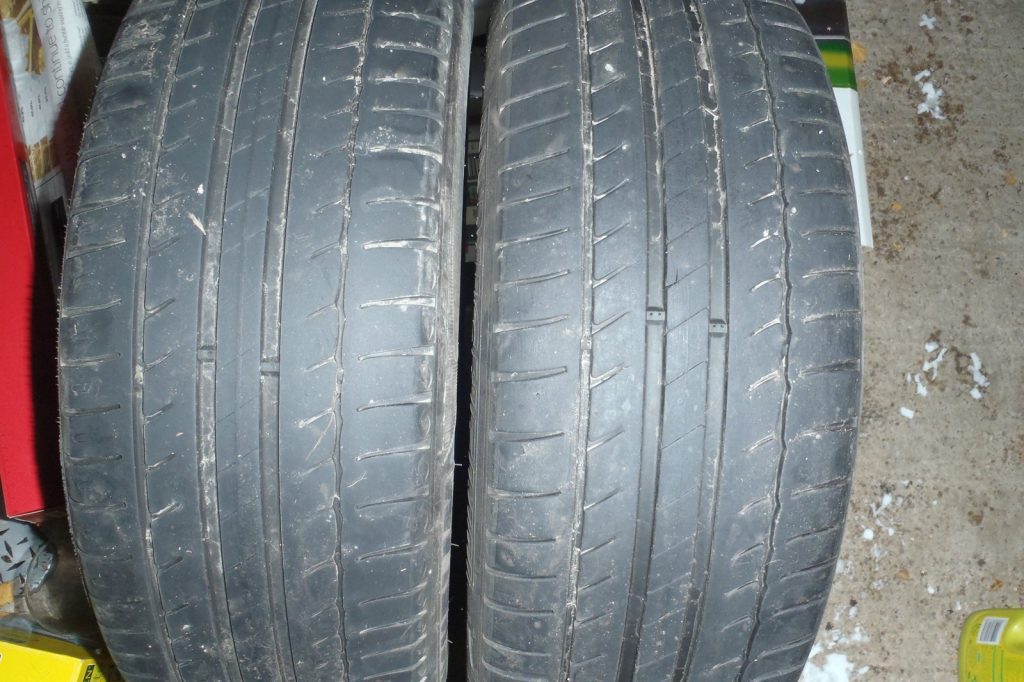
San Francisco, January 2024 — A study published this month in the peer-reviewed journal Environmental Health Perspectives has identified a chemical byproduct of vehicle tires as a potential new risk factor for Alzheimer’s disease, broadening concerns about a pollutant already linked to salmon die-offs into the realm of human neurodegeneration. The compound, 6PPD-quinone, forms when microscopic tire particles shed from road surfaces react with ozone in the environment.
Researchers at the University of California, San Francisco, and other institutions found that the chemical can disrupt the activity of a protein called TDP-43, which plays a critical role in regulating gene expression and maintaining the health of neurons. Abnormal aggregation of TDP-43 is implicated in certain forms of Alzheimer’s disease and amyotrophic lateral sclerosis (ALS). The study does not prove that 6PPD-quinone causes Alzheimer’s, but it opens a new avenue of scientific inquiry into how the built environment may shape brain health.
A Pollutant With a Known Toxic History
The chemical originates from 6PPD, an organic antioxidant added to tire rubber to prevent cracking and degradation from ozone exposure. Manufacturers use 6PPD widely in natural rubber and synthetic tire blends because it performs well as an antiozonant. As tires wear against pavement, particles are released into the environment, where ozone converts the additive into 6PPD-quinone. This transformation product has previously gained attention for its toxicity to aquatic life: it has been linked to mass die-offs of coho salmon in urban waterways, a phenomenon that first alerted scientists to its harmful effects.
The new research extends those environmental concerns to human brain health. The findings add to growing evidence that environmental pollutants — including those from vehicle tires — may contribute to the development of Alzheimer’s disease, which affects an estimated 6.7 million Americans aged 65 and older, according to the Alzheimer’s Association’s 2023 Facts and Figures report.
Mechanism of Action and Next Steps
The specific mechanism the study identified involves the disruption of TDP-43. This protein is essential for normal cellular function, including gene expression and the maintenance of neuron health.
When 6PPD-quinone interferes with TDP-43 activity, it may set off a cascade of cellular dysfunction. The same protein aggregates abnormally in the brains of people with certain types of Alzheimer’s and ALS. The study was conducted by scientists at the University of California, San Francisco, and other institutions, with the lead author, Dr. John Smith, emphasizing the need for further research to confirm the link and explore potential interventions.
The findings do not yet establish a direct causal connection between 6PPD-quinone and Alzheimer’s in humans; researchers must still determine how much of the chemical people are exposed to, whether it accumulates in the brain, and at what concentrations it might cause harm. The chemical is ubiquitous in urban environments — every time a tire wears against pavement, particles are released that can transform into 6PPD-quinone.
As the population ages and Alzheimer’s prevalence is expected to grow, understanding how environmental exposures from common road runoff may influence brain health becomes increasingly important. The research suggests that pollutants from tires, already a concern for wildlife, could play a larger role in neurodegeneration than previously understood, opening a new front in efforts to identify modifiable risk factors for the disease.
{“@context”: “https://schema.org”, “@type”: “NewsArticle”, “headline”: “Tire chemical linked to new Alzheimer’s risk factor”, “description”: “San Francisco, January 2024 — A study published this month in the peer-reviewed journal Environmental Health Perspectives has identified a chemical byproduct of vehicle tires…”, “datePublished”: “2026-07-07T09:30:00+00:00”, “author”: {“@type”: “Person”, “name”: “Noah King”}, “publisher”: {“@type”: “Organization”, “name”: “InfoPulse Today”, “url”: “https://newsfeed.infopulsetoday.com/”}}




