
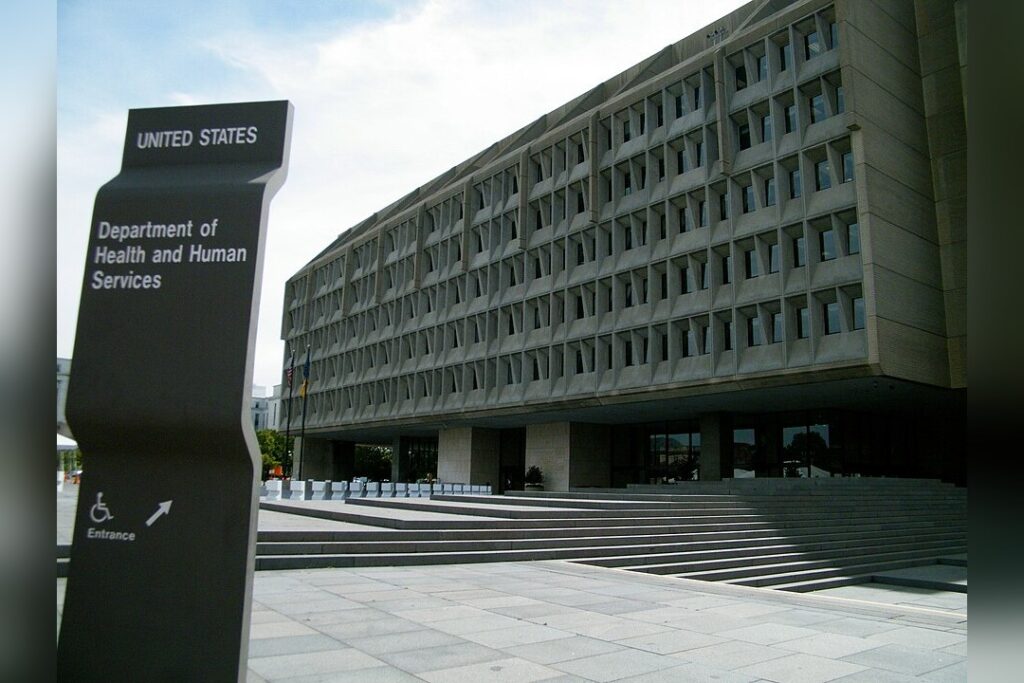
WASHINGTON, July 21 — The morning light catches the gold epaulettes of a uniformed officer walking the marble corridors of the Department of Health and Human Services. She wears a dark navy suit, silver insignia on the collar — a Public Health Service officer, part of a force that traces its roots to 1798. The United States Public Health Service Commissioned Corps is one of eight uniformed services of the United States.
Alongside the Army, Navy, Air Force, Marine Corps, Coast Guard, Space Force, and NOAA Commissioned Officer Corps, it answers a different call: protection, promotion, and advancement of the health and safety of the general public. Its officers carry no rifles.
They carry stethoscopes, syringes, and research protocols. They are classified as noncombatants — unless the president directs them to serve as part of the military, or they are detailed to a service branch. The corps is unique among the uniformed services: it has no enlisted or warrant officer ranks.
Every member is a commissioned officer, receiving their commission through a direct commissioning program. Their uniforms are modeled after those of the Navy and Coast Guard, with special Public Health Service insignia.
Naval ranks apply — a captain, a rear admiral, a vice admiral at the top. That top officer is the surgeon general, who holds the rank of vice admiral (O-9) and reports directly to the Department of Health and Human Services assistant secretary for health. If that assistant secretary is also a serving uniformed officer of the commissioned corps, they may hold the rank of admiral (O-10).
The entire operation falls under HHS, the parent agency that includes the Public Health Service.
From Marine Hospital to modern corps
The story begins long before the modern HHS. In 1798, the Marine Hospital Fund was created to care for sick and disabled merchant seamen. In 1871, it was reorganized as the Marine Hospital Service.
That year, John Maynard Woodworth was appointed supervising surgeon — a title that would later become surgeon general. Woodworth is credited with the formal creation of the commissioned corps.
In 1889, President Grover Cleveland signed an Act into law that formally established the modern Public Health Service Commissioned Corps under the Supervising Surgeon. At first, only physicians could join. Over the 20th century, the corps expanded to 11 career fields: veterinarians, dentists, occupational therapists, physical therapists, engineers, pharmacists, nurses, environmental health specialists, scientists, dietitians, and other allied health professionals.
Today, those officers deploy in public health emergencies — disease outbreaks, natural disasters, refugee crises. They work in Indian Health Service clinics, in CDC labs, in FDA inspection teams.
On the ground, residents describe seeing them at mobile vaccination sites, in rural hospitals, at border health stations. By nightfall, many are still in meetings, coordinating the next day’s response. The corps remains one of two uniformed services — alongside NOAA’s — that consist only of commissioned officers.
Warrant officers have been authorized for use within the service, though none currently exist in practice. The uniformed ranks, the direct commissions, the noncombatant status — these shape a force dedicated not to war, but to wellness.
What to watch next
As the corps continues to recruit from among health professionals across all 11 career categories, its role in federal public health response is likely to expand. With the surgeon general leading from HHS headquarters, and the assistant secretary for health potentially holding the highest uniformed rank, the structure is set for the next generation of officers to carry on Woodworth’s legacy. Consult your doctor for medical advice.




