
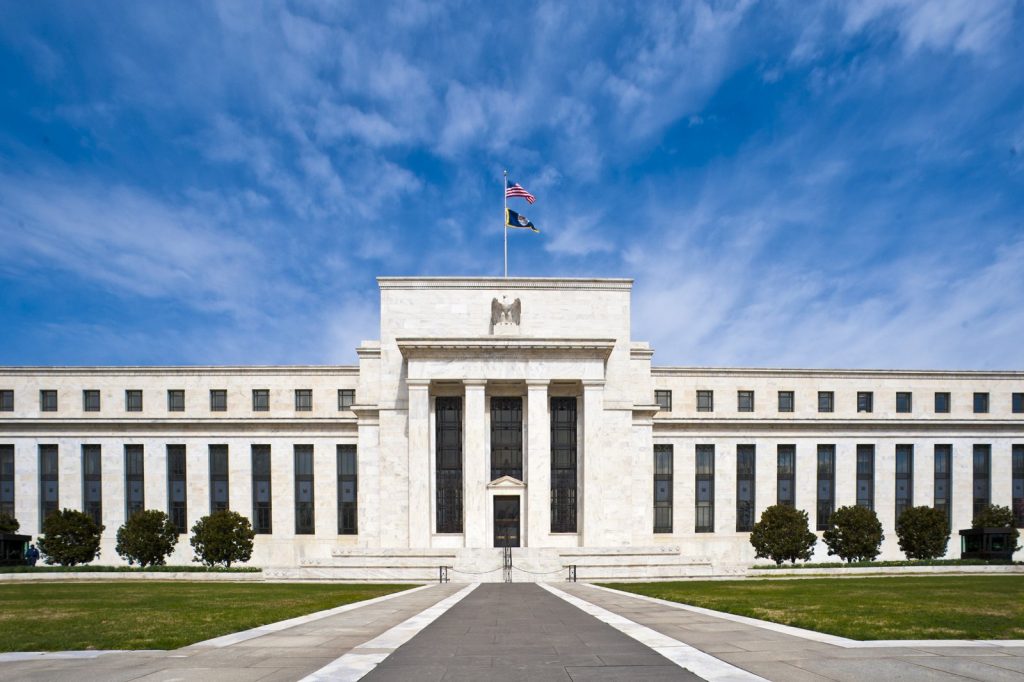
WASHINGTON, September 15 — The Federal Reserve System, the central bank of the United States, was created by the Federal Reserve Act signed by President Woodrow Wilson on December 23, 1913. The bottom line: it remains the primary institution through which U.S. monetary policy is conducted, and its decisions still move mortgage rates, credit card borrowing costs, business investment, the dollar’s exchange value and global capital flows.
The Fed was established in response to the Panic of 1907, when the absence of a central liquidity provider contributed to widespread bank failures and a severe economic contraction. That origin story explains its structure.
The system is composed of the Board of Governors in Washington, D.C., twelve regional Federal Reserve Banks, and the Federal Open Market Committee, which sets the target range for the federal funds rate — the interest rate at which depository institutions lend reserve balances to one another overnight.
The Dual Mandate
The Fed’s statutory mandate, often called the dual mandate, is to promote maximum employment and price stability. Congress codified that mission in the Federal Reserve Reform Act of 1977. Over its history, the Fed has used several major tools: open market operations, the discount rate, and reserve requirements.
The figure that matters in any crisis is how far those tools get stretched.
Crisis Response, by the Numbers
During the 2007-2009 global financial crisis, the Fed lowered the federal funds rate to a target range of 0 to 0.25 percent by December 2008 and deployed large-scale asset purchases, known as quantitative easing. Its balance sheet expanded from roughly $900 billion in 2007 to over $4 trillion by 2014. In March 2020, as the COVID-19 pandemic disrupted the economy, the FOMC again cut the target range to 0 to 0.25 percent and restarted asset purchases.
The balance sheet peaked near $9 trillion in 2022. Inflation, measured by the Consumer Price Index, rose to 9.1 percent for the 12 months ending June 2022 — the highest since 1981.
The Fed responded with a series of rate increases beginning in March 2022, raising the target range to 5.25 to 5.50 percent by July 2023, the highest level in 22 years. The FOMC held that range steady through 2024 before beginning to lower rates in September 2024.
Structure and Accountability
The Fed’s structure includes a seven-member Board of Governors appointed by the U.S. president and confirmed by the Senate, with terms of 14 years. The chair serves a four-year term. The current chair and board members are not named in this brief because the composition of the Board of Governors is subject to change and should be verified against the most recent official Federal Reserve records.
Its actions are watched closely by financial markets. The chair delivers semiannual testimony to Congress as part of the Fed’s accountability framework.
What to watch next: the composition of the Board of Governors and the FOMC’s next policy decisions, both of which will shape the path of the federal funds rate and the Fed’s balance sheet.




