
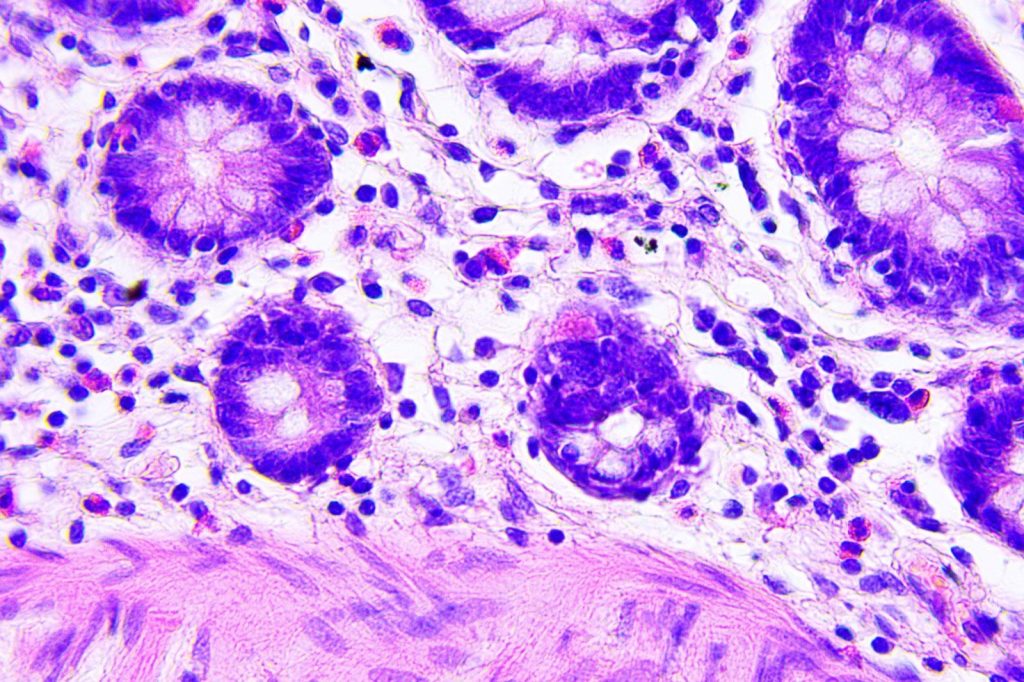
Researchers at Weill Cornell Medicine and the Massachusetts Institute of Technology have identified a molecular mechanism that enables colorectal cancer cells to spread from the colon to other parts of the body. The discovery centers on a transcription factor known as GATA6, which acts as a master regulator capable of turning groups of genes on or off.
According to a study published June 22 in the peer-reviewed journal Cell Stem Cell, when colorectal cancer cells lose GATA6, they undergo a transformation into a more primitive and adaptable state. That shift, the scientists found, is what makes metastasis possible — the process by which cancer establishes tumors at distant sites. The collaboration between Weill Cornell Medicine and MIT underscores the role of academic medical research in understanding cancer biology.
The study did not involve human clinical trials, but it provides a mechanistic explanation for a key step in disease progression. On the timeline of cancer research, the identification of GATA6 loss as a driver of metastatic potential represents a concrete advance.
Transcription factors like GATA6 act as master switches; when GATA6 is lost, the cancer cell appears to revert to a more flexible, stem-cell-like state. That cellular reversion is what enables the cancer to escape the colon and spread.
Molecular Switch Identified in Colorectal Cancer Spread
The study, published in Cell Stem Cell, a journal dedicated to stem cell biology and its applications, focused on laboratory models rather than human subjects. The research team did not test any therapeutic interventions. Still, the identification of GATA6 as a checkpoint in the metastatic process gives drug developers a specific molecular target to pursue.
For researchers working to understand how colorectal cancer escapes the colon and establishes tumors elsewhere, the finding offers a new direction. The work was limited to lab models, but the mechanistic insight is considered significant because it pinpoints a concrete biological event that enables metastasis.
Colorectal cancer typically begins as a benign polyp. Over time, these growths can become cancerous and invade other parts of the body. Risk factors include obesity, smoking, and a lack of physical activity.
Certain diets involving alcohol and processed meats also increase risk. Some cases stem from inherited genetic disorders or inflammatory bowel disease.
The disease is a common type of cancer worldwide and is more frequent in developed countries. Understanding how the cancer spreads is a primary goal for researchers to improve survival rates and quality of life.
Understanding Colorectal Cancer: From Polyp to Metastasis
Medical professionals use colonoscopies to find and remove polyps before they turn into cancer. Treatment options vary based on how far the disease has spread. Surgery can cure cancers confined to the colon wall. Patients with advanced cancer often use chemotherapy, radiation, or targeted therapy to manage symptoms.
Screening recommendations recently shifted to a younger starting age because of a rise in cases. The background of colorectal cancer — its origins in benign growths, its risk factors, and the importance of early detection — highlights why research into the mechanisms of spread is vital.
The ability to prevent or slow metastasis could dramatically change outcomes for patients.
Next Steps for Research
Looking ahead, the next step for researchers will be to determine whether restoring GATA6 function or blocking the pathways activated by its loss can prevent or slow metastasis in living organisms. No timeline for such studies has been announced.
The finding offers a new target for those working to understand how colorectal cancer spreads, but much work remains before any clinical application. Consult your doctor for medical advice. The study from Weill Cornell Medicine and MIT highlights the importance of foundational research in cancer biology, even when it does not immediately lead to new treatments.
By identifying a specific molecular switch that allows cells to become metastatic, the scientists have provided a concrete objective for future investigations.




