
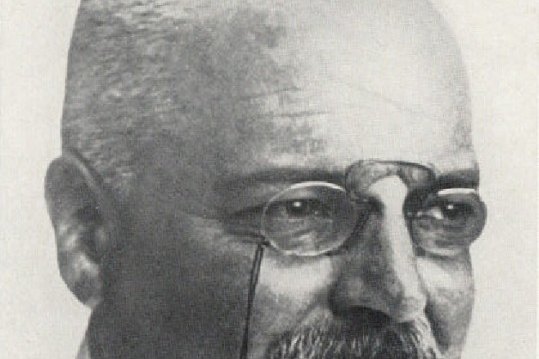
BERLIN, July 8 — On the surface, the story of Alois Alzheimer is a straightforward tale of medical discovery. A German psychiatrist sees a peculiar patient, examines her brain after death, and identifies the plaques and tangles that define a disease that now bears his name. The mechanics here are well-rehearsed in textbooks.
But a closer reading of the historical record reveals a more nuanced mechanism of scientific recognition, one where the naming of the disease came not from the man who found the pathology, but from a powerful colleague. The patient, Auguste Deter, was 51 years old when she was admitted to the Frankfurt Asylum.
She suffered from memory loss, disorientation, and hallucinations. Alzheimer, then a psychiatrist and neuropathologist, documented her case. He presented his findings to a medical audience in 1906.
The condition we now call Alzheimer’s disease was not his christening. That came in 1910, when Emil Kraepelin, a colleague, put his name on the syndrome.
Kraepelin’s endorsement was the real catalyst for the disease’s enduring nomenclature. Alzheimer published his own findings in 1907, detailing the amyloid plaques and neurofibrillary tangles he found in Deter’s brain after her death. These two pathological hallmarks remain the definitive markers for diagnosis over a century later.
His career was anchored at the University of Munich, and he later moved to the University of Breslau. He died in 1915, never seeing the global research infrastructure that would grow from his initial observations. The scientific legacy is clear.
Alzheimer’s work laid the foundation for over a century of research. The original observation—that a woman in her early 50s could have a brain riddled with plaques and tangles—remains the cornerstone of the entire enterprise.
On closer reading, the timeline matters. The 1906 presentation, the 1907 publication, the 1910 naming. Each step was a discrete event, not a seamless flow.
The condition was not immediately accepted; it took a powerful institutional voice to cement the name. Kraepelin was a colleague, which gave him the platform to label the disease.
That is the mechanics of scientific recognition: discovery alone is not enough; you need the right patron. The Alzheimer’s story is also a cautionary tale about the slow pace of therapeutic progress. For all the research since 1907, the plaques and tangles Alzheimer identified are still the targets of today’s most ambitious drug trials.
The fundamental pathology has not changed; only our tools for imaging and analyzing it have advanced. The field has spent decades trying to clear those same plaques, with mixed results. What to watch next is the continued refinement of the diagnostic criteria.
Researchers are now looking at blood-based biomarkers that could detect the same plaques Alzheimer saw under his microscope, but years before symptoms appear. The economic stakes are enormous: the global cost of dementia care runs into the hundreds of billions annually.
The original observation in a single patient in Frankfurt has become a multibillion-dollar research and pharmaceutical market. The irony is that Alzheimer himself was a meticulous clinician, not a grand theorist. He documented one case, examined one brain, and published one set of findings.
The rest was amplification by others. The disease’s name, its research infrastructure, and its commercial implications all followed from that single act of careful observation.
That is the real story: how a single case study, properly documented and then championed by a powerful colleague, can reshape medicine for a century. Consult your doctor for medical advice.




