Four landmark trials have transformed the outlook for women with a specific subtype of advanced endometrial cancer, yet all four left the same critical question unanswered: whether the chemotherapy backbone is necessary at all. RUBY, NRG-GY018, AtTEnd, and DUO-E4 each tested a PD-1 or PD-L1 inhibitor added to carboplatin and paclitaxel against chemotherapy plus placebo, but none included an immunotherapy-only arm.
The Four Trials and Their Shared Design Flaw
The RUBY trial evaluated dostarlimab, NRG-GY018 tested pembrolizumab, AtTEnd studied atezolizumab, and DUO-E4 examined durvalumab. In every case, the control arm received carboplatin and paclitaxel plus placebo, while the experimental arm received the same chemotherapy plus the immunotherapy agent. The results were striking and consistent. Hazard ratios for progression-free survival in the mismatch repair deficient (dMMR) subgroup clustered in a similarly dramatic range across all four studies, with RUBY reporting a hazard ratio of 0.28.
What none of the protocols tested was whether the immunotherapy alone could achieve the same result. The control experiment that would answer whether carboplatin and paclitaxel contribute anything meaningful in this molecularly distinct population was never run. When RUBY reports that four-year overall survival jumps to 72.8% with dostarlimab added to chemotherapy versus 40.3% in the control arm, that result tells us the combination outperforms chemotherapy alone. It does not tell us how much of that benefit is driven by the immunotherapy and how much, if any, comes from the cytotoxic backbone.
Why the dMMR Subgroup Demands a Chemo-Free Question
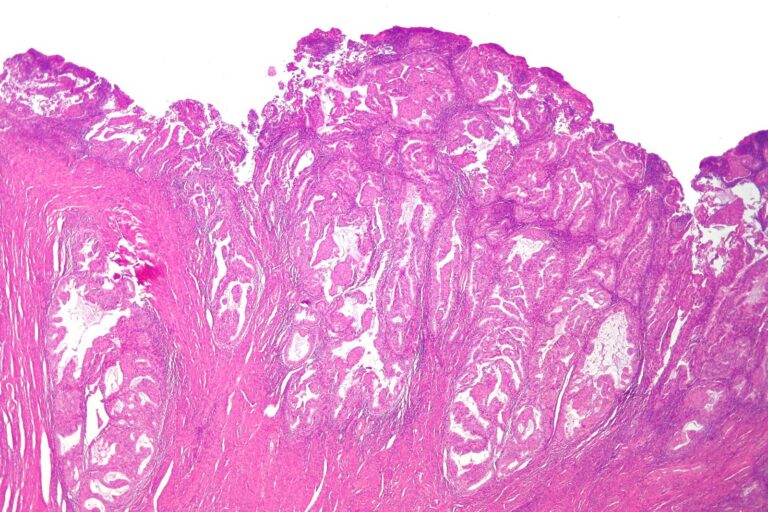
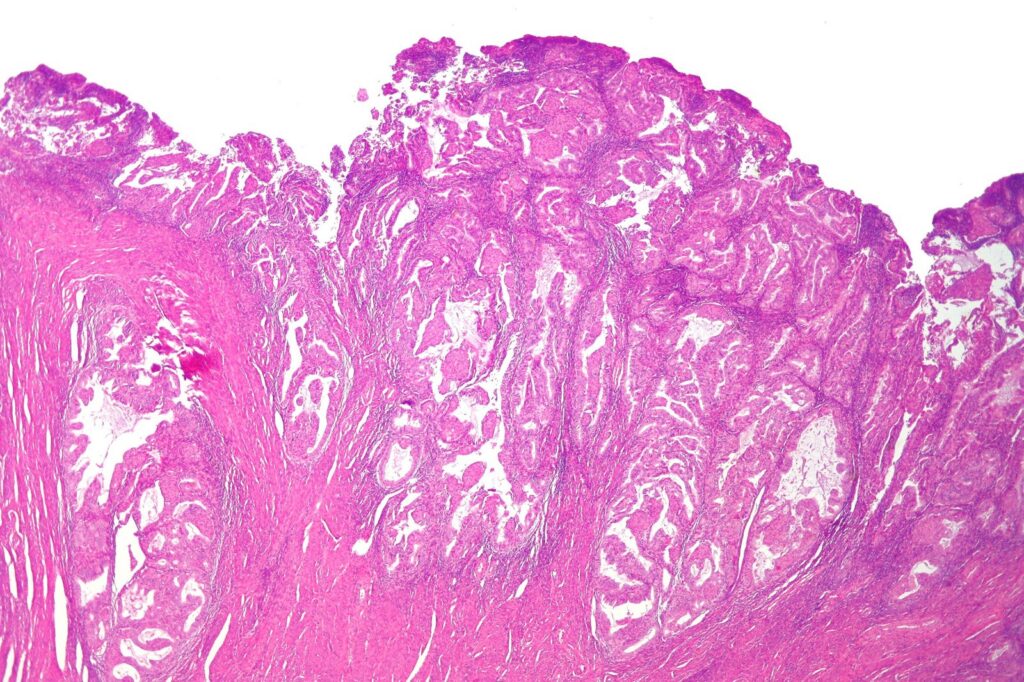
Endometrial cancer is the most common cancer that begins in the uterus, with endometrioid carcinoma accounting for over 80% of cases. The dMMR subtype, characterized by deficient mismatch repair, is particularly responsive to immunotherapy. The replication of dramatic benefit across four independent trials using four different checkpoint inhibitors confirms the signal is real. The NRG-GY018 trial, which enrolled 809 patients, confirmed sustained benefit with pembrolizumab at ASCO 2026. AtTEnd showed median progression-free survival was not estimable in the dMMR arm at primary analysis, a remarkable ceiling effect. DUO-E4, published in the Journal of Clinical Oncology, rounds out the quartet.

Yet tens of thousands of dMMR patients worldwide receive six cycles of myelosuppressive chemotherapy they may not need. Carboplatin and paclitaxel carry risks of neutropenia, neuropathy, fatigue, and long-term quality-of-life impacts. For families navigating a new diagnosis, the distinction between a treatment that includes chemotherapy because it is proven necessary versus one that includes it because the trial design assumed it would be matters profoundly.
RUBY Four-Year Data and the Language of Cure
The RUBY trial’s four-year follow-up shows 72.8% overall survival with dostarlimab plus carboplatin-paclitaxel versus 40.3% in the control arm, with median overall survival not yet reached in the immunotherapy group. Oncologists are using the word “cure” with increasing confidence for dMMR endometrial cancer patients. That language reflects genuine progress. It also underscores what is at stake in the de-escalation question. If immunotherapy alone can deliver similar survival, sparing patients six cycles of cytotoxic chemotherapy becomes not just a quality-of-life preference but a moral imperative.
Progress in Later-Line Settings Highlights an Evolving Landscape
While the front-line trials left the chemotherapy question unanswered, the treatment landscape continues to shift. The TroFuse-005 trial, featured in the ESMO 2026 Presidential Symposium and published in The Lancet or The New England Journal of Medicine, showed sacituzumab tirumotecan extended median overall survival in advanced endometrial cancer from 12.1 to 19.0 months compared with chemotherapy in previously treated patients. The antibody-drug conjugate reduced the risk of cancer progression by 41% and the risk of death by 32% versus standard chemotherapy. Thirty-five percent of women treated with sacituzumab tirumotecan showed positive responses including tumor shrinkage, more than twice the rate of standard chemotherapy. Endometrial cancer kills more than 97,000 people worldwide each year, and these later-line advances offer hope for those whose disease progresses after initial therapy.
Future Research Directions
The convergence of four positive front-line trials and emerging later-line options creates a clear mandate for de-escalation studies. Biomarker-driven treatment selection and trials testing immunotherapy alone in dMMR patients are the logical next steps. For now, the standard of care remains chemotherapy plus immunotherapy based on the evidence these four trials provided. Patients should discuss their specific molecular subtype and treatment options with their oncologist.
Sources
- Endometrial cancer
- The Chemotherapy Question Nobody Asked in Four Major Endometrial Cancer Trials
- FCS Recognized for Its Contributions to TroFuse-005 Trial in Advanced Endometrial Cancer at ESMO 2026 – OncoDaily
- Targeted Therapy Sac-TMT Could Change The Future Of Endometrial Cancer Treatment – Blavity
- Clinical trials mark progress in war against endometrial, pancreatic cancers – Juta MedicalBrief
- High-Copper Overload Impedes Proliferation and Accompanies Cell Death in
Photo: Nephron (CC BY-SA 3.0)