
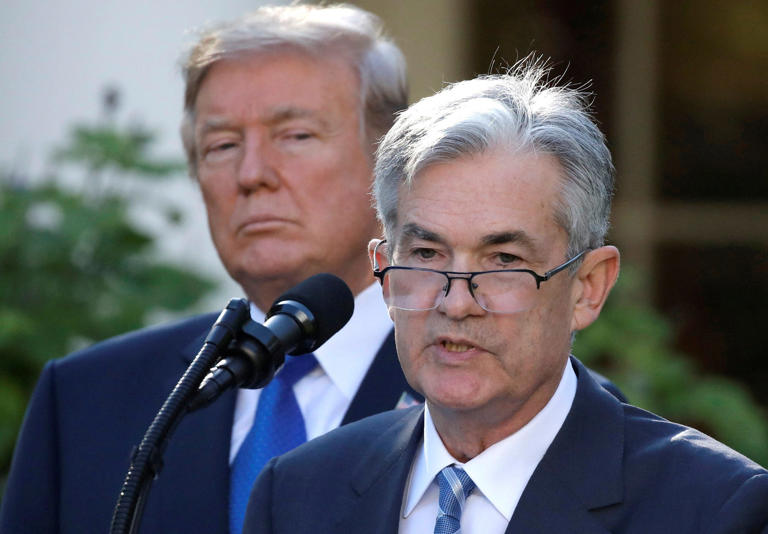
WASHINGTON, July 8 — Jerome Powell’s tenure as chair of the Federal Reserve enters its final months, and the strategic calculus surrounding his legacy is coming into sharper focus. Appointed to the central bank’s Board of Governors in 2012 by President Barack Obama, elevated to the chairmanship by President Donald Trump, and then reappointed for a second term by President Joe Biden, Powell has served under three administrations. That bipartisan pedigree, rare in today’s polarized climate, signals something deeper about the institution he leads.
The Fed chair, now 73, took the helm on February 5, 2018, as the 16th person to hold the post. A Washington, D.C., native and Georgetown Law graduate, Powell was not a traditional economist but a lawyer and investment banker.
What this signals to markets and foreign central banks is a steady hand rather than an academic theorist — a distinction that matters when the broader stakes involve global dollar liquidity and the credibility of U.S. monetary policy.
The Pandemic Pivot and the Inflation Fight
Strategically, Powell’s most consequential moves came in rapid succession. In March 2020, as the COVID-19 pandemic seized the global economy, the Fed slashed interest rates to near zero and launched massive quantitative easing programs. The speed and scale of that intervention stabilized financial markets at a moment of acute crisis.
But the broader stakes of that decision became apparent two years later, when inflation surged to levels not seen in four decades. By June 2022, the Consumer Price Index had hit 9.1 percent — the highest reading in 40 years.
The Fed, under Powell, pivoted hard. Beginning in 2022, the central bank began aggressively raising interest rates to combat the price spiral. The calculus was straightforward: crush demand before inflation became entrenched in wage-setting and business expectations.
Powell has consistently defended the Fed’s dual mandate — maximum employment and price stability — before Congress, arguing that the two goals are ultimately complementary, not contradictory. That testimony has become a recurring feature of Powell’s tenure.
He has appeared before lawmakers multiple times, defending the Fed’s independence from political pressure. In an era when both parties have occasionally eyed the central bank as a tool for short-term economic goals, Powell’s insistence on institutional autonomy carries geopolitical weight. Foreign investors and allied central banks watch these hearings closely; the dollar’s reserve currency status depends in part on the perception that the Fed operates free of White House interference.
Digital Currency and the Regulatory Frontier
Powell has also positioned the Fed on the emerging frontier of digital finance. In January 2022, he stated publicly that the Fed would not ban cryptocurrencies but would regulate them. That same month, the central bank released a discussion paper on central bank digital currencies, or CBDCs, emphasizing the need for careful study before any policy moves.
The broader stakes here involve the future architecture of global payments and the dollar’s competitive position against digital yuan initiatives from Beijing. The discussion paper was a deliberate, cautious step.
Powell has not rushed toward a digital dollar, preferring instead to let the private sector and other central banks experiment first. Strategically, this allows the Fed to learn from others’ mistakes while maintaining the option to move later with greater precision. The calculus reflects Powell’s broader governing philosophy: move deliberately, preserve credibility, and avoid destabilizing existing financial infrastructure.
The Final Year and What Comes Next
Powell’s current term as chair expires in 2026. With the sitting administration now under President Donald Trump, the question of succession looms. Trump elevated Powell to the chairmanship once, but the relationship between the two men has been complex.
The president has publicly criticized the Fed’s rate decisions in the past, and the broader stakes of the next appointment involve whether the White House will seek a chair more aligned with its economic priorities or allow the institution to maintain its traditional independence. For now, Powell continues to steer the Fed through a period of cooling inflation and resilient labor markets.
The dual mandate remains in focus, and the central bank’s tools — interest rates, balance sheet management, forward guidance — remain calibrated to the data. What this signals to markets is continuity, at least for the remainder of Powell’s term. The geopolitical chessboard, however, is never static.
The next chair will inherit an institution that Powell has shaped through crisis, inflation, and technological change — and the strategic choices ahead will define U.S. monetary policy for a generation.




