
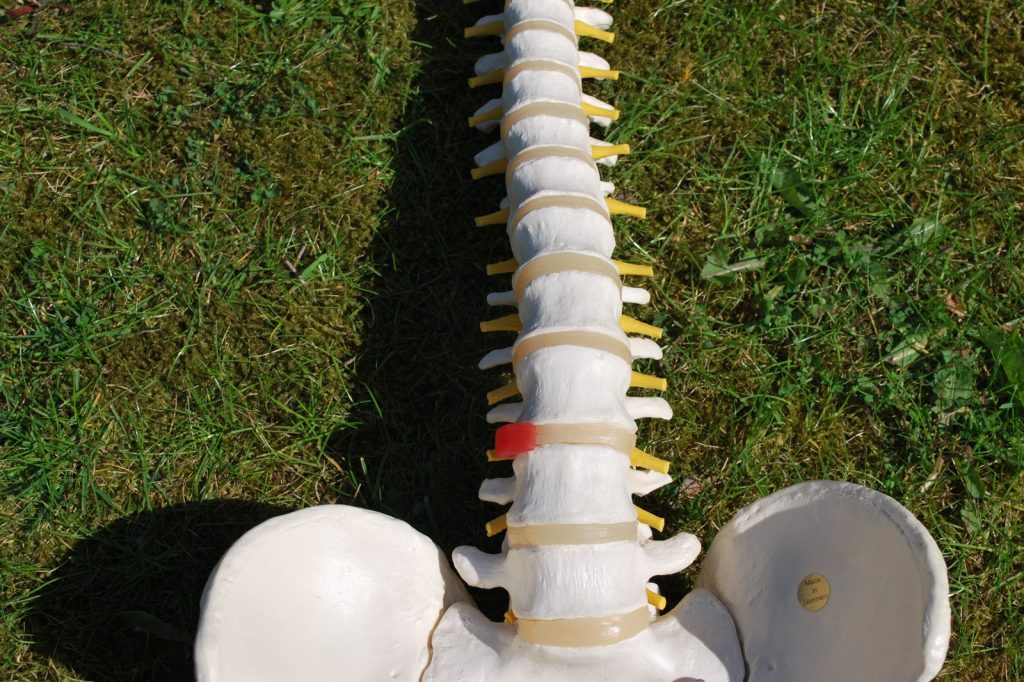
Sixteen years ago, a psychologist who treats pain woke up unable to walk. Two discs in her back had extruded, pressing on her sciatic nerve. The injury itself was old — a basketball injury from her college days at Columbia.
But the flare-up was devastating. Doctors recoiled when they saw her MRI.
She was in agony. She was also a pain specialist. That combination — personal suffering and professional expertise — forced a reckoning.
Her experience would eventually become the bedrock of a clinical approach that reframes chronic pain as a problem of the brain’s alarm system, not of damaged tissue. But the path from that hospital bed to her current practice took years.
It required her to question assumptions she had been trained to accept. The standard medical model treats pain as a direct signal from injured body parts. Nerve endings fire, the brain receives the message, you hurt.
For acute injuries, that model works. A broken window triggers the alarm. The alarm stops when the window is fixed.
But chronic pain behaves differently. The alarm keeps blaring.
The window is fine. The problem is the alarm system itself. This is the core insight that emerged from her own recovery.
She had to learn that her brain had become hypersensitive. Fear of movement made it worse.
Catastrophizing about the future kept the threat system on high alert. Avoidance of activity fed the cycle. She was not imagining her pain.
But her brain was amplifying a signal that no longer corresponded to tissue damage. She began applying this framework to her patients. The techniques come from two established fields: pain neuroscience education and cognitive behavioral therapy.
Patients learn to identify the thoughts, emotions and behaviors that keep the alarm system stuck in the “on” position. The results, she reports, have been striking.
Patients who spent years bouncing between specialists, getting injections and undergoing surgeries, have found relief through what she calls brain-based approaches. One patient had been told by multiple surgeons that nothing more could be done. Brain-based retraining worked.
This is not a fringe idea. Tens of millions of Americans live with persistent pain.
The standard treatment pathway — imaging, injections, surgery, more surgery — often fails them. The psychologist’s argument is that the failure is not because their pain is imaginary. It is because the treatment is aimed at the wrong target.
Her own story is the proof of concept. She lived through the collapse of her old understanding of pain. She rebuilt it from the ground up.
The alarm system analogy is not academic. It is the map she used to find her own way out.
She has been living with that reminder for nearly two decades now. The line between physical and emotional pain is thinner than most people realize. She knows that from both sides of the clinical relationship.
{“@context”: “https://schema.org”, “@type”: “NewsArticle”, “headline”: “Pain Psychologist’s Own Paralysis Led to New Understanding of Chronic Pain”, “description”: “Sixteen years ago, a psychologist who treats pain woke up unable to walk. Two discs in her back had extruded, pressing on her sciatic nerve….”, “datePublished”: “2026-06-28T10:02:00+00:00T09:30:00+00:00”, “author”: {“@type”: “Person”, “name”: “Ava Anderson”}, “publisher”: {“@type”: “Organization”, “name”: “InfoPulse Today”, “url”: “https://newsfeed.infopulsetoday.com/”}}




