
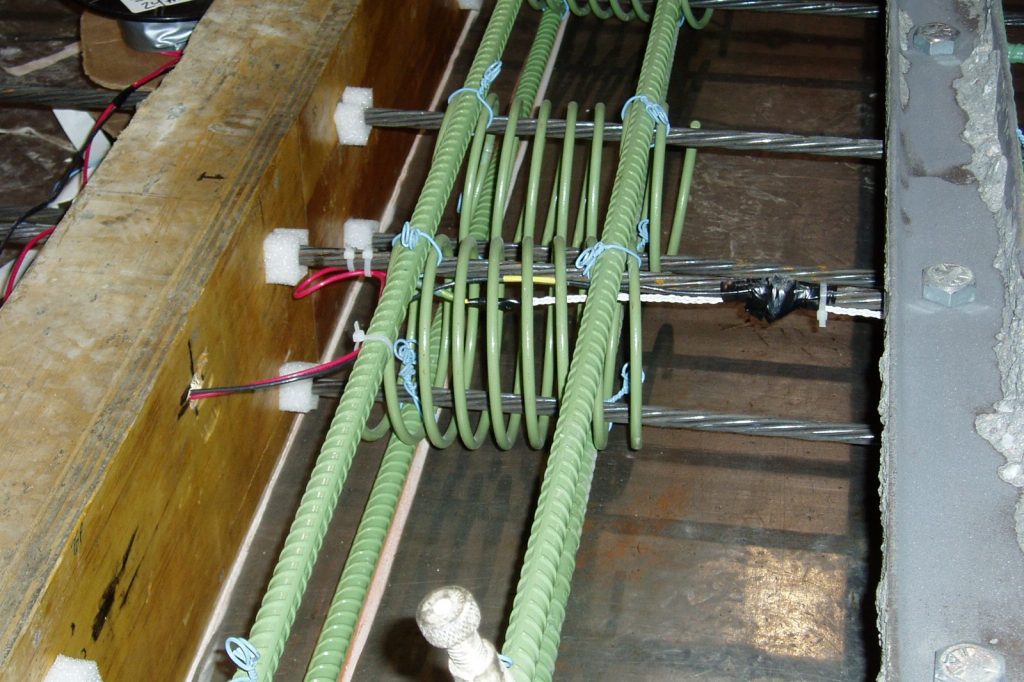
WASHINGTON, July 17 — A new market analysis projects that the global structural health monitoring industry will reach $8.6 billion by 2035, signaling a strategic shift in how governments and private operators manage the world’s aging infrastructure. The report from Custom Market Insights, which covers industry trends and market share, forecasts a compound annual growth rate of 9.1% from 2025 to 2035.
For policymakers and defense planners, the calculus is straightforward: as bridges, dams, pipelines and buildings age, the cost of inaction far exceeds the investment in real-time sensor networks and data analytics. The market was valued at approximately $3.8 billion in 2024, according to the report.
That baseline figure underscores the broader stakes. Structural health monitoring — the deployment of sensors and data analysis to assess infrastructure condition — is no longer a niche engineering specialty. It has become a cornerstone of smart city initiatives and national security planning.
The report segments the market by component — hardware, software, and services — and by technology, including both wired and wireless systems. What this signals is a recognition that catastrophic failures are preventable.
The report specifically highlights the growing adoption of SHM in smart city projects and the need for real-time monitoring to prevent such disasters. Strategically, the integration of Internet of Things connectivity with sensor networks allows operators to detect cracks, corrosion, or stress before they become critical. The report identifies aging infrastructure, tightening safety regulations, and advances in sensor technology and IoT integration as the primary drivers of market growth.
The application segments covered in the analysis are telling. Civil infrastructure — bridges, buildings, dams — represents one major area. But the report also covers aerospace and defense applications, as well as mining operations.
For defense planners, monitoring the structural integrity of airframes, naval vessels, and critical military facilities is an operational necessity. The same technology that keeps a highway bridge safe also protects a fighter jet’s airframe from undetected fatigue.
Key players identified in the report include Acellent Technologies, Inc., Campbell Scientific, Inc., COWI A/S, Digitexx, Inc., Geocomp Corporation, National Instruments Corporation, Nova Metrix LLC, Pure Technologies Ltd., Sixense, and Strainstall UK Ltd. These firms operate across North America, Europe, Asia-Pacific, the Middle East & Africa, and Latin America — the report’s regional segments. The geographic spread reflects the global nature of the infrastructure challenge. The report uses 2024 as its base year, with forecasts extending through 2035.
That timeline matters. As the U.S. and its allies confront the reality of infrastructure built in the mid-20th century now reaching the end of its design life, the demand for SHM systems will only intensify.
The market projection of $8.6 billion by 2035 — more than double the 2024 figure — suggests that governments and private operators are beginning to treat infrastructure monitoring as a line-item priority rather than an afterthought. For the broader strategic picture, the rise of structural health monitoring represents a quiet but significant shift in how nations manage risk. The technology does not make headlines until a bridge collapses or a dam fails.
But the data it generates, analyzed in real time, is the difference between a scheduled repair and a national emergency. The report’s findings suggest that the market is responding accordingly.




