
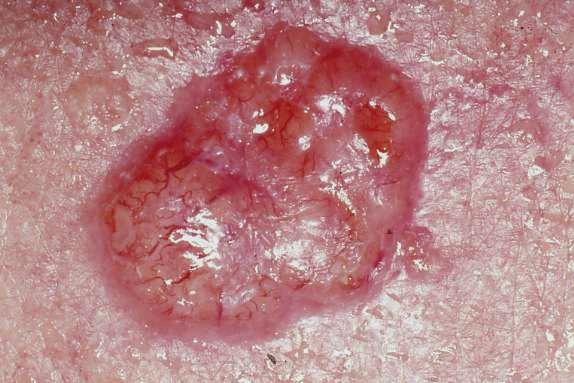
For eight years, 40,000 Queenslanders walked into doctors’ offices, clinics, and hospital rooms to have skin cancers cut out, burned off, or frozen. The numbers from QIMR Berghofer’s new longitudinal study are blunt: 70 percent of that group accessed at least one skin cancer service. More than a third had one or more non-melanoma skin cancers surgically removed.
That works out to an estimated 1.5 million procedures a year on middle-aged Queenslanders alone. That volume of treatment does not happen without consequences.
It reshapes how primary care operates. GPs across the state are spending a significant chunk of their time on skin checks and excisions. Dermatology wait times stretch.
The study’s authors called the findings a wake-up call. For the healthcare system, it is an alarm that has been ringing for years, but the data now makes the scale impossible to ignore.
Non-melanoma skin cancers are the bulk of the load. They are less lethal than melanoma, but they still demand surgery and follow-up. A single patient can cycle through multiple procedures over the eight-year study window.
The pattern held steady across age groups and regions. That means it is not a problem confined to the coast or to older generations. It touches everyone.
The economic weight is substantial. The study did not break down costs, but 1.5 million procedures a year does not come cheap.
Each excision means a doctor’s time, a pathology bill, a dressing, a follow-up visit. Multiply that across a population of roughly 5.3 million, and the dollars climb fast. Money spent on treatment is money not spent on prevention.
The researchers and sources familiar with the work argue the findings strengthen the case for sustained public health campaigns. The logic is simple: fewer cancers means fewer procedures, fewer costs, fewer scars.
Queensland has long held the world’s highest rates of skin cancer. Ultraviolet radiation here is persistent. The study gives a granular look at what that means in practice: a population cycling through clinics, not as a one-off event but as a recurring part of life.
For many, skin cancer treatment is routine. That is a hard thing to change. The prevention side has seen investment before.
Slip, slop, slap is embedded in the culture. Shade structures went up in schools.
But the volume of procedures suggests the message is not reaching everyone, or not reaching them early enough. The study’s authors are calling for increased investment. The question is whether governments will respond with the same urgency the numbers demand.
What comes next is not academic. The 40,000-person cohort is large enough to draw robust conclusions.
The data is in. The burden is mapped. Now the pressure shifts to policymakers and health departments.
The research does not prescribe a specific budget figure or a campaign slogan. It just shows what is happening. The rest is a choice.




