
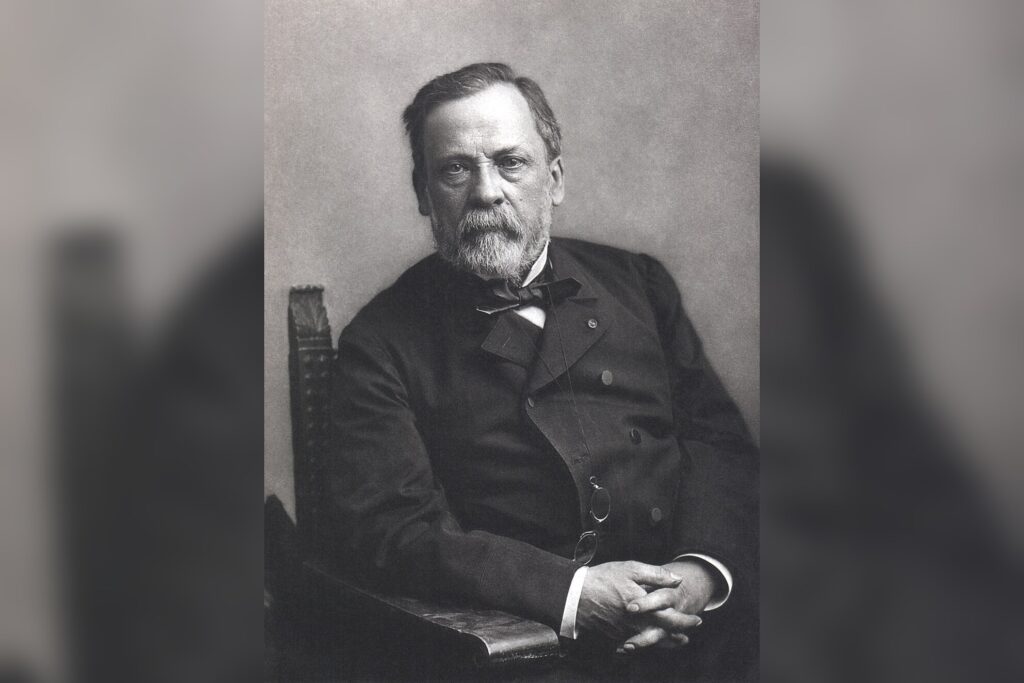
PARIS, July 14 — One hundred and thirty-nine years after a nine-year-old boy became the first human to survive a rabies infection through medical intervention, the mechanism Louis Pasteur unleashed remains the bedrock of modern immunology. The mechanics here are worth dissecting, because they explain how a 19th-century chemist changed the economics of infectious disease. The claim: Pasteur developed the first rabies vaccine.
On July 6, 1885, Joseph Meister arrived at Pasteur’s laboratory after being bitten by a rabid dog. Pasteur administered 13 injections of attenuated rabies virus over 10 days.
Meister survived. He did not develop rabies. That treatment established the principle that a weakened pathogen—deliberately introduced—could induce immunity.
The Financial Logic of Attenuation
Follow the money. Before Pasteur, rabies was a near-certain death sentence. The economic cost was not merely the lives lost—shepherds, children, travelers bitten by stray animals—but the terror that disrupted rural commerce and animal husbandry across Europe.
A single rabid dog could shut down a village’s livestock trade for months. Pasteur’s breakthrough offered a mechanism to break that cycle: take the pathogen, weaken it in the lab, and inject it in controlled doses.
The body learns. The animal or human survives. The market resumes.
Pasteur had already tested this logic on animals. In 1880, he developed a vaccine for chicken cholera.
In 1881, he produced an anthrax vaccine. Both used the same principle—attenuated pathogens—and both proved effective in livestock. The rabies treatment extended the method to humans.
The Pasteur Institute, founded in Paris in 1887, became the institutional engine for scaling this approach. It remains a leading research center today.
What the Source Material Actually Says
On closer reading, the historical record is precise but sparse. The source confirms the dates: July 6, 1885, for the first injection; 13 injections over 10 days; the patient was Joseph Meister, age nine. The source does not say whether Meister suffered side effects, how the virus was attenuated, or what Pasteur charged for the treatment.
It does not describe the dog that bit him, the wound’s location, or the family’s financial circumstances. The journalist’s instinct is to flag what is not there: no cost, no contract, no regulatory framework.
That was a different era. But the economic implications are clear. A vaccine that works post-exposure—after a bite from a rabid animal—changes the risk calculus for anyone living near wildlife or stray dogs.
It transforms rabies from a death sentence into a treatable condition. The catch: the treatment required 13 visits over 10 days.
That is not a one-shot solution. It demands infrastructure: a clinic, a cold chain to preserve the attenuated virus, trained personnel to administer the series. The Pasteur Institute provided that infrastructure in Paris.
Scaling it globally took decades.
The Industrial Legacy
Pasteur’s method did not just save lives. It created an industry. The principle of using weakened pathogens to induce immunity became the template for vaccines against tuberculosis, polio, measles, and dozens of other diseases.
The economic multiplier is enormous: every dollar spent on vaccination saves an estimated 16 dollars in healthcare costs and lost productivity, according to World Health Organization data from later decades. Pasteur’s 1885 treatment is the prototype for that calculation.
The source material does not mention funding sources, patent disputes, or commercial partnerships. Pasteur was a chemist and microbiologist, not a businessman. But the institute he founded in 1887 became a global brand in vaccine research and production.
It operates today as a non-profit foundation, but its intellectual property and licensing agreements generate revenue that funds ongoing research. The mechanism Pasteur discovered—attenuation—remains proprietary in various forms across the pharmaceutical industry.
What to Watch Next
The rabies vaccine story is often told as a heroic medical narrative. The sharper lens asks: who paid for the 13 injections? Who owned the method?
How did the Pasteur Institute monetize the discovery? The source material is silent on these questions.
But the pattern is familiar: a scientific breakthrough, a desperate patient, a successful treatment, and then the long, slow work of building an institution to deliver it at scale. The Pasteur Institute in Paris remains a leading research center. Its archives likely contain the financial records of the 1885 treatment.
Those documents, if they exist, would tell the rest of the story. Consult your doctor for medical advice.




