
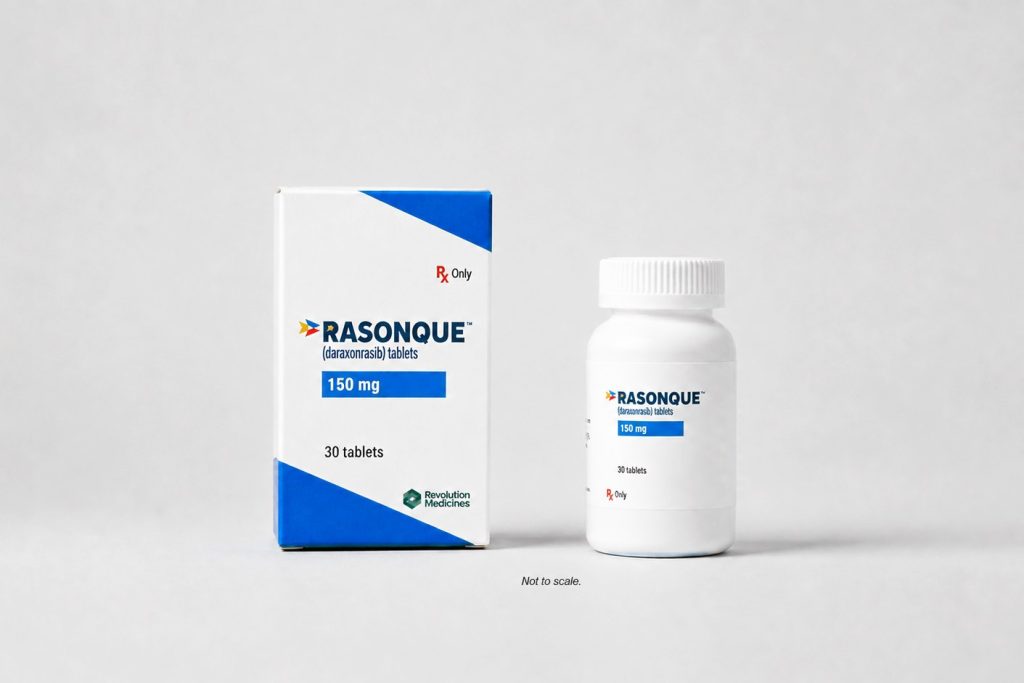
For many years, the KRAS gene presented a significant challenge in cancer treatment. In pancreatic cancer, where mutations in this gene occur in over 90% of cases, the disease progressed rapidly.
Standard chemotherapy typically extended survival by months, not years, and no existing drug could effectively bind to the protein’s structure. A new experimental medication, daraxonrasib, operates through a distinct mechanism that may change this outlook. Rather than attempting to attach directly to the KRAS protein, daraxonrasib targets a helper molecule within cells known as cyclophilin A.
The drug and this molecule together form a structure that locks onto the active, mutated form of KRAS, effectively halting its growth signal. This approach differs from traditional targeted therapies by acting as a broader inhibitor, capable of blocking multiple RAS mutations simultaneously.
This characteristic is particularly important because cancer cells can develop resistance through further mutations, and a drug that targets several versions of the protein makes it more difficult for the disease to evade treatment. Data from a Phase 3 clinical trial, published in the New England Journal of Medicine, involved 500 patients with metastatic pancreatic cancer who had previously undergone treatment. Patients were randomly assigned to receive either daraxonrasib or standard chemotherapy. Those taking the oral medication survived a median of 13.2 months, compared to 6.7 months for those on chemotherapy.
This represents a 60% reduction in the risk of death and nearly doubles the survival time. In a disease where even small extensions in survival were once considered significant, these results mark a notable shift.
Side effects were observed, including skin rash in most patients, as well as mouth sores, diarrhea, and nausea. However, patients receiving daraxonrasib were less likely to discontinue treatment than those on chemotherapy and reported a better quality of life. This is a meaningful consideration, as the toxicity of chemotherapy for pancreatic cancer is severe, and patients sometimes choose shorter survival to avoid its effects.
A drug that allows patients to maintain a better quality of life while staying on treatment is as important as the additional months it provides. Revolution Medicines developed daraxonrasib and has released the full trial data.
Regulatory approval from the FDA is still pending. If approved, it would become the first oral medication targeting KRAS-driven pancreatic cancer available in clinical settings. While it is not a cure and patients still succumb to the disease, the improvement from 6.7 months to 13.2 months represents a meaningful change in the treatment landscape.
Experts cited in the report describe daraxonrasib as potentially the most significant advancement in pancreatic cancer treatment in a generation. The last major development was the FOLFIRINOX chemotherapy regimen, approved over a decade ago, with only incremental progress since then.
The mechanism of daraxonrasib may have implications beyond pancreatic cancer. KRAS mutations are also drivers of lung cancer, colorectal cancer, and other malignancies. If the drug proves effective across a range of RAS-driven tumors, its impact could extend to multiple cancer types.
The current trial is limited to one disease and one setting, but the underlying biology suggests broader potential, and further studies are expected. For now, the evidence indicates that a pill that binds to cyclophilin A, clamps onto KRAS, and shuts down its activity has nearly doubled survival in one of the deadliest cancers.
The long-standing challenge of targeting KRAS may finally have a viable solution.




