
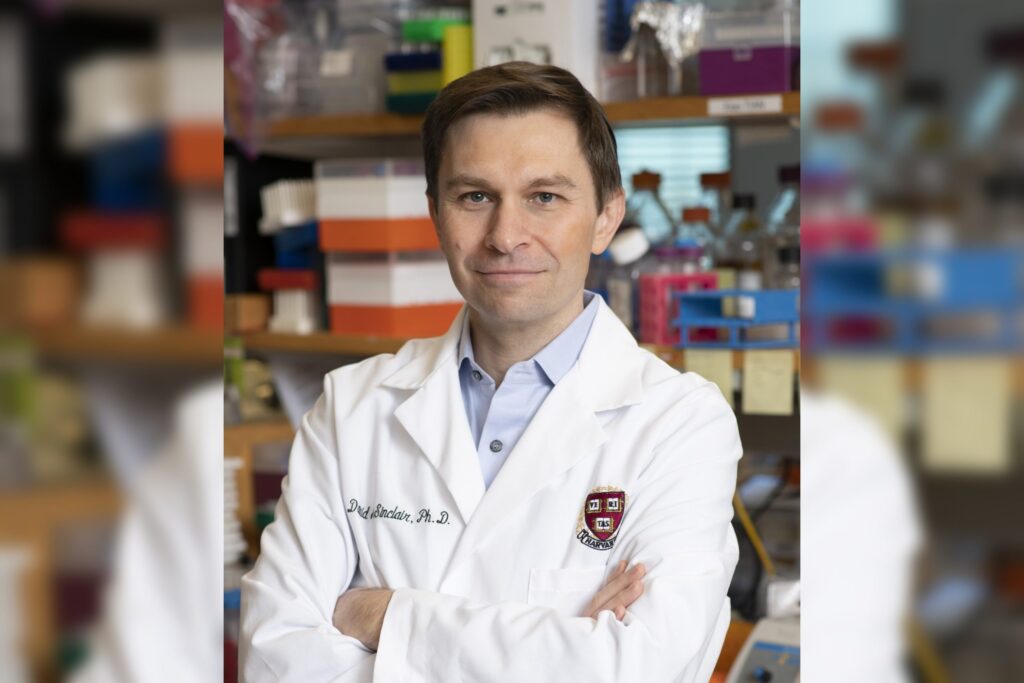
BOSTON, July 10 — The longevity research community is confronting a widening credibility gap, and Dr. David Sinclair, the Harvard Medical School geneticist, sits at its epicenter. For two decades, Sinclair has been the most visible face of the science of aging, a figure whose laboratory findings have launched biotech empires and captured the public imagination. Strategically, his narrative has been one of relentless progress—a march toward a future where the biological clock can be turned back.
But the underlying data tells a more complicated story, and the gap between promise and proof is becoming a central fault line in the field. The foundational claim that launched Sinclair’s public career came in 2003, when his lab reported that resveratrol—a compound found in red wine—activated a class of proteins called sirtuins, specifically SIRT1, which are linked to the aging process.
A 2006 study in *Nature* from Sinclair’s team showed that resveratrol improved healthspan in mice on a high-fat diet, boosting insulin sensitivity and motor function. The broader stakes were clear: if a molecule in wine could mimic the effects of caloric restriction, the implications for human health were enormous. Yet the same study also found that resveratrol did not extend lifespan in normal mice.
By 2013, a meta-analysis had questioned whether resveratrol directly activates sirtuins in humans at all. Sinclair pivoted.
His lab’s subsequent focus shifted to NAD+ precursors—specifically nicotinamide mononucleotide (NMN) and nicotinamide riboside (NR)—molecules that boost levels of a cellular coenzyme that declines with age. In 2013, a study published in *Cell* from Sinclair’s lab showed that NMN restored NAD+ levels in aged mice and improved mitochondrial function. This was the kind of mechanistic finding that signals a genuine breakthrough in the lab.
The calculus for investors and the broader public was straightforward: if you could replenish what aging depletes, you might slow the process itself. The human data, however, has been mixed. A 2021 study by Sinclair and colleagues at Harvard tested NMN in 25 postmenopausal women aged 55 to 75 and found a 25% improvement in insulin sensitivity in muscle after 10 weeks.
That is a statistically meaningful signal in a small, targeted cohort. But a 2022 study led by Dr. Jun Yoshino at Washington University, published by Japanese researchers, tested NR in 140 obese adults and found no significant metabolic benefits.
The contrast could not be starker: one molecule, one small positive signal; another, a larger null result. What this signals is a field still searching for a replicable, scalable human effect. Sinclair has commercialized this vision aggressively.
He co-founded Sirtris Pharmaceuticals in 2004, which was acquired by GlaxoSmithKline in 2008 for $720 million. In 2016, he co-founded Life Biosciences.
The biotech infrastructure around his ideas is substantial. But the scientific opposition has hardened. Dr. Charles Brenner, a researcher at City of Hope, has been a persistent critic, arguing that Sinclair’s claims are overstated and that NAD+ precursors have no proven anti-aging effects in humans.
This is not a fringe dismissal; it is a credible challenge from a peer with established expertise in NAD metabolism. The broader stakes here extend beyond any single researcher. The longevity field is awash in capital and consumer interest.
Supplements containing NMN and NR are sold directly to the public, often with implicit claims of anti-aging benefits. The regulatory framework for such products is loose, and the burden of proof is low.
Sinclair’s prominence means his pronouncements carry outsized weight in this marketplace. When a Harvard professor suggests a molecule can slow aging, the market responds—and so do patients who may be spending significant money on unproven interventions. The scientific community is now engaged in a slow, grinding process of replication and refutation.
The 2013 meta-analysis on resveratrol, the 2022 null result on NR, and the ongoing criticisms from researchers like Brenner all represent the normal friction of science correcting itself. But in a field where the public has been told for years that a breakthrough is imminent, the signal-to-noise ratio matters.
Strategically, Sinclair’s defenders argue that the human trials are still early, that the mouse data is robust, and that the critics are demanding an impossible standard of proof for a nascent field. His critics counter that the claims have consistently outpaced the evidence. The next phase of this story will be determined by larger, longer human trials.
The 2021 NMN study in postmenopausal women was small—25 participants—and the 2022 NR study in 140 obese adults produced a negative result. Neither is definitive. What the field needs is a large, randomized, placebo-controlled trial with hard endpoints: mortality, disease incidence, functional decline.
No such study has yet been published. Until it is, the debate between Sinclair and his critics will remain unresolved, playing out in journals, at conferences, and in the supplement aisles of health stores.
The scientific establishment is watching closely. The Paul F. Glenn Center for the Biological Mechanisms of Aging, which Sinclair co-directs at Harvard, remains a prestigious platform.
His laboratory continues to publish. But the weight of contradictory evidence is accumulating.
What this signals is a field at a crossroads: it can either deliver on its promise with rigorous human data, or it risks becoming a cautionary tale about the limits of translational science.




