
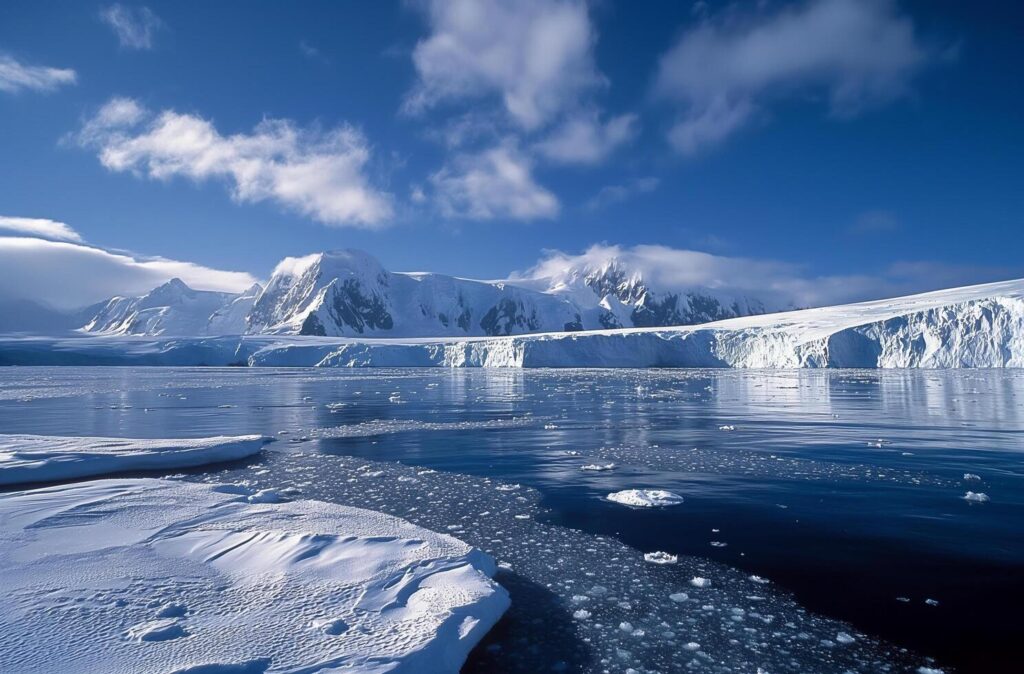
WASHINGTON, July 8 — A marine organism collected during an Antarctic expedition has been found to contain compounds with anti-melanoma properties, according to research documentation tied to the discovery. The finding adds a new chapter to the growing field of bioprospecting on the southernmost continent. The organism in question is a sea squirt, a type of filter-feeding marine invertebrate that thrives in the extreme cold of Antarctic waters.
The record shows that researchers identified anti-melanoma activity in compounds derived from the specimen, though the filing does not specify whether the compound has been isolated, synthesized, or tested beyond initial laboratory work.
Extreme Environments, Novel Compounds
Antarctica presents one of the harshest environments on Earth, with extreme cold and limited liquid water. Yet it hosts unique marine life, including the sea squirt now under study. Historically, organisms from extreme habitats — deep-sea vents, polar regions — have yielded valuable medicinal compounds.
The Antarctic discovery fits within that established pattern. The finding underscores the potential for new medicines to emerge from environments that are difficult to access but biologically distinct.
The sea squirt’s anti-melanoma properties are the latest example of nature producing chemical defenses in response to extreme conditions, defenses that can be repurposed for human medicine.
Legal Framework for Antarctic Research
Bioprospecting in Antarctica is governed by the Antarctic Treaty System, established in 1959, and the Protocol on Environmental Protection to the Antarctic Treaty, signed in 1991. The treaty ensures that the continent is used for peaceful purposes and scientific research. Any collection of biological material falls under these international agreements, which set rules for environmental protection and scientific access.
The 1991 protocol designates Antarctica as a natural reserve devoted to peace and science. It prohibits commercial mining and sets standards for environmental impact assessments.
Bioprospecting — the search for commercially valuable genetic and biochemical resources — operates within these constraints.
What Comes Next
Future expeditions to Antarctica may uncover more medically useful compounds, according to sources familiar with the research trajectory. The sea squirt discovery is one data point in a longer timeline of Antarctic biological exploration. Each expedition adds to the catalog of extremophile organisms and their biochemical adaptations.
The anti-melanoma finding does not, on its own, guarantee a new drug. The pathway from a compound with laboratory activity to a clinically approved medicine is long, expensive, and uncertain.
But the discovery provides a starting point for further investigation. Researchers will need to determine the compound’s mechanism of action, test it in animal models, and eventually — if results hold — move toward human trials. For now, the record shows that a sea squirt from the coldest continent on Earth contains a molecule that attacks melanoma cells.
That is a fact worth noting, and one that may drive the next round of Antarctic biological surveys.




