
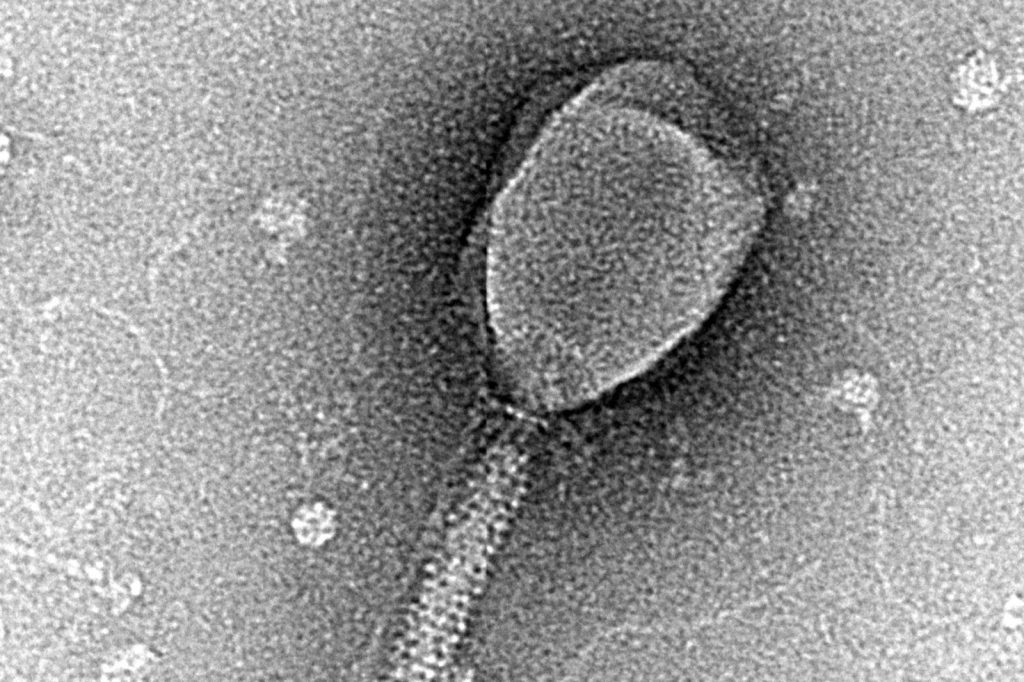
In laboratories where the tools of molecular biology are refined, a technique rooted in viruses that attack bacteria has quietly become a cornerstone for discovering new therapeutic molecules. The technology, known as phage display, allows researchers to fuse a foreign protein domain onto the coat protein of a bacteriophage — a virus that infects bacterial cells — without halting the virus’s ability to replicate. Because the displayed domain sits on the phage particle’s surface, exposed and capable of interacting with other molecules like any normal protein, scientists gain a powerful advantage: the protein is physically linked to a replicating virion whose genome carries the coding sequence for that protein. This linkage means enormous quantities of the displayed domain can be produced quickly and efficiently.
The Mechanics of Selection and Amplification
At the heart of the method are phage display libraries — collections containing billions of phage clones, each displaying a distinct protein domain. Every clone is represented by thousands, millions, or even billions of genetically identical virions, all combined in a single vessel. What appears chaotic is in fact a highly organized system. From these vast mixtures, researchers can isolate exceedingly rare virions that happen to bind to a specific target, which scientists call the “selector.” This isolation occurs through an affinity selection process. Initially, the yield of selector-binding virions is far too low to be of practical use. However, because the virus remains infectious and can be propagated in host bacteria in culture, that yield can be increased by many orders of magnitude — a critical capability that turns a minute discovery into a workable supply of binding molecules.
The system centers on an engineered phage whose genome includes the coding sequence for the displayed protein. Nature’s own design — a virus that infects bacteria — has been repurposed into a tool for finding rare needles in vast haystacks. The future of the technology depends on how researchers continue to refine both the libraries and the selection processes, but the technique is already reshaping how scientists think about identifying molecules that matter for therapy and research.
From Peptides to Antibodies: A Focused History
Phage display’s history is focused and relatively recent. In 1985, biologist George P. Smith first demonstrated that a short peptide could be fused to the coat protein of a filamentous phage without disabling the virus. Three years later, in 1988, researchers devised a method called biopanning that enabled the selection of rare phages from large pools. By 1990, libraries containing many random peptide sequences became feasible. Subsequent work at the Laboratory of Molecular Biology, The Scripps Research Institute, and the German Cancer Research Center adapted the technique to display entire antibodies, opening the door to therapeutic applications.
An overview published as a critical review places special emphasis on what has become the technology’s most prominent application: phage antibodies. In this application, the displayed domain is an antibody domain, and the selector is an antigen of interest. The advantage is that each phage particle simultaneously carries both the physical trait — the antibody domain — and its genetic code, allowing scientists to identify, isolate, and amplify specific antibody molecules from vast mixtures. This ability to generate and screen huge collections of proteins quickly has enabled researchers to find new antibodies, study protein interactions, and design molecules for therapy.
Why the Technique Matters for Patients
For families waiting on new treatments, the quiet shift that phage display represents carries tangible promise. Patients hoping for therapies that target specific disease mechanisms stand to benefit from a technology that allows scientists to isolate and mass-produce binding molecules that might otherwise be too rare to discover. By linking a physical trait to its genetic code, phage display turns the natural replication machinery of a bacterial virus into a production platform. The technique does not attempt to cover the entire arena of contemporary phage display, but its core achievements — the ability to select rare binding domains from vast libraries and amplify them manyfold — have already changed the landscape of biotechnology. As libraries and selection methods continue to improve, the molecules discovered through this system may become the basis for new treatments that address diseases with precision.




