
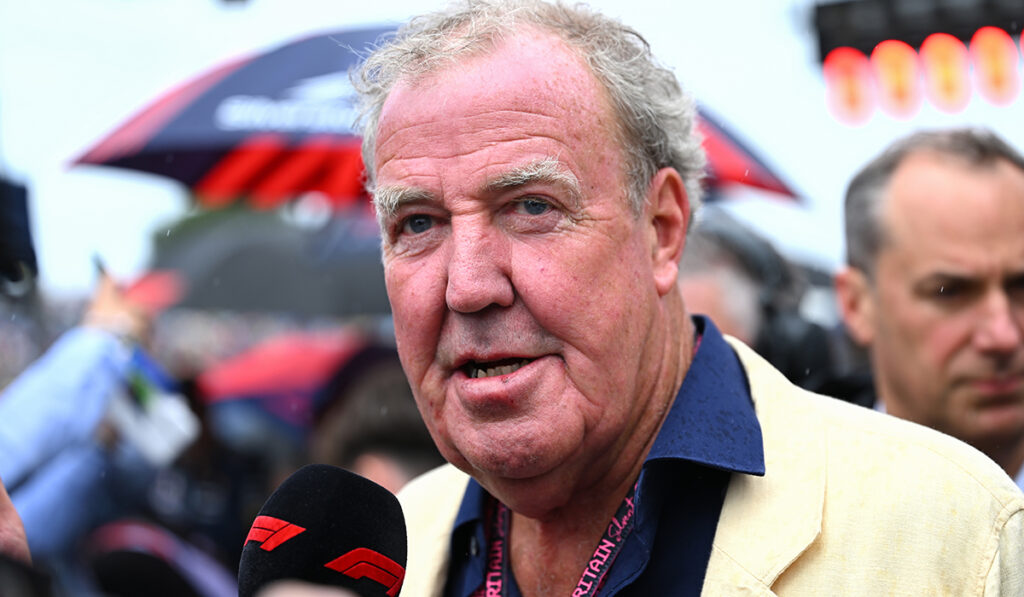
Clarkson’s cancer fight: The numbers behind the disease that strikes one in eight men
Jeremy Clarkson’s disclosure that he has an aggressive form of prostate cancer has done more than shock his fans. It has thrown a sharp, public light on a disease that operates in grim statistical patterns. His case is aggressive, fast-growing, and already in treatment.
That puts him in a specific, urgent category. But the wider picture is one of sheer scale.
The NHS states that one in eight men in the UK will get prostate cancer at some point. The American Cancer Society repeats that same figure. That is not an abstract risk.
It means that in any street of twenty men, two or three will face this diagnosis. The odds shift dramatically with age.
Six in ten cases are found in men aged 65 or older. The average age at diagnosis is 67. Clarkson is 64.
He is right on the edge of that statistical spike. Race cuts the numbers even more sharply. One in four Black men will get prostate cancer, according to the American Cancer Society.
That is double the general risk. Research into why this disparity exists is still ongoing.
No clear answer has emerged yet. But the numbers are stark and they are not changing quickly. Clarkson’s case is also a reminder that not all prostate cancer behaves the same.
Some forms are slow. They sit dormant.
They need no immediate treatment. Others, like his, grow fast and aggressively. The cells in the prostate gland — a small organ below the bladder that helps produce semen — start multiplying in ways they should not.
When that growth is rapid, treatment must start straight away. That is where Clarkson is now. His doctors told him they caught it early.
That is a hopeful sign. Early detection changes the trajectory.
It gives more options. It buys time. The finale of Clarkson’s Farm showed him telling his farm colleagues Charlie Ireland and Kaleb Cooper that he had known since May.
He had warned viewers the episode would be a difficult watch. He was not wrong.
What this event means for the broader conversation is straightforward. Public figures getting sick forces a public reckoning. Men who might have ignored a screening appointment suddenly book one.
The NHS and the American Cancer Society have been pushing that message for years. Clarkson’s diagnosis amplifies it in a way no public health campaign can match. He has a massive audience.
He is talking openly about it. That matters.
Research into prostate cancer continues to evolve. Better screening methods are being developed. Treatment options are expanding.
But the basic facts remain stubborn. One in eight.
Six in ten over 65. One in four for Black men. Those numbers are not moving fast enough.
Clarkson’s case is a high-profile data point in a long, slow fight. The future will bring more research. It will bring more awareness.
But it will also bring more diagnoses. The shift towards greater awareness is real, but it is a shift in attention, not a cure.
Clarkson’s situation is a reminder that the disease is common, that it can be aggressive, and that catching it early is the best chance anyone has. That is the message his story sends. It is not a comfortable one.
But it is a true one.




